



In This Article
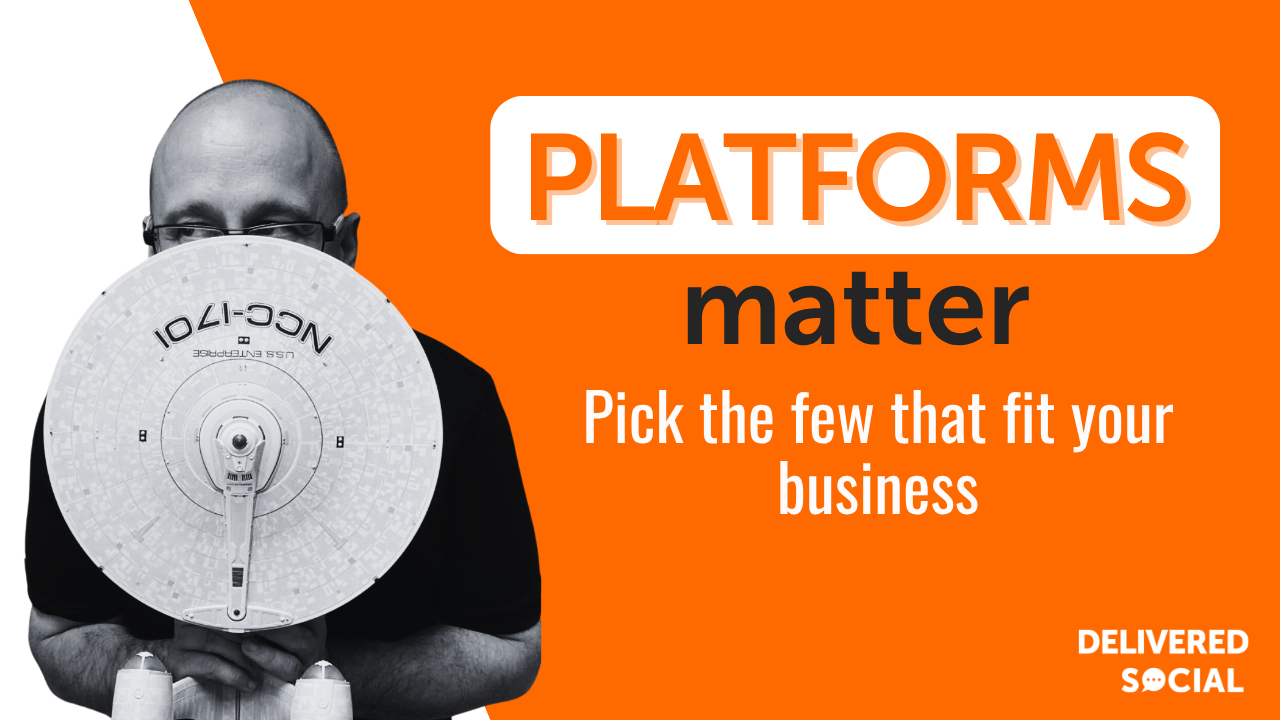
One of the most common worries we hear from small business owners is that they feel they should be on every single network at once, posting madly across a dozen apps and burning out within a fortnight. Here is the reassuring truth: you do not need to be everywhere. Choosing the right social media platforms for your particular business is far more powerful than spreading yourself thin, and it is the single decision that will save you the most time and money this year. Pick well, and your marketing suddenly feels lighter, more focused and a great deal more effective.
In this guide we will explain what platform choice really means, why it matters so much for a growing business, and a simple step-by-step way to decide where you belong. We will talk to you the way we talk to our own clients over a cup of tea: honestly, warmly and without the jargon.
What we really mean by choosing the right platforms
Choosing your platforms simply means deciding which social networks deserve your time, energy and budget, and which ones you can happily ignore. It is a strategic filter rather than a popularity contest. The goal is not to chase whichever app is trending this month; it is to show up consistently in the handful of places where your ideal customers already spend their attention.
Every network has its own personality, its own audience and its own rhythm. A beautifully styled interiors business lives a very different life on a visual platform than a no-nonsense trade business does on a local community feed. Knowing the difference, and playing to it, is the whole game.
It also helps to remember that a platform is not just an audience; it is a set of expectations. People arrive on each network in a particular mood, ready for a particular kind of content. Match that mood and you feel like a welcome guest; ignore it and you feel like an advert people are trying to swipe past. Choosing the right places is really about choosing the conversations you are best suited to join.

Why focus beats being everywhere at once
Being on fewer networks, done properly, almost always beats being on many networks, done badly. When you concentrate your effort, everything improves at once.
You protect your time and sanity
Every extra platform is another set of formats, sizes and conversations to keep up with. Cutting the list down to the two or three that matter frees up hours each week, hours you can pour back into serving customers or, dare we say it, actually resting.
Your content gets better
Focus lets you learn a platform properly instead of skimming five at once. You start to understand what your audience there responds to, your posts sharpen, and your results follow. Depth wins.
There is a lovely compounding effect here too. The more you understand a single platform, the faster you create for it, which means less agonising over every post and more time to be genuinely useful. We say this to clients all the time: mastery makes marketing feel easy, and mastery only comes from focus.
Your budget works harder
Whether you are spending money on ads or time on organic posts, concentrating that investment in the right place gives you a far better return than scattering it thinly across networks where your customers never even look.
A step-by-step way to choose your platforms
Here is the practical method we use with clients. Work through it in order and the answer usually reveals itself.
Step one: get crystal clear on your customer
Start with the person, not the app. Who are they, how old are they, what do they care about, and crucially where do they already hang out online? A younger, visual audience behaves very differently from a professional, business-to-business one. Nail this and half the decision is made for you.
Step two: match your offer to a format
Think about how your business shows up best. If your work is highly visual, image and video-led networks will flatter you. If your value is your expertise and your words, a platform built for longer posts and professional connections may serve you better. Play to your natural strengths.
Step three: see where your competitors are winning
Have a good look at similar businesses that are doing well. Which networks are they active on, and where are they getting real engagement rather than tumbleweed? You are not copying them; you are gathering evidence about where your shared audience actually responds.
Step four: be honest about your capacity
Ask yourself how much time you can genuinely commit each week. It is far better to run one platform brilliantly than three in a half-hearted way. Choose a number you can sustain on a busy week, not just a quiet one.
Step five: start small, then expand
Pick one or two networks, commit for a few months, and measure what happens. Once those are humming along nicely and feel like second nature, you can add another. Growth by design always beats growth by panic.
Give each new channel a fair trial of at least three months before you judge it. Social media rewards patience, and the accounts that look like overnight successes have almost always been quietly showing up, week after week, long before anyone noticed. Consistency is the secret ingredient nobody likes to hear, because it is not glamorous, but it works.
The main social media platforms compared at a glance
Every network suits a different sort of business. Here is a quick, honest comparison to help you see where you might fit:
- Facebook: brilliant for local reach, community groups and an older, ready-to-buy audience; still the workhorse for many small and local businesses.
- Instagram: made for visual brands like food, beauty, interiors and retail; wonderful for showing off your work, though it rewards regular, polished posting.
- TikTok: unbeatable for reach and personality-led content aimed at younger audiences; a real time investment, but the organic reach can be astonishing.
- LinkedIn: the natural home for business-to-business, professional services and recruitment; quieter but full of decision-makers with budgets.
- Pinterest: a search engine in disguise, superb for weddings, crafts, recipes and anything people plan for; content there keeps working for months.
- X and Threads: good for fast conversation, news and building a voice in your niche; better for reach and chatter than for direct local sales.
Best practices once you have made your choice
Choosing well is only the start; how you show up matters just as much. Commit to consistency over intensity, because a steady weekly rhythm beats a frantic burst followed by silence every time. Tailor your content to each platform rather than copying and pasting the same post everywhere, since a message that feels native always outperforms one that feels borrowed. Keep your branding recognisable across the networks you do use, so a customer who meets you on one feels instantly at home on another. And do check in on your numbers every month; the platforms themselves will tell you, quite plainly, where your effort is paying off and where it is not.
Common mistakes small businesses make with platform choice
The biggest mistake by far is trying to be on everything at once, which almost always leads to thin, inconsistent posting and eventual burnout. Close behind is chasing the newest, shiniest app simply because everyone is talking about it, rather than asking whether your customers are actually there. Some owners pick a platform based on personal preference instead of where their audience lives, which is a bit like opening your shop in the wrong town. And plenty set up profiles, post enthusiastically for a fortnight, then vanish, leaving a stale account that quietly damages trust. Consistency, on the right few networks, is what wins.
Where social media platforms are heading next
The landscape keeps shifting, and it pays to watch the direction of travel. Short video continues to dominate almost everywhere, with even traditionally static networks pushing it hard. Search behaviour is changing too, as younger customers increasingly use social apps the way older ones use Google, which makes the words and captions in your posts more important than ever. Artificial intelligence is creeping into feeds and recommendations, quietly deciding who sees what. None of this means you need to reinvent your strategy each week; it simply means the businesses that pick their platforms thoughtfully and stay consistent will keep being rewarded, whatever the algorithms do next.
How many social media platforms should a small business be on?
For most small businesses, one or two done consistently is the sweet spot, stretching to three only when you have the time or a team to support it. It is always better to be genuinely good in one place than forgettable in five. Start with your strongest single channel, get it working, and only then think about adding another.
Which platform is best for a brand-new small business?
There is no universal answer, because it depends entirely on your customers and your offer. That said, many local and service-based businesses find Facebook the easiest place to start thanks to its broad, local, ready-to-buy audience, while visual brands often thrive first on Instagram. The right first platform is simply the one where your particular customers already spend their time.
Do I need to be on the newest apps to stay relevant?
Not at all. New apps can offer wonderful early reach, but they are a bonus, not a duty. Chasing every launch is exhausting and rarely profitable. Master the platforms that clearly serve your business first; you can always test a newcomer later once your foundations are solid.
Your platform-picking checklist
- Know your customer: map who they are and where they already spend time online.
- Match your format: pick networks that flatter how your business shows up best.
- Study the winners: see where similar businesses get real engagement.
- Count your hours: choose a number of platforms you can sustain on a busy week.
- Start small: commit to one or two, measure, then expand.
- Stay consistent: a steady rhythm beats an occasional flurry.
- Review monthly: let the numbers guide where your effort goes.
Let us help you show up in the right places
Choosing the right social media platforms is one of those quietly powerful decisions that makes everything else in your marketing easier, cheaper and more enjoyable. If you would like a friendly hand working out exactly where your business belongs, and a plan to make those channels sing, that is precisely what we do best. Get in touch with the team at Delivered Social and we will help you focus your energy, reach the right people and grow with far less stress. Contact us today and let us build your social presence on the platforms that truly matter for you.
Share This Article
About the Author: Jonathan Bird































