



Keep reading
Rather we just did it for you?
Let's get your business seen.
Social media, websites, SEO and ads from a team you can actually meet.
Most businesses approach content marketing the same way they approach a treadmill. They put in a load of effort, generate a bit of sweat, and the moment they stop, everything stops with them. There’s no momentum. No compounding effect. Just a lot of effort for a result that disappears the second you take your foot off the gas.
The content flywheel is a completely different way of thinking about it. Instead of starting from scratch every time, you build a system where each piece of content you create adds energy to everything that came before it. Done properly, it becomes self-sustaining. And once it’s properly spinning, it gets easier to keep going, not harder.
Here’s how to build one that actually works for your business.
.ds-poll-heading { font-size: 11px; font-weight: 700; letter-spacing: 0.1em; text-transform: uppercase; color: #ff6a00; margin: 0 0 0.6rem; }
.ds-poll-question { font-size: 17px; font-weight: 600; color: #1a1a1a; margin: 0 0 0.4rem; line-height: 1.4; }
.ds-poll-subtitle { font-size: 13px; color: #777; margin: 0 0 1.25rem; }
.ds-poll-grid { display: grid; grid-template-columns: repeat(auto-fit, minmax(175px, 1fr)); gap: 10px; }
.ds-poll-btn {
background: #ffffff;
border: 1px solid #ddd;
border-radius: 10px;
padding: 13px 15px;
cursor: pointer;
text-align: left;
transition: border-color 0.15s, background 0.15s;
font-size: 14px;
color: #1a1a1a;
line-height: 1.4;
display: flex;
flex-direction: column;
gap: 5px;
font-family: sans-serif;
}
.ds-poll-btn:hover { border-color: #ff6a00; background: #fff4ed; }
.ds-poll-btn.ds-selected { border: 2px solid #ff6a00; background: #fff4ed; color: #a03d00; }
.ds-poll-btn:disabled { cursor: default; }
.ds-poll-icon { font-size: 17px; }
.ds-poll-results { margin-top: 1.25rem; display: none; flex-direction: column; gap: 10px; }
.ds-poll-results.ds-show { display: flex; }
.ds-result-row { display: flex; flex-direction: column; gap: 4px; }
.ds-result-label { font-size: 13px; color: #555; display: flex; justify-content: space-between; font-family: sans-serif; }
.ds-result-bar-wrap { background: #f0f0f0; border-radius: 4px; height: 8px; overflow: hidden; }
.ds-result-bar { height: 8px; border-radius: 4px; background: #ff6a00; transition: width 0.6s ease; }
.ds-poll-thanks { font-size: 14px; color: #a03d00; font-weight: 600; margin-top: 1rem; display: none; font-family: sans-serif; }
.ds-poll-thanks.ds-show { display: block; }
.ds-poll-total { font-size: 12px; color: #999; margin-top: 0.4rem; font-family: sans-serif; }
Quick question
Where does your content marketing currently fall down?
Pick the one that resonates most. Takes 2 seconds.
Thanks for voting! Read on — this article covers every single one of those.
document.addEventListener(‘DOMContentLoaded’, function() {
var dsVotes = [54, 41, 38, 29, 33, 47];
var dsHasVoted = false;
var dsLabels = [
“No consistency”,
“Running out of ideas”,
“Not promoting it enough”,
“Not measuring results”,
“Not repurposing content”,
“No clear strategy”
];
for (var i = 0; i < 6; i++) {
(function(idx) {
document.getElementById('dsBtn' + idx).addEventListener('click', function() {
dsVote(idx);
});
})(i);
}
function dsVote(idx) {
if (dsHasVoted) return;
dsHasVoted = true;
dsVotes[idx]++;
var btns = document.querySelectorAll('.ds-poll-btn');
btns.forEach(function(b) { b.disabled = true; b.style.opacity = '0.6'; });
document.getElementById('dsBtn' + idx).classList.add('ds-selected');
document.getElementById('dsBtn' + idx).style.opacity = '1';
var total = dsVotes.reduce(function(a, b) { return a + b; }, 0);
var container = document.getElementById('dsResultBars');
container.innerHTML = '';
dsVotes.forEach(function(v, i) {
var pct = Math.round((v / total) * 100);
var row = document.createElement('div');
row.className = 'ds-result-row';
row.innerHTML =
'
‘ +
‘
‘;
container.appendChild(row);
});
document.getElementById(‘dsPollTotal’).textContent = total + ‘ people have voted’;
document.getElementById(‘dsPollResults’).classList.add(‘ds-show’);
document.getElementById(‘dsPollThanks’).classList.add(‘ds-show’);
setTimeout(function() {
document.querySelectorAll(‘.ds-result-bar’).forEach(function(bar) {
bar.style.width = bar.getAttribute(‘data-pct’) + ‘%’;
});
}, 100);
}
});
What Is a Content Flywheel and Why Should You Care?
The flywheel concept isn’t new. It was popularised in a business context by Jim Collins, who used it to describe how great companies build unstoppable momentum over time through consistent, compounding effort. The content marketing version works on exactly the same principle.
Rather than treating each blog, video or social post as a standalone piece of work, the content flywheel connects everything together. Content you created six months ago feeds into what you’re creating now. A blog becomes a podcast. A podcast becomes a series of social posts. A social post drives traffic back to the blog. Each piece adds energy to the system, and the system keeps spinning long after the original effort has been made.
For businesses that want consistent, sustainable growth online without constantly reinventing the wheel, this is the approach worth getting to grips with.
The Four Stages You Need to Understand
Before you start building your flywheel, it helps to understand the four stages it moves through. Think of these less as a funnel and more as a cycle, because that’s exactly what they are.
The first stage is attraction. This is where you pull people in with content that grabs their attention and gives them something genuinely useful. Original research, in-depth guides, webinars, interactive tools — anything that sparks curiosity and offers real value to someone who doesn’t know you yet.
The second stage is engagement. Getting someone to click is one thing. Keeping them interested is another. Engaging content immerses people, pulls them deeper into your world and makes them want more. Think interactive quizzes, short punchy videos, content that feels personal rather than broadcast.
The third stage is delight. This is where you turn engaged readers into loyal fans. Customer success stories, behind-the-scenes content, formats that go above and beyond what your audience expected — this is what builds the kind of trust that keeps people coming back and, more importantly, telling other people about you.
The fourth stage is analysis. None of this works without data. You need to know what’s performing, what’s resonating, and what’s quietly dying in the corner. Google Analytics, Google Search Console, and similar tools give you the information you need to double down on what’s working and quietly retire what isn’t.
Map Your Customer Journey First
Before you create a single piece of content, sit down and map out your customer journey properly. Where do people first discover you? What do they need to see, read or experience before they’re ready to buy? What happens after they become a customer?
This exercise is genuinely important because it tells you where your content needs to exist and what job it needs to do at each stage. A piece of content aimed at someone who’s never heard of you looks completely different to a piece aimed at someone who’s been on your mailing list for three months.
A simple framework to start with is Attraction, Consideration and Decision. What content pulls people in? What content helps them evaluate you? What content tips them over the line? Map those out and you’ve got the bones of a flywheel strategy worth building on.
Don’t Build a Flywheel That’s Too Big to Spin
This is where a lot of businesses come unstuck. They get excited about the concept, map out an enormous content strategy with seventeen different formats across eight different channels, and then wonder why nothing is moving six months later.
The size of your flywheel matters. A bigger flywheel has the potential to drive bigger results, but it also requires more resources to get it moving. If you’re a small team, or if content is something you’re fitting around running an actual business, start smaller than you think you need to.
Three content formats done consistently and well will outperform ten formats done sporadically and half-heartedly every single time. Pick the channels where your audience actually spends time, choose the formats you can realistically sustain, and build from there. You can always scale up once the flywheel is spinning.
Create Content That Does a Proper Job
Content in the attraction stage needs to be genuinely useful. Not vaguely interesting, not sort-of-relevant, actually useful. The kind of thing someone bookmarks and comes back to. Think detailed guides, original research, free tools, downloadable resources — things that deliver real value in exchange for someone’s time and attention.
As people move deeper into your world, the content needs to shift. At the consideration stage, you’re building trust and demonstrating credibility. Case studies, webinars, videos showing real results — this is the content that answers the question “but can they actually do what they say they can?” in a way that a sales page simply can’t.
At the delight stage, you’re reinforcing the decision people have already made to engage with you. Customer success stories, exclusive insights, content that makes existing customers feel like they’re part of something worth being part of — this is what turns customers into advocates, and advocates are worth more than any paid campaign you’ll ever run.
Repurpose Everything You Possibly Can
One of the biggest mistakes in content marketing is treating every piece of content as a one-use item. You write a blog, it goes up, you move on. That’s leaving an enormous amount of value on the table.
Every substantial piece of content you create should ask itself: what else can I become? A detailed blog post can be repurposed into a LinkedIn article, a series of social posts, a short video, an email newsletter, a podcast episode or an infographic. A webinar recording can become clips for social, a transcript for a blog, and pull quotes for your email list.
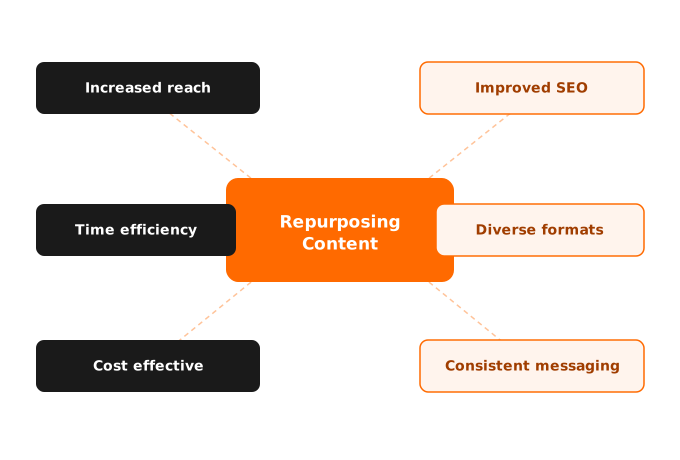
This isn’t about being lazy. It’s about being smart with your time and making sure your best ideas reach as many people as possible, in the format they prefer to consume them.
Reduce the Friction in Your System
A flywheel slows down when there’s too much friction. In content marketing terms, friction is anything that makes it harder for your audience to engage with you, or anything that makes it harder for your team to produce content consistently.
On the audience side, this means making sure your content is easy to find, easy to read and easy to act on. Clear calls to action, simple navigation, content that loads quickly and looks good on mobile — these things sound basic, but they have a real impact on whether your flywheel keeps spinning or gradually grinds to a halt.
On the internal side, it means having clear processes, good communication between whoever is involved in your content, and the right tools to keep things moving. If creating content feels like wading through treacle every time, it won’t happen consistently. And consistency, more than almost anything else, is what makes a flywheel work.
Think Long Term, Always
Here’s the honest truth about the content flywheel: it doesn’t produce overnight results. The businesses that get the most out of it are the ones that commit to it as a long-term strategy rather than expecting it to pay off in the first three months.
The compounding effect of consistent, quality content over time is genuinely powerful. A piece of content you wrote two years ago can still be driving traffic today. A reputation built through consistent, valuable content is an asset that your competitors can’t easily replicate. The relationships you build with your audience through content are worth more than any short-term campaign.
At Delivered Social, we help businesses build content strategies that compound over time rather than burning bright for a week and disappearing. If you’d like to talk about what a proper content flywheel could look like for your business, we’d love to have that conversation.































