




Keep reading
Rather we just did it for you?
Let's get your business seen.
Social media, websites, SEO and ads from a team you can actually meet.
Driving a car from Los Angeles to Miami sounds like a great idea until you add up the fuel costs, three or four nights in motels, and 2,800 miles of wear on your odometer.
That is why California to Florida car shipping has become the go-to option for anyone relocating between the two coasts.
Whether it is a job transfer, a seasonal move, or a vehicle purchased online, shipping your car saves time and money that a cross-country drive would eat up.
This route happens to be one of the busiest corridors in the auto transport industry, which works in your favor when it comes to availability and pricing.
Why This Route Is So Popular
California and Florida are the two largest states for vehicle registrations in the country.
Snowbirds head south every winter, tech workers relocate from the Bay Area to Tampa or Fort Lauderdale, and military families get reassigned between bases like Camp Pendleton and Naval Station Mayport.
All of that movement creates consistent carrier traffic between the two states.
High demand on a route actually keeps things competitive because carriers do not want to run empty on the return trip, so there is almost always a truck heading in your direction.
How the Process Works
You start by requesting a quote from a car transportation provider.
They will ask for the origin and destination zip codes, vehicle year, make, and model, whether the car runs, and your preferred shipping method.
Open transport uses the standard multi-car carriers you see on highways, while enclosed transport costs more but protects high-value vehicles like a classic Corvette or a new Porsche 911 from road debris and weather.
Once you book, a carrier is dispatched to your location, typically within one to seven days depending on the season.
The driver inspects the vehicle, documents existing damage on a Bill of Lading, and loads it onto the trailer.
Transit time on the California to Florida corridor usually runs between seven and ten days.
What Affects the Price
Distance and fuel prices are the obvious factors.
Vehicle size matters too, because shipping a Honda Civic costs less than shipping a Ford F-250 since the truck takes up more deck space and adds weight.
Seasonality swings pricing noticeably.
January through March tends to be peak season on this route because of snowbird migration and post-holiday relocations.
Your choice between open and enclosed auto transport also shifts the cost.
Open carriers haul eight to ten vehicles at once, spreading the expense, while enclosed trailers carry fewer cars so each slot costs more.
For a standard sedan on an open carrier from San Diego to Jacksonville, expect quotes ranging from $900 to $1,400 depending on timing and demand.
Open vs. Enclosed: Which One Makes Sense
For most people shipping a daily driver like a Toyota Camry or a Hyundai Tucson, open transport is the practical choice.
It is cheaper, faster to book, and the risk of damage is genuinely low.
Enclosed transport earns its premium when the vehicle is worth protecting at a higher level.
Think collector cars, luxury vehicles like a Mercedes-Benz S-Class, or anything with a custom paint job.
If your car is valued north of $75,000, the extra $300 to $600 for enclosed shipping is worth the peace of mind.
Timing Your Shipment
Booking two to three weeks in advance is the sweet spot for most California to Florida shipments.
Related reading: A Digital-First Guide to Car Insurance for Women: What Really Drives Online Choices in 2025
That gives carriers enough lead time to slot your vehicle into an existing route without rush fees.
Last-minute bookings, anything under a week, are possible but usually come with a premium price tag.
If your schedule is flexible, choosing a wider pickup window can save money.
Telling a carrier “anytime in the next ten days” gives them room to batch your car with others heading the same direction, which lowers their cost and often yours.
Preparing Your Car for Transport
Wash the vehicle so existing scratches and dents are visible during the pre-transport inspection.
Remove personal belongings, because carriers are not insured for loose items inside the car and extra weight can be a compliance issue.
Keep the gas tank around a quarter full since a full tank adds unnecessary weight.
Disable any aftermarket alarm systems so they do not go off mid-transit.
Document the vehicle’s condition with timestamped photos before the driver arrives, covering the front, back, both sides, and roof.
How to Choose the Right Car Transportation Company
The auto transport industry has its share of brokers who quote low, collect a deposit, and then struggle to find a carrier willing to move your car at that price.
A few checks help you avoid that.
Verify the company’s USDOT number and MC number through the Federal Motor Carrier Safety Administration database.
Read reviews on the Better Business Bureau, Trustpilot, and Google, but focus on patterns rather than individual complaints.
What matters is whether the same issue, like missed pickups or hidden fees, keeps showing up.
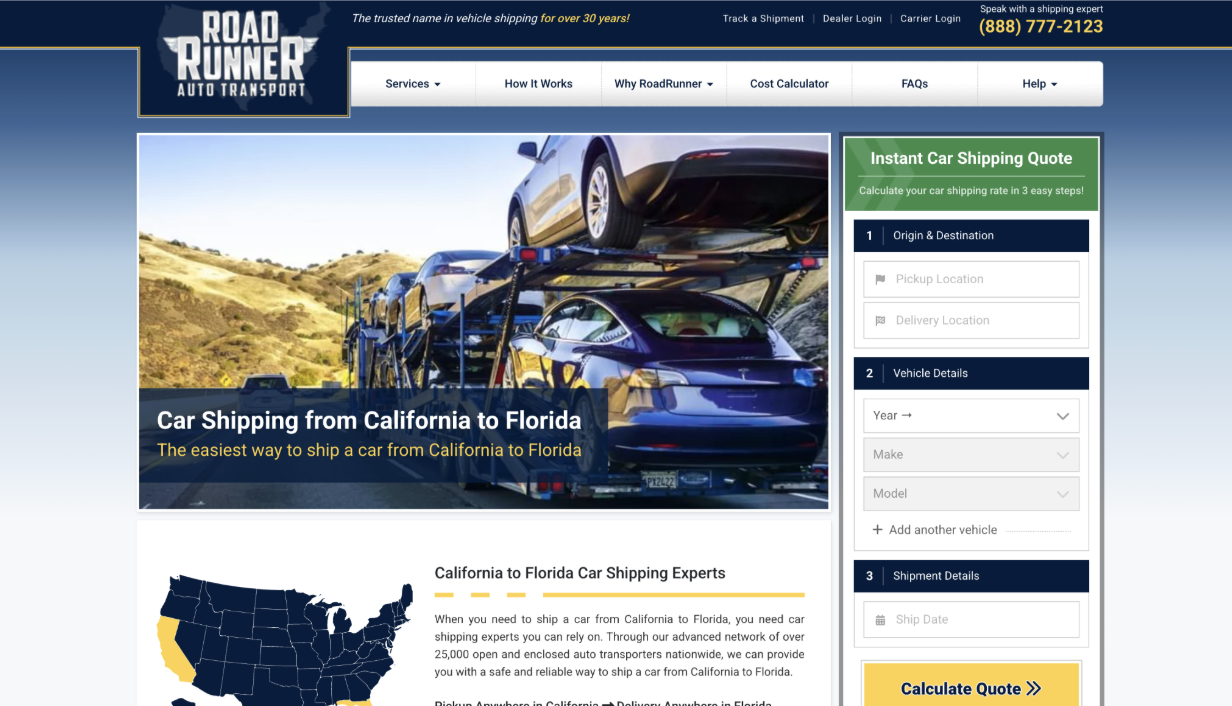
Companies like RoadRunner Auto Transport have built a reputation on this specific corridor by offering transparent pricing and consistent communication throughout the shipping process.
Ask about insurance coverage before you book, and get a copy of the carrier’s policy or at minimum a Certificate of Insurance.
What to Do at Delivery
When the carrier arrives, inspect the vehicle carefully before signing the final Bill of Lading.
Compare it against the condition report from pickup and check the body panels, wheels, and windshield.
If you spot new damage, note it on the delivery receipt and photograph everything immediately.
This documentation is essential for filing a damage claim with the carrier’s insurance.
Confirm the payment method with your transport company well before delivery day, because some carriers accept credit cards while others require a cashier’s check or money order.
The Bottom Line
Car transportation between California and Florida is a well-established route with plenty of carrier options, competitive pricing, and reliable timelines.
The key is booking early enough to get a good rate, choosing the right transport type for your vehicle, and vetting your provider before handing over the keys.
Skip the 2,800-mile drive, save the wear on your car, and let a professional auto carrier handle the heavy lifting.
































