



Keep reading
Rather we just did it for you?
Let's get your business seen.
Social media, websites, SEO and ads from a team you can actually meet.
Digital marketing is brilliant at reach. It puts brands in feeds, inboxes, search results, video platforms, and retargeting journeys. It gives marketers data, speed, testing, and scale.
But there’s one thing digital can’t always do on its own.
It can’t always make people stop, look up, lean in, and feel something.
That’s where experiential marketing earns its place. Experiential marketing is not a nice-to-have add-on for brands with oversized budgets. Done properly, it becomes a powerful part of a modern digital marketing strategy. It gives people something worth sharing, remembering, and acting on. It turns passive attention into active participation. It creates the kind of presence that a social post alone often struggles to achieve.
In a world full of scrolls, skips, and swipes, experience gives your audience a reason to care.
Experiential Marketing Is Not the Opposite of Digital
A common mistake is treating experiential and digital as separate worlds.
Digital is online. Experiential is offline. One is measurable. The other is emotional. One belongs to performance marketers. The other belongs to events teams.
That split is outdated. Modern experiential marketing works best when it is designed with digital from the start. A launch event can become a video campaign. A live activation can fuel social content. A pop-up can capture first-party data. A conference experience can support email nurturing, sales enablement, influencer partnerships, PR, and remarketing.
The experience creates the spark. Digital carries the signal further. Instead of asking whether experiential marketing belongs in a digital strategy, marketers should ask a better question:
What kind of real-world moment would make our digital activity more believable, more human, and more memorable?
Why Digital Campaigns Need More Than Attention
Digital marketers are under constant pressure to win attention. Better hooks. Better thumbnails. Better subject lines. Better targeting. Better creative. Better offers.
All of that matters. But attention is not the same as connection.
Someone can watch three seconds of a video and forget the brand instantly. They can click an ad and bounce. They can follow a page and never engage again. Digital activity can create visibility without building much memory.
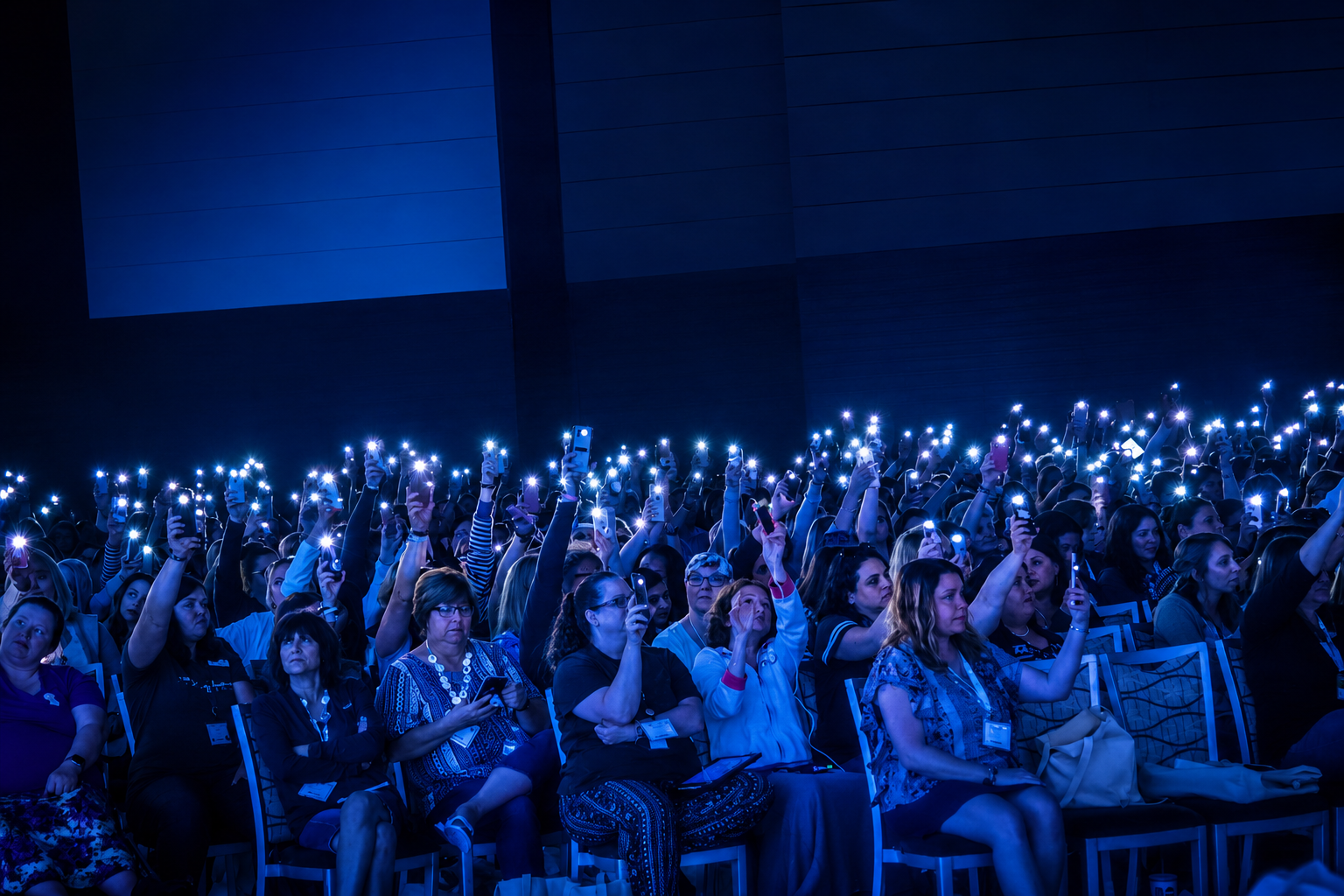
Experiential marketing helps close that gap because it works through participation. People remember what they do, not just what they see. They remember the room, the reveal, the conversation, the sound, the texture, the small moment of surprise. They remember how the brand made them feel.
That emotional imprint gives digital campaigns more weight. It turns content into evidence. It gives social posts a story. It gives email follow-ups context. It gives paid media something stronger than another polished claim.
Where Experiential Fits in the Funnel
Experiential marketing can support every stage of the customer journey, not just brand awareness.
At the top of the funnel, it creates curiosity. A product demo, immersive installation, pop-up, roadshow, launch moment, or live brand activation can pull people into the story faster than a static ad.
In the middle of the funnel, it builds understanding. For complex products or services, experience can make abstract benefits tangible. Instead of telling people what a solution does, brands can let them feel the problem being solved.
At the bottom of the funnel, it can increase trust. Executive briefings, customer events, private demos, and high-touch experiences help prospects ask questions, meet the team, and see the brand’s confidence up close.
After purchase, it can deepen loyalty. Customer communities, user conferences, training events, recognition moments, and VIP experiences can turn customers into advocates.
That is the real power of experiential marketing. It is not just a one-off event. It is a way to move people through the journey with more presence and resonance.
The Digital Value of a Physical Experience
A strong experiential campaign can create a huge amount of digital value.
One well-designed experience can produce:
Social video clips
Customer testimonials
Behind-the-scenes content
Influencer collaborations
Founder or leadership content
Email campaign assets
Case study material
PR angles
Sales enablement content
Retargeting audiences
First-party data
Community engagement
Organic search opportunities
The key is planning for this before the experience happens.
Too many brands treat content capture as an afterthought. Someone remembers to take photos. A few clips get posted. Then the moment disappears.
A modern approach builds the digital layer into the experience from day one. The lighting, signage, flow, interactions, interview spaces, shareable moments, and audience prompts should all be designed with content in mind.
The goal is not to make the experience feel staged for social. The goal is to make the experience rich enough that digital content feels natural, useful, and alive.
Experiential Strategy Gives Digital Teams a Stronger Story
Digital marketing works best when it has a clear story to tell. Without that, teams end up pushing offers, posting filler content, or chasing trends that don’t connect back to the brand.
This is where experiential strategy becomes valuable. It helps brands define what people should feel, understand, and do at each touchpoint. It connects the emotional arc of an experience to the business goal behind it. It makes sure the big moment is not just impressive in the room, but useful across the entire marketing system.
For example, a brand might want to launch a new product. A weak approach starts with assets: a landing page, some paid ads, a few social posts, and a launch email. A stronger approach starts with the experience:
What tension does the product resolve?
What should the audience feel before the reveal?
How can the product benefit become tangible?
What moment will people want to share?
What proof will help the sales team after launch?
What content can extend the story for weeks or months?
That thinking makes the digital campaign sharper because the story has already been pressure-tested in a real audience environment.
Data Still Matters
Experiential marketing should not get a free pass because it feels creative. It still needs to connect to outcomes. The right metrics depend on the goal, but they might include:
Registrations Attendance
Dwell time
Lead capture
Qualified meetings
Content shares
Social reach Engagement rate
Email follow-up performance
Pipeline influenced
Customer retention
Survey responses
Brand sentiment
Sales team feedback
Digital channels make experiential marketing easier to measure than it used to be. QR codes, UTM links, CRM integrations, event apps, social listening, landing pages, email journeys, and remarketing audiences can all help connect the live moment to business performance.
The point is not to measure everything. The point is to measure what matters.
If the goal is awareness, track reach and engagement. If the goal is sales, track qualified leads and pipeline movement.
If the goal is loyalty, track attendance, satisfaction, renewals, referrals, and customer advocacy.
Good experiential marketing creates emotion. Great experiential marketing connects that emotion to action.
Social Media Loves Real Moments
Social media teams are constantly searching for content that feels real. Not stock. Not sterile. Not another graphic with a quote slapped on top.
Experiential marketing gives social teams the raw material they need.
Live reactions. Human faces. Movement. Sound. Behind-the-scenes energy. Small moments of awe. Big moments of reveal. People interacting with the brand instead of being talked at by the brand.
This kind of content often feels more authentic because it is rooted in something that actually happened.
That matters because audiences are good at spotting empty content. They know when a brand is posting for the sake of posting. Experiential campaigns give social media a stronger reason to exist: to extend a moment people cared about.
SEO and Experiential Can Work Together Too
Experiential marketing can also support search, especially when brands think beyond the day of the event.
A campaign can become a blog series, a recap article, a thought leadership piece, a case study, a press release, a resource hub, or a video landing page. If the experience answers real customer questions, those answers can become search-friendly content.
For example, a company hosting a sustainability-focused activation could turn the experience into educational content about product materials, supply chains, customer behaviour, or industry trends.
The experience creates authority. SEO helps that authority get found. This is where digital and experiential stop competing and start compounding.
How to Build Experiential Into a Digital Plan
Start with the marketing objective. Do you need awareness, leads, education, retention, community, or repositioning?
Then define the audience. What do they already believe? What do they need to understand? What would make them stop and engage?
Next, decide what kind of experience fits the goal. It might be a large event, but it could also be a small executive dinner, an interactive demo, a trade show environment, a hybrid broadcast, an influencer experience, or a customer workshop.
Then map the digital ecosystem around it. What happens before, during, and after? Which channels will build anticipation? Which assets need to be captured? How will leads be followed up? How will the story continue?
Finally, measure the right things. Agree on success before creative development begins, not after the campaign wraps.
The Best Strategies Feel Connected
Modern marketing does not need more random activity. It needs connected activity.
A paid campaign should not feel separate from an event. A social campaign should not feel separate from a product launch. A customer experience should not feel separate from the brand promise.
Experiential marketing helps bring the brand into the real world. Digital marketing helps that moment travel.
When the two work together, brands can create something stronger than impressions. They can create memory. They can create trust. They can create a sense of connection that lasts beyond the click.
That is where modern strategy is heading.
Less noise. More presence. Fewer empty touchpoints. More moments people actually remember.
































