



Keep reading
Rather we just did it for you?
Let's get your business seen.
Social media, websites, SEO and ads from a team you can actually meet.
The words “marketing plan” can sound a bit grand for a small business, like something only companies with a boardroom and a budget to match would bother with. In truth, a marketing plan is simply a short, sensible document that says who you are trying to reach, what you are going to do and how you will know it is working. It turns marketing from a series of panicked, random posts into something calm and deliberate. We say this to clients all the time: a plan on one page beats brilliant ideas scattered across your head.
In this guide we will explain what a marketing plan really is, why even the smallest business benefits from one, and a friendly step-by-step way to write yours, without the jargon or the forty-page template nobody ever finishes.
What a marketing plan actually is
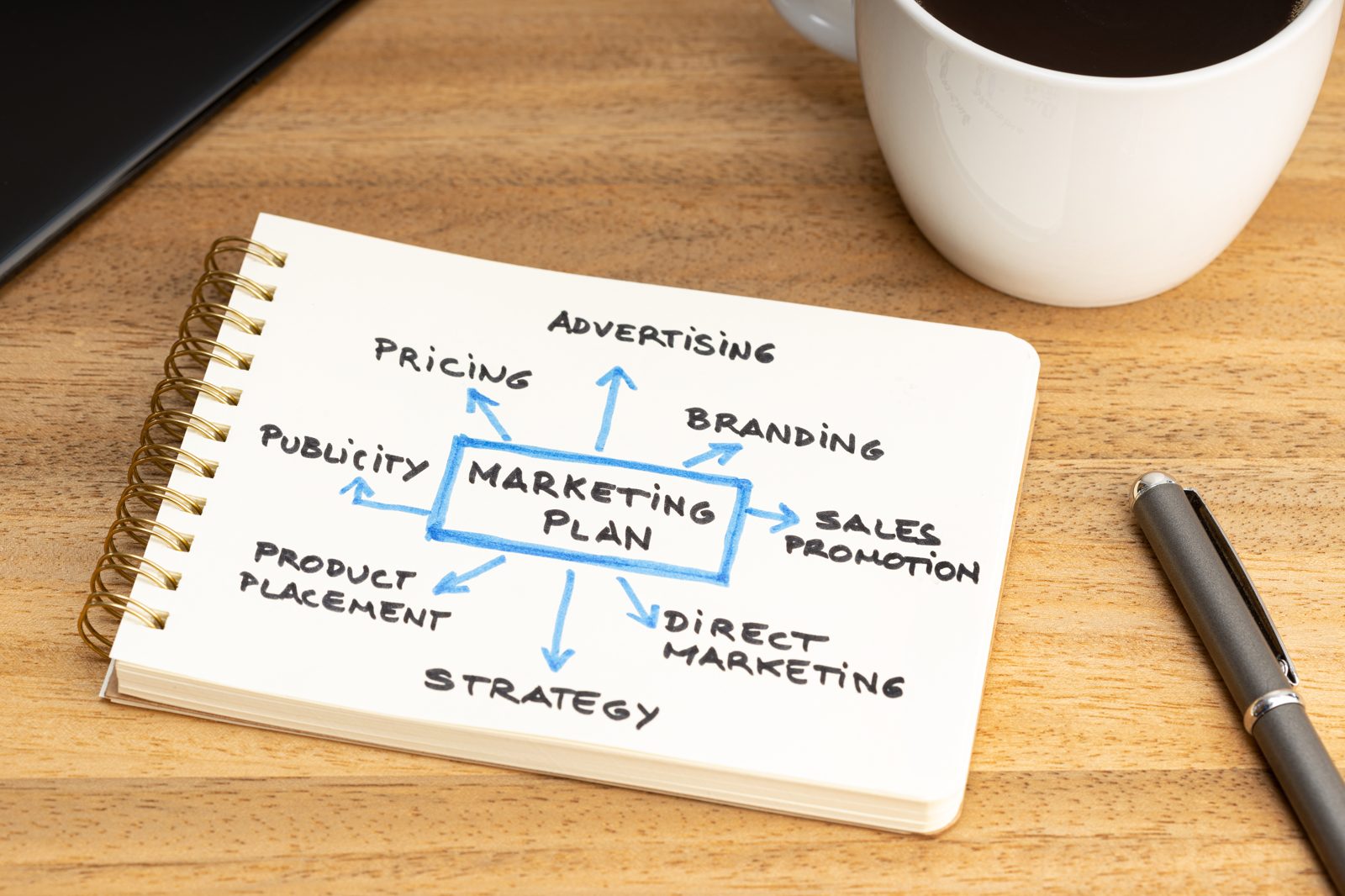
A marketing plan is a written summary of your marketing goals and the practical steps you will take to reach them. It captures who your customers are, what you want to achieve, the channels you will use and the rough budget and time you will commit. Crucially, it also says how you will measure success, so you are not just busy but actually getting somewhere.
Think of it as a map for a journey. You still have to do the driving, but with a map you stop wasting fuel on wrong turns and you can tell when you are heading in the right direction. Without one, marketing tends to become whatever feels urgent that morning, which is exhausting and rarely adds up to much. We have met so many owners who work incredibly hard at their marketing yet feel like they are running on the spot, and almost always the missing piece is not effort or talent; it is simply a plan to point all that energy in one direction.
Why a plan matters, even for a tiny business
It is tempting to think planning is a luxury for bigger firms, but the opposite is true. When your time and money are tight, a plan is what stops you wasting either.
It keeps you focused
A plan helps you say a cheerful no to the shiny distractions and yes to the handful of activities that actually move the needle. That focus is worth its weight in gold when you are wearing every hat in the business.
It saves money
Marketing without a plan often means spending on a bit of this and a bit of that, with little to show for it. A plan points your limited budget at the things most likely to work, so more of every pound pulls its weight. For a small business, that efficiency can be the difference between marketing that feels affordable and marketing that quietly drains the accounts with nothing to show for it.
It lets you see what is working
Because a plan sets goals and ways to measure them, you can tell the difference between activity and progress. That means you double down on what works and quietly drop what does not, instead of guessing. Over a few months this turns marketing from a nervous gamble into something closer to a steady, learnable skill, where each month teaches you a little more about what your customers respond to.
A step-by-step way to write your marketing plan
Here is the practical method we use with clients. Keep it short and honest, and you will end up with a plan you actually follow.
Step one: get clear on your goals
Start with what you actually want, and make it specific. “More customers” is a wish; “ten new enquiries a month by autumn” is a goal you can aim at and measure. Pick two or three goals at most, so your energy is not spread too thinly.
Step two: know your ideal customer
Describe the person you most want to reach: what they care about, where they spend their time and what problem you solve for them. The clearer this picture, the easier every later decision becomes, because you are always marketing to a real person rather than a vague crowd. A handy trick is to imagine one genuine customer you have loved working with and write the plan as if you are trying to reach more people just like them.
Step three: choose your channels
Decide where you will show up, whether that is one or two social platforms, email, local search or word of mouth. Pick the places your ideal customer already spends time, and resist the urge to be everywhere; focus beats sprawl every single time.
Step four: plan your activities and budget
Sketch out what you will actually do, roughly how often, and what it will cost in time and money. Be realistic about your capacity on a busy week, not just a quiet one, so the plan survives contact with real life. It is far better to promise yourself two posts a week and keep it than to plan a daily masterpiece and quietly give up by Wednesday; consistency you can sustain always beats ambition you cannot.
Step five: decide how you will measure success
For each goal, note the simple number you will watch, be it enquiries, sales, followers or website visits. Set a regular date, monthly is ideal, to check in and adjust. A plan you never review is just a wish list in a drawer.
What to include in your plan, at a glance
A useful small business marketing plan does not need to be long, but it should cover the essentials. Here is a quick checklist:
- Your goals: two or three specific, measurable things you want to achieve.
- Your audience: a clear picture of the customer you are trying to reach.
- Your message: the core thing you want people to understand and remember.
- Your channels: the handful of places you will focus your effort.
- Your activities and budget: what you will do, how often and what it costs.
- Your measures: the simple numbers that tell you it is working.
Best practices that keep your plan alive
A marketing plan only helps if you actually use it, so keep it lean and practical rather than long and impressive. Aim for something that fits on a page or two, because a short plan gets read and a fat one gets forgotten. Be honest about your time and money, since an over-ambitious plan simply sets you up to feel guilty. Revisit it regularly, ideally once a month, and treat it as a living document you tweak as you learn. And celebrate the small wins along the way; noticing progress keeps you motivated far better than only ever chasing the next target. Marketing is a long game, and the businesses that stick with it are usually the ones that remembered to enjoy the small victories along the way.
Common mistakes small businesses make
The most common mistake is not writing anything down at all, keeping a vague plan in your head where it is easily forgotten and impossible to measure against. Another is setting goals so woolly that you can never tell if you have hit them. Many businesses also try to do too much at once, spreading themselves across every channel and burning out. Some pour effort into marketing without ever checking the results, so they cannot learn what works. And plenty write a lovely plan once, then never look at it again, which is almost as good as not having one. Little, clear and regularly reviewed wins every time; a modest plan you follow will always beat a magnificent one you abandon.
Where small business marketing is heading next
Marketing keeps changing, but the value of a plan only grows. Artificial intelligence tools are making it quicker to create content and spot patterns in your results, which means a clear plan to point them at becomes more useful, not less. Customers increasingly expect a joined-up experience across social, search and email, so planning how your channels work together matters more than ever. And measurement is getting easier, with simple dashboards putting real numbers within reach of any small business. The fundamentals stay the same though: know your customer, focus your effort, and check what works. A plan is simply how you keep doing that as the tools evolve.
How long should a small business marketing plan be?
As short as it can be while still being useful, which for most small businesses is a page or two. The goal is clarity, not length. A concise plan that you actually read and follow will always beat an exhaustive document that looks impressive and then gathers dust. If in doubt, cut it down until only the useful bits remain; you can always add detail later, but a plan that feels light and doable is one you will actually open again.
How often should I update my marketing plan?
A quick monthly check-in works well for most small businesses, with a slightly bigger review once or twice a year. The monthly look lets you adjust activities and spot what is working, while the larger review is a chance to revisit your goals and direction. The point is to treat the plan as a living tool, not a one-off task you tick off and forget.
Do I need a marketing plan if I only use social media?
Yes, arguably even more so, because it is easy to pour endless hours into social media with no clear sense of whether it is paying off. A simple plan gives your posting a purpose: who you are trying to reach, what you want them to do, and how you will know it is working. Even a one-page plan will make your social media far more focused and far less exhausting.
Your marketing plan checklist
- Set clear goals: two or three specific, measurable targets.
- Define your customer: a real, detailed picture of who you serve.
- Sharpen your message: the one thing you want remembered.
- Choose your channels: a focused few, not everywhere at once.
- Plan activities and budget: realistic for a busy week.
- Pick your measures: the simple numbers you will watch.
- Review monthly: keep the plan living and useful.
Let us help you build a plan that works
Writing a marketing plan is one of the most grounding, money-saving things a small business can do, and it need not be complicated or time-consuming. If you would like a friendly hand shaping yours, from setting sensible goals to choosing the right channels and measuring what matters, that is exactly the sort of thing we love doing. Get in touch with the team at Delivered Social and we will help you swap scattered, stressful marketing for a calm, focused plan that actually grows your business. Contact us today and let us map out your marketing together.































