





In This Article
Advertising for e-commerce has become more complex in 2026 as marketers juggle fragmented data sources, tighter privacy rules, and the ongoing need to prove return on ad spend (ROAS). Brands of all sizes must reconcile performance across Meta, Google, TikTok, and other channels while preserving first-party data accuracy and navigating post-cookie tracking challenges.
Advertising management platforms for e-commerce businesses help teams unify data, attribute conversions correctly, and optimize spend across channels without overwhelming manual analysis. In this guide, you’ll find updated insights into the top platforms shaping e-commerce advertising in 2026 – what they do, who they’re for, and how they fit into real-world growth teams.

At-a-Glance Comparison
| Platform | Best For | Core Capabilities | Notable Strength | Pricing Model |
| RedTrack | Performance ad teams | Attribution, tracking, automation | AI-assisted insights | Custom / Tiered |
| Triple Whale | Shopify & DTC brands | Analytics + attribution + activation | Unified BI + AI guidance | Tiered |
| Northbeam | Multi-channel growth teams | Multi-touch attribution | Advanced modeling & view-through | Custom / Tiered |
| Hyros | High-spend advertisers | AI-driven attribution | Full-funnel mapping | Custom / Tiered |
| Rockerbox | Data-centric organizations | Measurement & reporting | Flexible data pipelines | Custom |
| Wicked Reports | Revenue & LTV focused marketers | Multi-touch attribution | Deep cohort & LTV reporting | Tiered |
Our Criteria
Selections are based on e-commerce integration breadth, attribution accuracy, automation capabilities, reporting clarity, scalability, and adaptability to privacy-first environments. Tools that deliver actionable data for cross-platform spend decisions were prioritized.
Our Top Picks For The Best Advertising Management Platforms
RedTrack
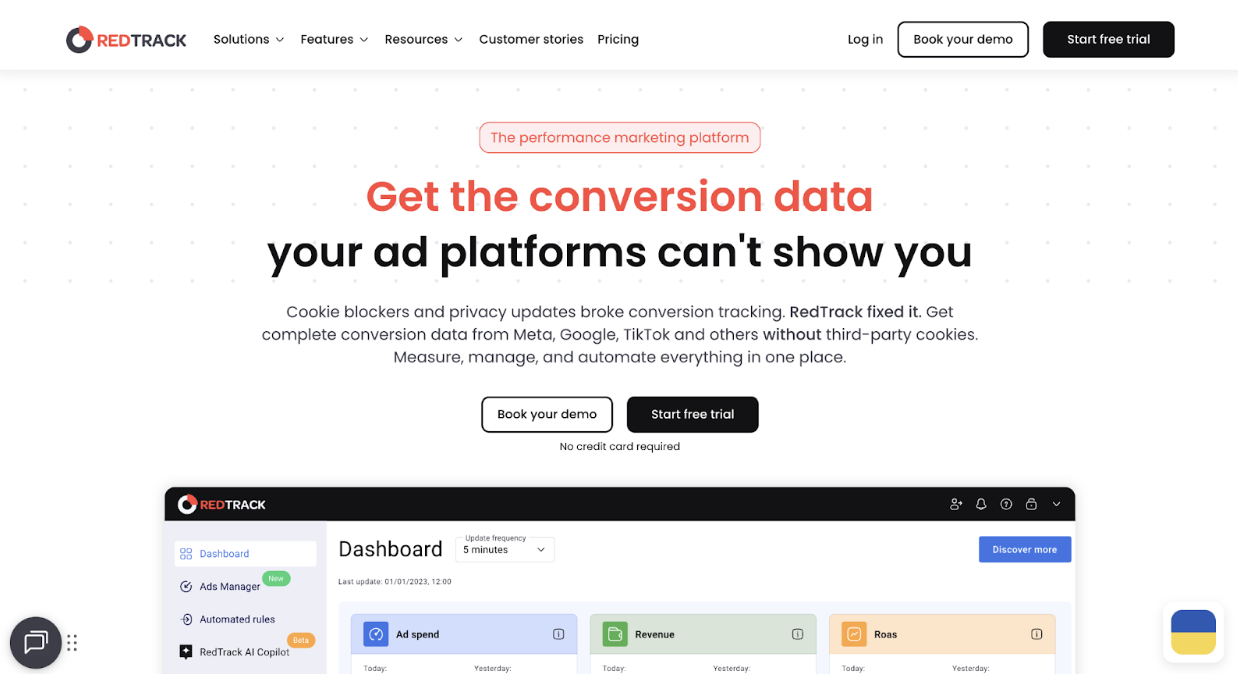
RedTrack is a performance advertising tracking and attribution platform that combines first-party data collection, real-time reporting, and automation into a unified system. It helps e-commerce teams capture conversions while navigating privacy changes and server-side requirements. RedTrack’s platform also includes AI-assisted setup tools and analytics agents to help teams interpret their campaign results.
Marketers use RedTrack to centralize performance data from Meta, Google, TikTok, affiliates, and other networks, then automate rules for optimization. It’s often chosen by performance marketing teams with complex media mixes who need granular conversion insights.
Key Strengths
- Integrated tracking, attribution, and analytics
- Server-side and first-party data collection
- Automation for rules and optimization
- AI support for insights and setup
Triple Whale
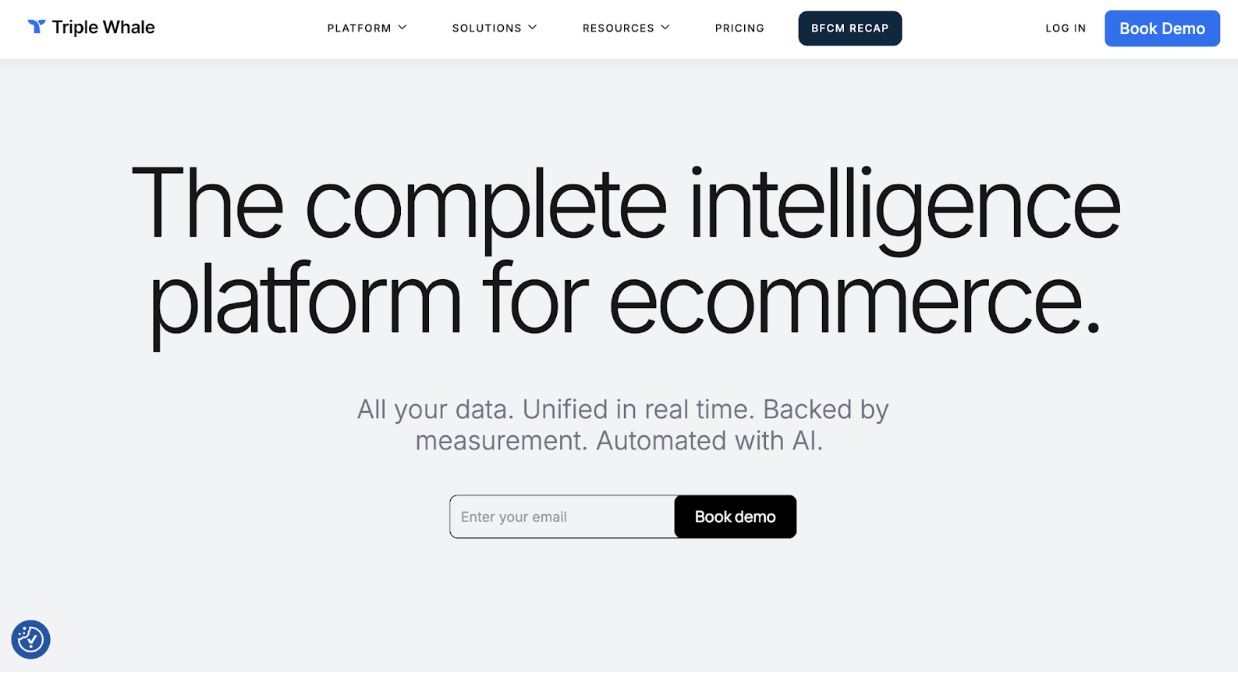
Triple Whale is built as an end-to-end e-commerce analytics and attribution platform, especially strong for Shopify stores and direct-to-consumer brands. It consolidates marketing, sales, and revenue data into dashboards and reports with AI enhancements that help guide decisions.
The platform’s activation layer goes beyond passive analytics, enabling teams to sync audiences, data, and insights back into ad platforms. It’s widely adopted by brands that want a central source of truth for blended ROAS, lifetime value, and high-level campaign performance without building custom data infrastructure.
Key Strengths
- Unified e-commerce data platform
- AI-driven insights and recommendations
- Real-time performance dashboards
- Seamless connection with ad and commerce systems
Northbeam
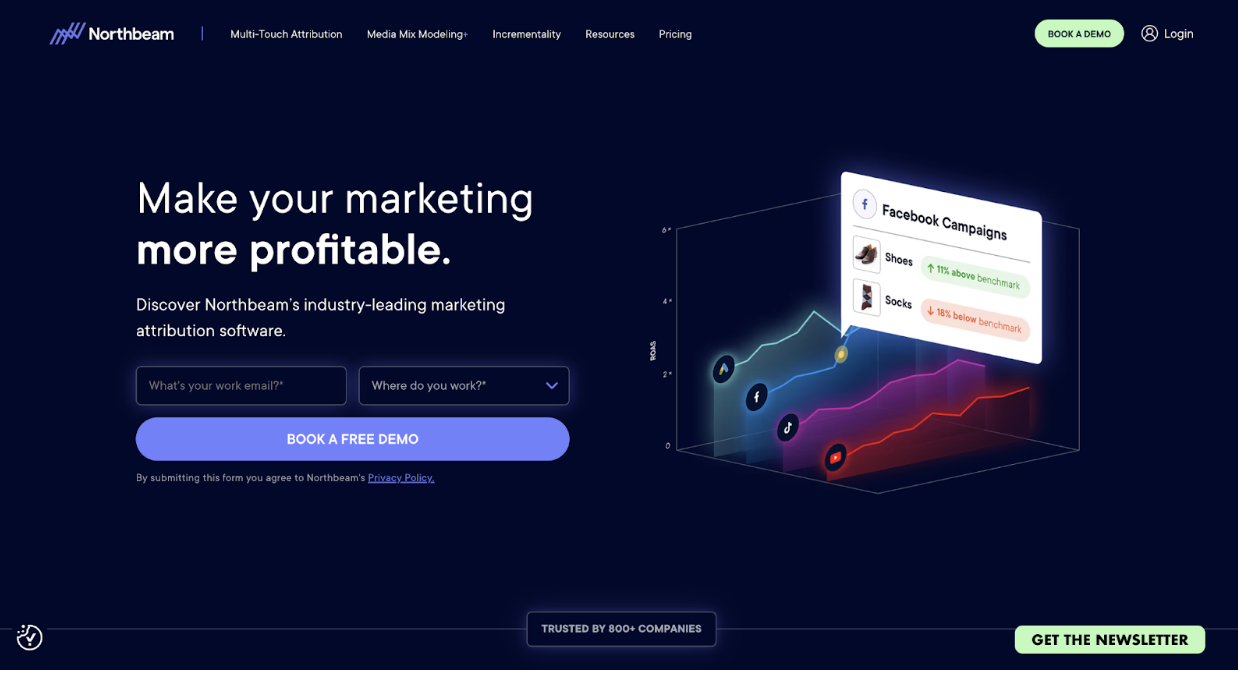
Northbeam focuses on advanced multi-touch attribution and user-journey measurement for brands operating across channels and devices. Its models aim to capture both click- and view-through conversions, helping advertisers account for ad exposures that don’t result in immediate clicks but still influence purchase decisions.
Growth teams use Northbeam to understand complex customer journeys, attribute spend more fairly across channels, and inform strategic budget allocation for long-term scaling.
Key Strengths
- Multi-touch and cross-device attribution
- AI-backed modeling and custom attribution options
- Real-time and historical performance views
- Designed for multi-channel performance measurement
Hyros
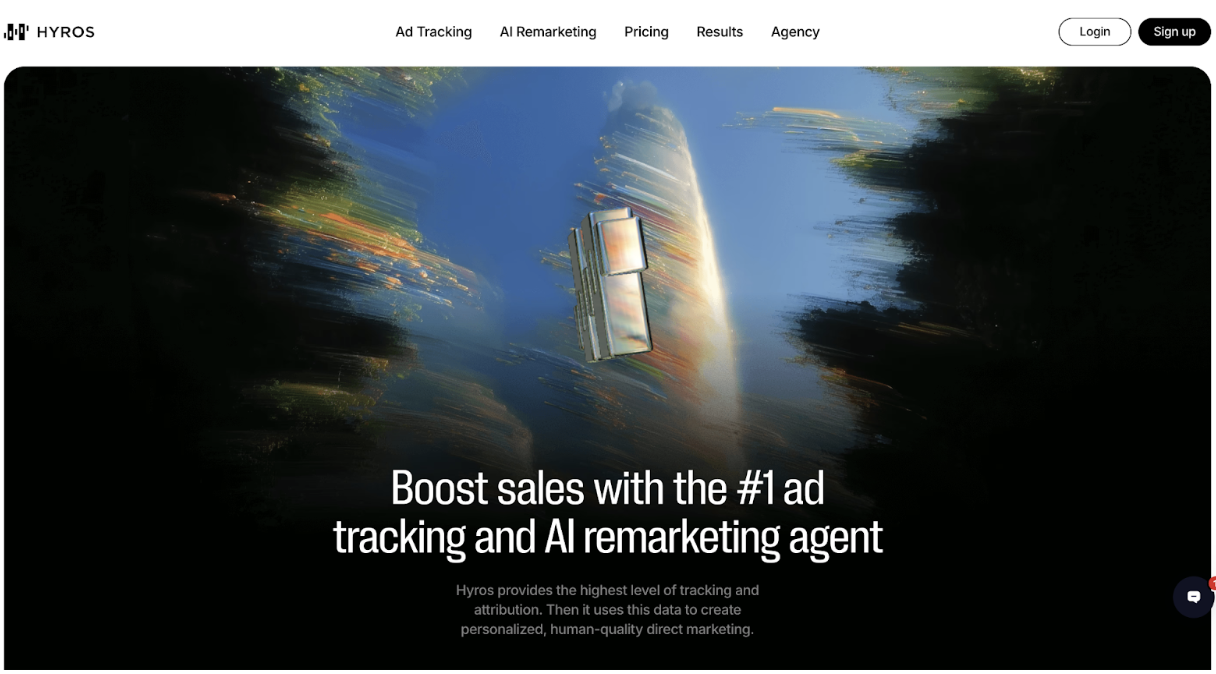
Hyros is a marketing attribution and ad tracking platform with a focus on solving full-funnel, cross-platform attribution headaches. It uses server-side and AI-enhanced methods to tie clicks, views, leads, and purchases back to their originating campaigns across Meta, Google, TikTok, email, and other touchpoints.
This platform is often selected by teams with significant ad spend or complex funnel requirements, including calls or long nurture sequences where linking activity to revenue matters for budget optimization.
Key Strengths
- AI-enhanced cross-channel attribution
- Full funnel mapping from click to purchase
- Conversion data feeding back into ad platforms
- Strong support for deep tracking and analysis
Rockerbox
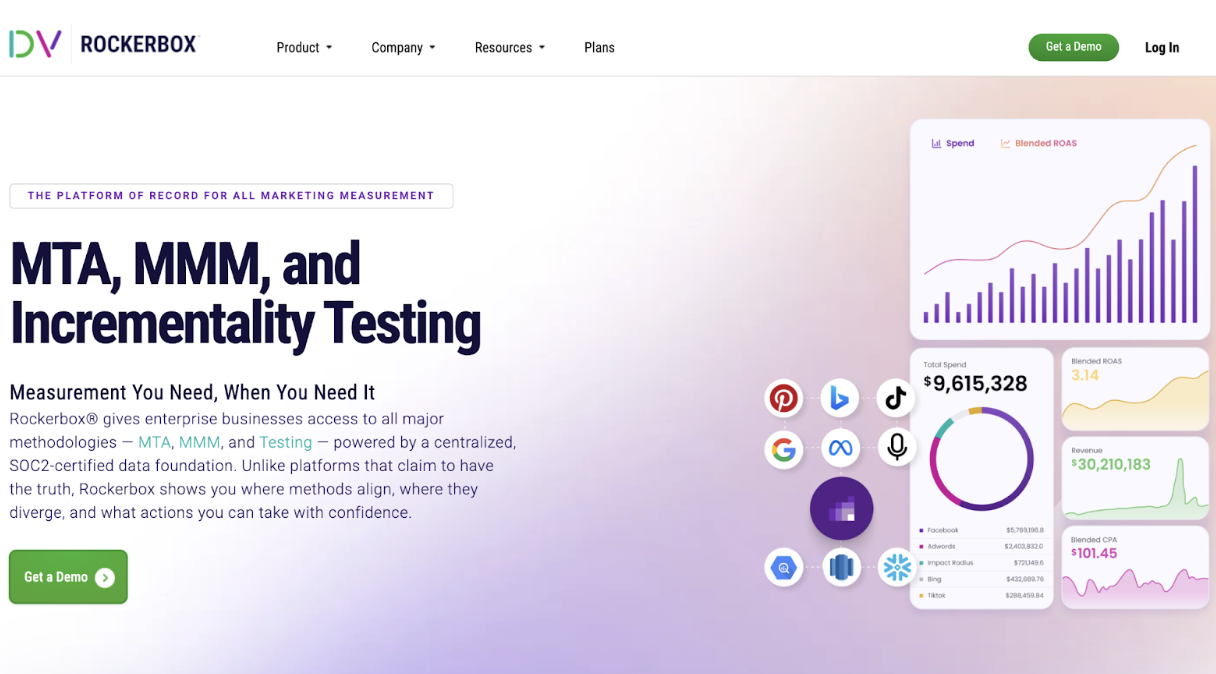
Rockerbox is a marketing measurement platform designed for technically mature brands that want flexible data ingestion and reporting. It acts as a centralized data layer where ad, e-commerce, and first-party event data are normalized and made available for sophisticated analysis.
Data teams use Rockerbox to power custom reporting, conduct media mix modeling, and build dashboards that aren’t limited by fixed templates – making it suitable for enterprise environments with complex stacks.
Key Strengths
- Flexible data pipelines and normalization
- Support for advanced models and custom views
- Strong enterprise reporting capabilities
- Works across ad platforms and owned data sources
Wicked Reports
Wicked Reports emphasizes long-term revenue attribution and customer lifetime value (LTV) measurement. It ties ad spend, email activity, and CRM data back to actual revenue and order IDs, helping e-commerce teams understand how campaigns perform over extended periods.
Marketers rely on Wicked Reports to gauge not only immediate ROAS, but also how channels contribute to repeat purchases and customer growth over time. Its cohort and segmentation tools support deeper performance analysis beyond basic conversion events.
Key Strengths
- Deep multi-touch attribution tied to revenue
- Cohort and lifetime value reporting
- Strong CRM and email integration
- Insight automation for optimization
Additional Contenders
- AnyTrack – First-party attribution and affiliate tracking platform.
- Voluum – Ad tracking with real-time automation and traffic optimization tools.
- Cometly – Real-time ad analytics and multi-touch attribution
- Elevar – Shopify-centric server-side and conversion tracking.
- SegmentStream – Enterprise server-side tracking and customer data solutions.
How to Choose the Right Advertising Management Software For Your Business?
There’s no “best” ad management tool for everyone. The right choice depends on how your team works and how complex your advertising setup really is.
Start with usability. If your team can’t understand the data or trust what they’re seeing, the tool won’t get used. From there, look at how well it fits your existing stack – ad platforms, e-commerce systems, analytics, and CRM data should connect without constant workarounds.
Scalability matters too. A tool that works for a few campaigns should still hold up when spend increases or new channels are added. And finally, pay attention to reliability and support. When performance issues cost real money, fast answers matter.
The best platform is the one that gives you clear data, fits your workflow, and lets you focus on growth instead of troubleshooting.
Conclusion
Advertising management platforms are now essential for e-commerce growth, especially as teams navigate fragmented channels and stricter privacy rules in 2026. The tools covered in this guide each solve a different part of the attribution and optimization problem.
Overall, RedTrack stands out as the best all-around option, combining first-party tracking, reliable attribution, and automation for performance-focused e-commerce teams. Triple Whale is well suited for Shopify and DTC brands that want fast, profit-focused insights. Northbeam supports complex, multi-channel growth strategies, while Hyros fits high-spend advertisers managing full-funnel campaigns. Rockerbox serves data-driven organizations needing flexibility and control, and Wicked Reports excels at long-term revenue and LTV analysis.
The right platform depends on your team’s scale, technical resources, and media mix – but choosing a tool that delivers trusted data and clear decision-making will matter more than ever.
FAQs
What is an advertising management platform?
It’s software that centralizes ad performance data, tracks conversions across channels, and attributes revenue back to campaigns.
Do these platforms replace analytics tools like Google Analytics?
They complement analytics tools by providing deeper attribution and optimization data focused on ad performance.
Why is first-party data important?
First-party data ensures more accurate measurement in a privacy-first era where third-party cookies are limited.
Which tool works best for small e-commerce brands?
Triple Whale or entry plans from platforms like RedTrack can be a good starting point for smaller teams.
Share This Article
About the Author: Alice Little































