





In This Article
70% of Baby Boomers would consider referrals when looking for their next lawyer. Among Gen Z, that figure drops to just 46%.
Referrals haven’t lost their value, but they are no longer enough to account for how prospective clients find and assess a law firm. Internet searches, law firm websites, and online reviews all play an important role, particularly among younger generations. Even when a recommendation starts the process, what someone finds when they search for the firm can influence what happens next.
Marketing options available to law firms are expanding. Search remains fundamental, but social media and video provide additional ways to reach prospective clients, and AI-assisted search is beginning to change how people find and consume information online.
With limited time and budgets, choosing where to focus matters. The most effective marketing ideas for small law firms in 2026 are those that reach the right audience, build on the firm’s existing reputation, and can be maintained consistently.
Here are seven practical strategies worth prioritizing.
#1 Build Your Marketing Around the Clients You Want
For a small law firm, reaching fewer people who are genuinely likely to need its services can be far more valuable than generating broad exposure with little relevance. The first priority is narrowing that audience.
Consider the areas of law you specialize in, the problems those services solve, and the people most likely to need them. A personal injury firm needs to reach a very different audience from a family law, employment, or commercial practice.
Existing client and inquiry data can then help turn that broad audience into something much more specific. Useful information could include:
- Location: Where do most relevant clients live or work?
- Demographics: Are there recurring age groups, occupations, or other characteristics that matter to the service?
- Legal need: What circumstances typically lead someone to contact the firm?
- Search behavior: What questions and search terms lead people to your website?
- Acquisition source: Are suitable clients finding you through Google, referrals, social media, or another channel?
- Common questions: What do prospective clients repeatedly want to know before making contact?
Website analytics, Google Search Console, intake forms, inquiry records, and referral data can all help answer these questions. Keyword research and local market data can fill gaps, especially when the firm wants to attract a particular audience and build client relationships with customers you don’t currently attract.
The result should influence where marketing resources actually go.
#2 Make Local SEO Your First Digital Priority
38% of consumers now turn to the internet first when searching for a lawyer. And when that search happens online, Google dominates: 86.7% of respondents in iLawyer Marketing’s research used the platform.
Being visible in relevant Google searches should therefore be a priority, particularly for small firms competing for clients within a defined geographic area.
Someone looking for help after an accident, for example, is more likely to search for a “personal injury lawyer in Houston” than simply a “lawyer”.
For example, Baumgartner Law Firm optimizes for the term ‘houston burn injury attorney’ in the Houston area:

Google determines local rankings primarily through relevance, distance, and prominence. You cannot control where someone searches from, but you can strengthen the signals that tell Google what your firm does, where it operates, and how established it is.
Your Google Business Profile is an obvious place to focus:
- Keep information accurate: Check your address, phone number, opening hours, and website.
- Choose relevant categories and services: Clearly identify the areas of law your firm handles.
- Build your reviews: Encourage genuine client reviews and respond appropriately where possible.
- Add photos and video: Keep the profile active with current images of the firm, team, and office.
Your website should reinforce those same signals. Rather than relying on one generic services page, create useful pages around individual practice areas and relevant locations.
Baumgartner Law Firm, for example, has dedicated pages for Houston car accidents, truck accidents, and wrongful death. Each page can target a specific search need while giving prospective clients information directly relevant to the legal help they are looking for.
Make it as clear as possible to both Google and prospective clients what you do and where you do it.
#3 Turn Real Client Questions Into Searchable Content
Some of the best content ideas for a law firm are already being discussed in client calls and consultations.
Questions that come up repeatedly can reveal exactly what prospective clients want to know before deciding whether they need legal help.
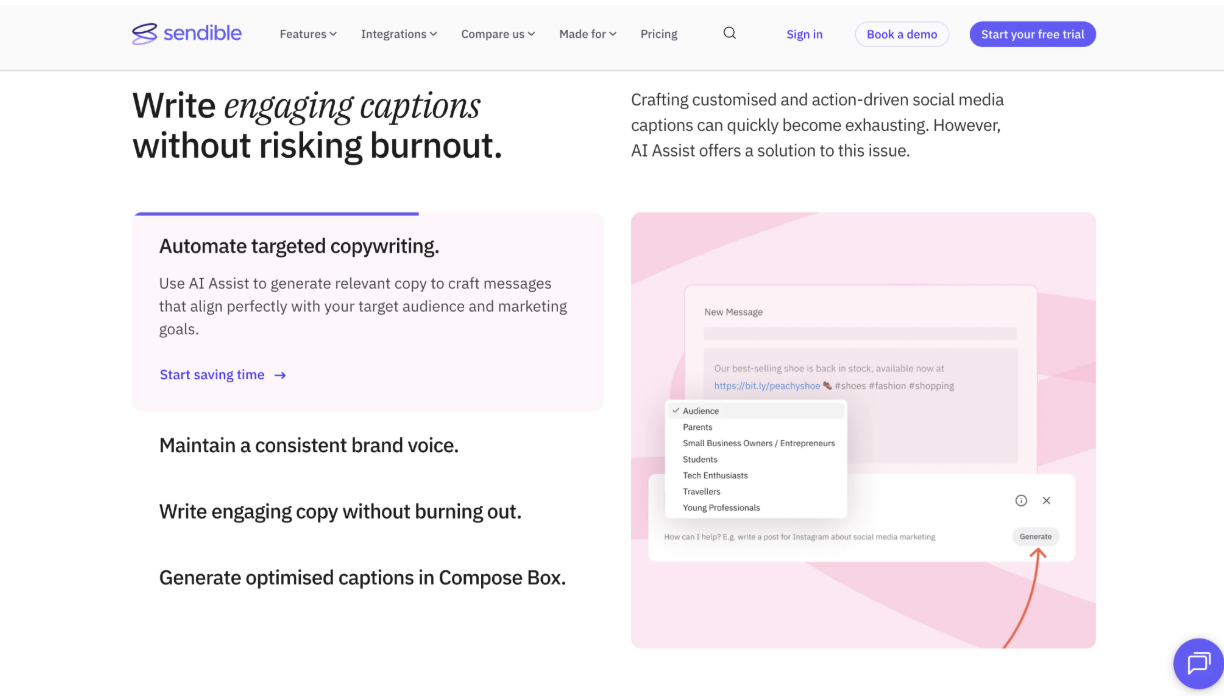
While the research and thought behind your final content should be original (and come from a human), AI can help you with ideas. For example, Sendible’s AI assist tool helps brands rephrase copy or catch spelling errors.
Keep a record of these questions and compare them with actual search behavior. Google Search Console can show queries already bringing people to your website, while keyword research tools and Google’s related searches can uncover variations and related topics people are actively looking for.
For a personal injury firm, recurring questions might include:
- What should I do immediately after a car accident?
- How long do I have to file a claim?
- What evidence should I collect?
- Can I make a claim if I was partly at fault?
- When should I contact a lawyer?
You don’t need to turn every question into an article. Look for topics that come up repeatedly and relate closely to the legal services you want to promote.
Artificial intelligence (AI) can make this particularly easy. Give it a list of anonymized client questions and ask it to identify recurring themes and suggest ways they could be grouped into useful articles or frequently asked questions (FAQs). You can then sense-check those ideas with a quick Google search. Look at what appears when you type the question, Google’s related searches, and the questions included in “People also ask”.
Several questions about evidence, insurance, fault and the first steps after a collision, for example, could form one useful guide on what to do after a car accident.
Once that guide exists, use it more. Individual answers can become FAQs, short videos, or social posts, allowing the same legal expertise to support several marketing channels.
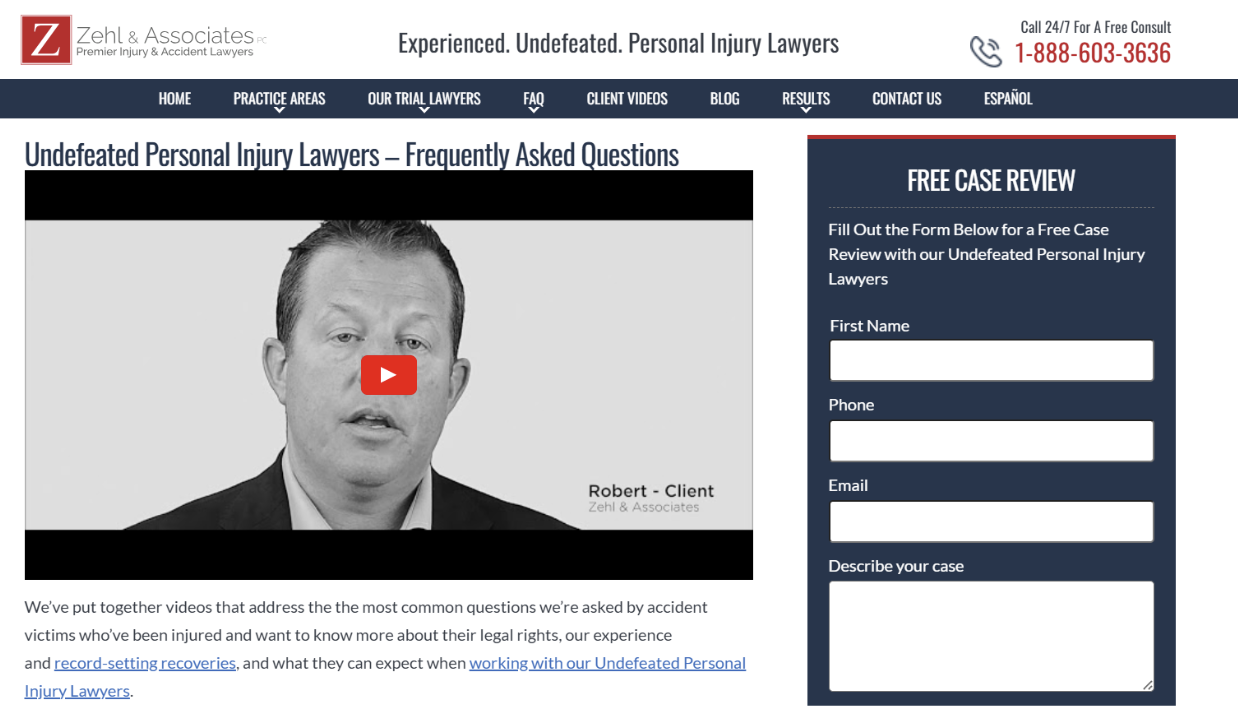
Zehl & Associates does this within their posts by including videos and text that search engines and LLMs can cite and pull, which increases the likelihood of being seen by prospects.
Source: Zehl & Associates
The important part is simple: answer the questions prospective clients are already asking rather than guessing what they might want to read about.
#4 Optimize Content for Google and AI Search
Google AI Overviews, ChatGPT, Gemini, and other AI tools can answer legal questions directly, giving law firms another type of search visibility to consider.
Fortunately, optimizing for AI search doesn’t require creating a second version of your website. Many of the same practices that make legal content useful to readers and search engines also make it easier for AI tools to understand and reference.
Take one of your existing articles or FAQs and check whether it does the following:
- Answers the question early: If the page asks “How long do I have to file a personal injury claim in Texas?”, provide a concise answer near the top before expanding on exceptions and circumstances.
- Uses descriptive headings: “Texas personal injury filing deadlines” gives both readers and search tools more context than a vague heading such as “What you need to know”.
- Shows who wrote or reviewed it: Add the lawyer’s name, relevant credentials, and a link to their profile.
- Makes jurisdiction clear: Legal answers can change by state or country. Identify where the advice applies rather than publishing a generic answer.
- Keeps information current: Display a review or update date and revisit pages when legislation, regulations, or relevant guidance changes.
- Supports claims: Link important legal statements to primary or authoritative sources where appropriate.
This doesn’t mean writing robotic content purely for AI. The objective is to make your expertise easy to identify, your answers easy to understand, and the context surrounding them difficult to misinterpret.
#5 Build a Consistent Review System
Online reviews can have a major influence on a prospective client’s decision. Around 8 in 10 people consider a lawyer’s online reviews before deciding whether to hire them.
For a small law firm, collecting those reviews shouldn’t depend on remembering to ask occasionally. Build the request into your normal client process:
- Choose the right moment: Ask after a matter has concluded or at another appropriate point when the client has expressed satisfaction with the service.
- Make leaving a review easy: Create a direct Google review link and include it in your follow-up email or text. Don’t make clients search for your profile themselves.
- Send one reminder: If the client doesn’t respond, a polite follow-up a week or two later can recover reviews that were simply forgotten.
- Monitor new reviews: Assign responsibility to one person for checking reviews and flagging anything that requires attention.
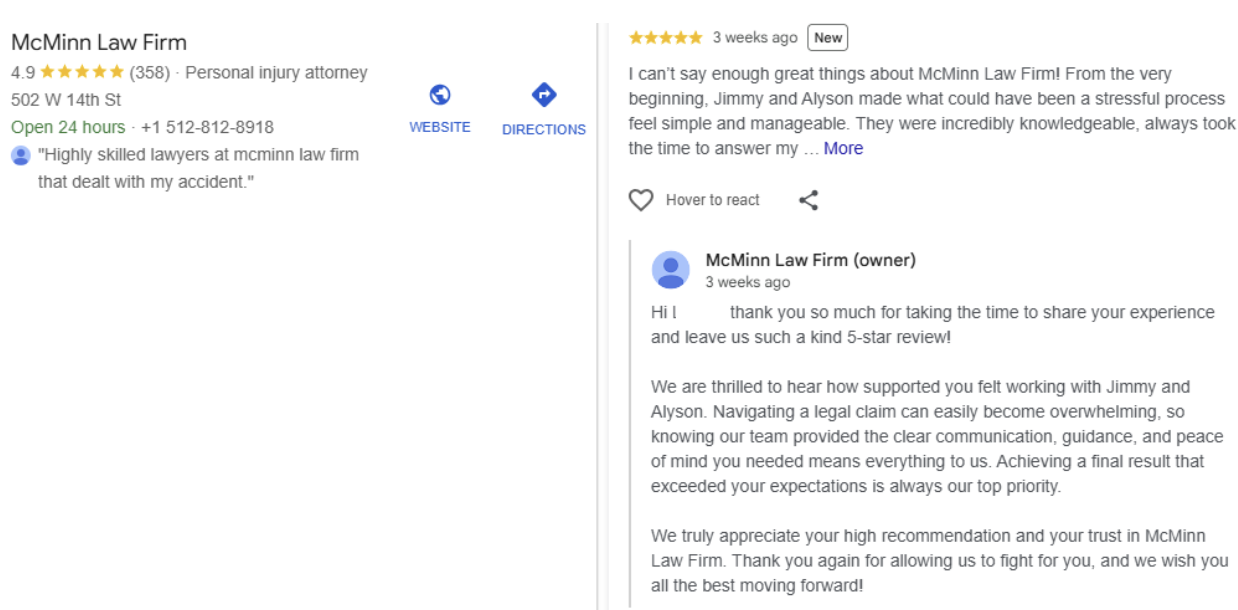
- Respond carefully: Thank reviewers where appropriate, but remember that lawyers have confidentiality obligations that other businesses don’t face.
That final point is particularly important when responding to negative feedback.
A public complaint may contain details about a case, but that doesn’t necessarily give the firm permission to discuss those details in its response. Keep replies professional and avoid revealing confidential information simply to correct the public record.
Here is an example of a law firm, McMinn Law Firm, and how they handle responses:
Source: McMinn Law Firm Google Reviews
Reviews can also highlight recurring strengths or frustrations in the client experience. Used properly, that feedback can help a firm build client relationships while strengthening the reputation prospective clients see when researching their options.
#6 Use Short-Form Video to Build Familiarity Before the Consultation
Before contacting a lawyer, prospective clients are assessing more than credentials. They want to understand their problem, see evidence of expertise, and get a sense of the person they may eventually trust with it. Video can address all three before the first consultation takes place.
The format also suits how people increasingly consume information. 63% of consumers say they would prefer to learn about a product or service through a short video, and 96% have watched an explainer video for this purpose.
The strongest starting point is expert-led video. Choose recurring questions that allow individual lawyers to demonstrate knowledge in their practice areas and record several answers in one session.
A simple format is enough:
- Open with the question: “What should you do immediately after a car accident?”
- Give the key answer quickly: Don’t spend the opening introducing the firm or asking viewers to call.
- Add the important context: Explain the considerations, exceptions, or next steps that demonstrate genuine expertise.
- End with a relevant action: Direct viewers towards a related guide, service page, or consultation where appropriate.
Publish the videos on the channels your target clients actually use, but don’t limit them to social media. Relevant videos can strengthen practice-area pages, FAQs, and articles too, allowing one recording session to support several parts of your marketing.
#7 Treat Referrals as a Marketing Channel, Not an Accident
Marketing may be changing, but referrals remain a major source of business for smaller law firms. 59% of solo and small practices identify referrals as their leading source of leads, compared with just 27% of larger firms.
Rather than waiting for referrals to arrive organically, create more opportunities for previous clients and professional contacts to recommend your firm.
A practical referral strategy could include:
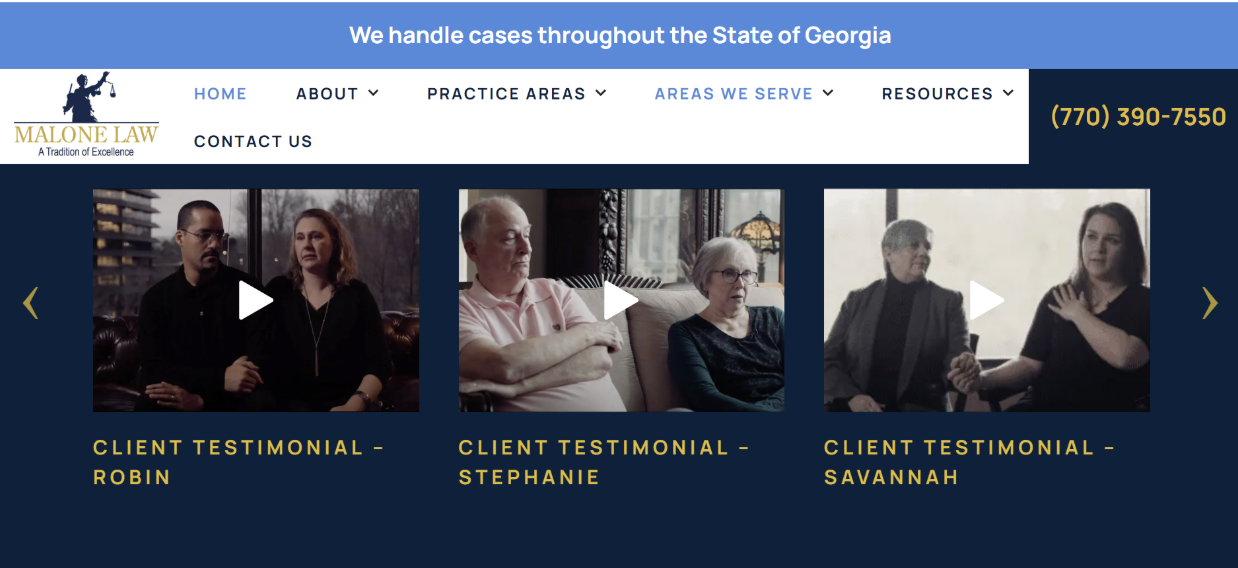
- Ask satisfied clients: When a matter concludes successfully and the client is satisfied, make a referral request part of your follow-up. A simple reminder that the firm welcomes introductions can be enough. Malone Law invests resources into video testimonials that convert on a much higher rate than ordinary text referrals.
Source: Malone Law
- Build a professional network: Develop relationships with other lawyers, accountants, financial advisers, real estate professionals and relevant local businesses. Attend industry and local business events where those relationships can develop naturally.
- Stay in touch: An occasional newsletter with useful legal updates, firm news, or practical guidance keeps the firm top of mind for previous clients without directly asking for referrals every few months.
- Explore permitted incentives: Referral fees and incentives for legal services are subject to professional conduct rules and vary by jurisdiction. Where permitted, firms can consider compliant arrangements with other lawyers or approved referral services.
Your digital presence supports these efforts too. Someone who receives a recommendation may still check your reviews, website, and lawyer profiles before getting in touch.
Conclusion: Focus Your Marketing Where It Matters
Small law firms don’t need to compete for attention everywhere. The strongest marketing strategies focus limited time and resources on making the firm easier to find, demonstrating its expertise, and building trust with the people most likely to need its services.
That means understanding your audience first, then investing consistently in the channels that can reach them. Local search, useful content, reviews, and referrals provide a strong foundation, with video and AI search creating additional opportunities to build visibility.
Creating enough high-quality content to support those channels can still be time-consuming. Kua.ai helps businesses research, create, and adapt content for search and multiple digital channels, making it easier to turn your expertise into content that works harder across your marketing.
Share This Article
About the Author: Penelope Klein































