



Keep reading
Rather we just did it for you?
Let's get your business seen.
Social media, websites, SEO and ads from a team you can actually meet.
Brand guidelines are a documented set of rules that define how a brand looks, sounds, and behaves across every channel, team, and touchpoint. They cover everything from logo usage and colour palettes to tone of voice, giving everyone who creates content on behalf of a brand a shared standard to work from. Without them, subjective decisions compound over time, eroding consistency and weakening recognition.
Table of Contents
- What exactly is included in brand guidelines?
- How do brand guidelines differ from a style guide or brand book?
- Why is consistency so important for building brand recognition?
- How do brand guidelines help your team and external partners?
- How should your brand guidelines adapt for modern digital and AI challenges?
- What should you do if you need help creating your brand guidelines?
- How can you measure if your brand guidelines are actually working?
- Key Takeaways
- References
What exactly is included in brand guidelines?
Brand guidelines cover the complete brand system, including visual identity, verbal identity, and core values and positioning. According to Bynder, they define how a brand looks, sounds, and behaves across every channel, team, and touchpoint. The visual side includes logo usage, colour palette, and typography. The verbal side covers tone of voice and messaging. Together, these elements form a central reference point for the brand.
The logo section should detail approved variations, minimum sizes, clear space rules, and explicit do’s and don’ts. Brandkit notes that the logo must remain identifiable even in black and white. Clear space rules, sometimes called exclusion zones or isolation areas, prevent other elements from crowding the logo. Examples of incorrect usage are just as important as examples of correct usage.

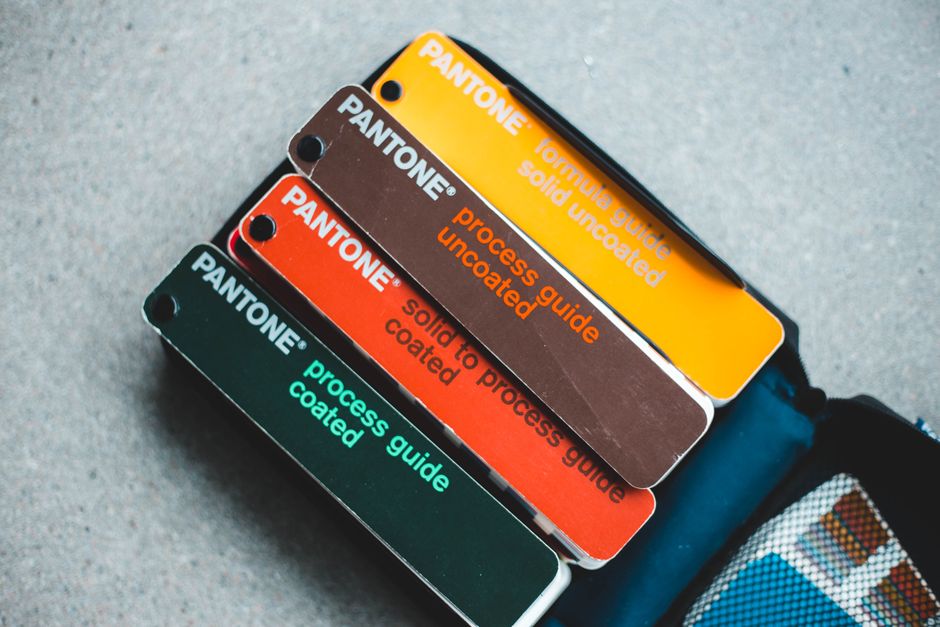
Colour guidelines should specify primary, secondary, and accent colours with codes for all standard colour spaces. According to Brandkit, this includes SPOT Pantone, CMYK, RGB, and HEX values. Having every code documented means a designer working in print and a developer working on a website both use exactly the same shade.
Typography guidelines must cover font families, weights, sizes, and hierarchy rules for headings, body copy, and captions across both digital and print. Studio Noel explains that guideline documents cover everything from logo usage and fonts to tone of voice and brand values. Defining type hierarchy keeps every document, web page, and social graphic visually consistent.
How do brand guidelines differ from a style guide or brand book?
A style guide is narrower than brand guidelines, focusing specifically on written language. According to Bynder, a style guide covers grammar conventions, punctuation preferences, terminology choices, and editorial formatting. It answers questions like whether to use serial commas or how to capitalise product names. It does not address visual identity.
Brand guidelines are comprehensive, covering the entire brand system from visual identity to governance protocols. Bynder describes them as covering visual identity, verbal identity, values, positioning, usage rules across contexts, and governance protocols. A style guide can sit inside brand guidelines as one component, but brand guidelines always contain much more.

The term brand manual or brand book is an older phrase for what is now commonly called brand guidelines. Adobe confirms that brand guidelines are often called a style guide or brand manual. The terminology has shifted over time, but the core purpose remains the same: keeping a brand consistent.
A design system is a separate, living toolkit for product and engineering teams. Bynder explains that a design system contains code components, interaction patterns, accessibility standards, and design tokens. It is distinct from brand guidelines, though the two often work alongside each other in larger organisations.
Why is consistency so important for building brand recognition?
Without brand guidelines, teams make subjective decisions that compound over time, eroding consistency and weakening recognition. Bynder states that this erosion reduces commercial value. When different people make different choices about fonts, colours, and tone, the brand starts to feel fragmented and less professional.
Research from Reboot, published in 2023 and cited by Bynder, found that using a signature colour consistently can increase brand recognition by up to 80%. That is a significant lift from a single element. When colour, typography, and tone all work together consistently, the effect compounds further.
A brand that always looks and feels the same wherever a customer sees it is deemed more honest, ethical, and trustworthy. Studio Noel explains that a brand perceived this way stands a better chance of earning customer loyalty and buy-in. Consistency signals reliability, and reliability builds trust.
Consistent brand guides ensure communications feel unified and professional, maintaining the quality of outputs across every touchpoint. Studio Noel notes that this is vital when building trust, brand recognition, and customer loyalty. Every email, social post, brochure, and web page should feel like it comes from the same organisation.
How do brand guidelines help your team and external partners?
Brand guidelines act as a central reference point, giving everyone who creates content on behalf of the brand a shared standard to work from. Bynder explains that they cover everything from logo usage to tone of voice, so no one has to guess. This reduces back-and-forth questions and speeds up production.
They can be used internally and in collaboration with partners, such as agencies or freelancers, to ensure the brand is represented consistently and correctly. Studio Noel confirms that guidelines can be used internally and with partners to keep representation consistent across the board. When an external agency has clear rules, they can produce on-brand work faster.
Guidelines simplify the design process for UX and UI designers by providing clear directives on the aesthetic and functional aspects of brand elements. According to the Interaction Design Foundation, designers use brand guidelines to ensure consistency in colours, typography, logos, and imagery. Clear directives mean fewer revisions and fewer missteps.
Keeping guidelines simple is crucial. Brandkit warns that guidelines which are too hard to action or too complex to understand will not be used, or will be used with too many compromises. A practical, easy-to-navigate document is far more valuable than an exhaustive but impenetrable one.
How should your brand guidelines adapt for modern digital and AI challenges?
Modern brand guidelines must now include specific rules for AI-generated content to ensure outputs stay accurate, on-brand, and compliant. Bynder lists AI guidelines as a core element of contemporary brand guidelines. As more teams use AI tools to draft copy or generate images, those outputs need the same governance as human-created work.
Brands are not immune to change, and guidelines must adapt to new mediums, technologies, and societal changes to remain relevant. Brandkit makes this point clearly. A guideline document written five years ago may not account for short-form video, AI imagery, or new social platforms.
It is becoming common practice to specify which font to use in a website’s CSS for specific HTML elements like h1 versus p. Brandkit notes this bridges the gap between design and development. When websites are built with the brand’s typography rules baked in, consistency becomes automatic.
Some organisations are moving away from static PDFs, atomising guidelines into searchable databases or dedicated websites to ensure teams always work from the latest approved version. Bynder describes dynamic guidelines updated in real time as a modern best practice. A living document prevents outdated versions from circulating.
What should you do if you need help creating your brand guidelines?
Creating a full set of brand guidelines can feel overwhelming, but you do not have to tackle it alone. A professional team can handle the heavy lifting, from defining your visual identity to documenting tone of voice. Bynder notes that guidelines have traditionally been designed by agencies, often at great expense, though digital distribution has made them more accessible.
Delivered Social offers a range of services that can help you define and implement your brand, including creative content production like video and photography, as well as website design and development. A professional team can also support your long-term marketing efforts, ensuring your brand stays consistent across social media management and paid advertising. Working with one team across these areas helps keep every output aligned with your guidelines.
How can you measure if your brand guidelines are actually working?
You can track brand recognition through customer surveys and brand recall tests. While the research sources do not provide specific metrics, Bynder links consistency directly to recognition and commercial value. Asking customers what they remember about your brand can reveal whether your visual identity is sticking.
Monitor the consistency of your marketing outputs by conducting regular audits of your channels, social media, and website against the guidelines. Studio Noel emphasises that guidelines maintain a consistent brand image, which is vital for trust. An audit shows where teams are following the rules and where drift is happening.
Reviewing engagement and trust signals, such as repeat business and customer loyalty, can indicate whether your consistent branding is resonating with your audience. Studio Noel connects consistent presentation to customer loyalty and buy-in. Guidelines should be reviewed and updated regularly to ensure they remain effective as your business and the market evolve.
Key Takeaways
- Brand guidelines are a documented set of rules defining how a brand looks, sounds, and behaves across every touchpoint.
- A style guide is narrower than brand guidelines, focusing only on written language conventions.
- Using a signature colour consistently can increase brand recognition by up to 80%, according to Reboot research.
- Logo guidelines should specify minimum sizes, clear space, and include examples of incorrect usage.
- Modern brand guidelines must include rules for AI-generated content to ensure outputs stay on-brand.
- Brand guidelines act as a central reference point for both internal teams and external partners.
- Guidelines must be kept simple to ensure they are actually used by the people who need them.
References
- Brand guidelines: What they are, how to create them & examples – Bynder, July 2026
- Why you need brand guidelines: A complete guide for 2026 – Adobe, December 2026
- What to Include in Brand Guidelines: 5 Essential Rules – Brandkit, January 2025
- What are Brand Guidelines? – Interaction Design Foundation
- The six elements which all brand guidelines should have – Studio Noel
































