


In This Article
Five years ago, a small business without an in-house designer had exactly two options for social media graphics: pay a freelancer for every single post, or make do with a stock photo and a Canva template that a dozen competitors were probably already using at the exact same time. An AI Image Generator is the advanced third option inside Higgsfield, one of the platforms small businesses have started turning to for it.
That third option matters because visual content has become the deciding factor in whether a small business’s social media presence actually looks credible, and credibility has always been the hardest thing for a small operation to fake convincingly, no matter how good the underlying product or service actually is, or how much genuine care goes into running the business day to day.
Why Has Visual Content Become Non-Negotiable for Small Business Social Media?
A scrolling audience decides whether to stop on a post within a fraction of a second, and that decision is made almost entirely on the image before a single word of caption gets read. A small business competing for that same fraction of a second against much larger brands with dedicated design teams has always been at a structural disadvantage, regardless of how much better their actual product or service might be, or how genuinely competitive their pricing already is.
Social media management alone can consume eight to twelve hours a week for a small business owner trying to handle it themselves, and a meaningful share of that time goes into producing or sourcing visuals rather than actually engaging with an audience or planning strategy for what comes next. That time cost compounds every single week a business needs to keep posting consistently, and it’s often the first thing that gets neglected when a business owner gets genuinely busy running the rest of the operation.
What Has Kept Professional Visual Content Out of Reach for Small Businesses?
Commissioning a freelance designer for every social post has never been financially realistic for a business posting several times a week. Stock photography solves the cost problem but creates a different one entirely, the same handful of popular stock images turning up across dozens of unrelated businesses, undermining exactly the sense of a distinct, trustworthy brand a small business is trying to build in the first place, particularly when a customer notices the exact same photo on a competitor’s page.
Learning proper design software has always been the third option, and it’s rarely a realistic one either. Most small business owners are already handling operations, sales, and customer service themselves, and becoming a competent graphic designer on top of everything else was never a reasonable expectation, no matter how many tutorials promise it’s easier than it looks or how many templates claim to remove the guesswork.
How Are AI Image Generators Actually Changing This?
AI image generation addresses this gap by letting a business owner describe what they need, a product shot, a seasonal promotion graphic, a quote card, and generate something that looks professionally produced without design training or a freelancer’s invoice. What used to require either a real budget or real design skill increasingly requires neither, just a clear enough idea of what the post should communicate.
This matters most for the kind of ongoing content need that social media genuinely demands but small businesses have rarely had the resources to keep up with properly, fresh visuals for every promotion, seasonal campaigns, and platform-specific formats, all produced at a pace that actually matches how often a business needs to post rather than how often it can afford to, without sacrificing quality just to keep up with the schedule.
How Does Higgsfield Fit Into a Small Business’s Social Media Workflow?
Rather than functioning as a single-purpose graphics tool, Higgsfield operates as a broader AI creative suite, bringing image generation together with editing, video, and upscaling inside one platform. For a small business, that breadth matters because social content rarely stops at a static image, a campaign might also need a short video clip or a product demonstration, all producible from the same Higgsfield workspace rather than several separate subscriptions each with its own learning curve.
Higgsfield gives users access to 15 or more leading image models, including Nano Banana Pro, GPT Image, Seedream, and FLUX, in one place, letting a business compare which model handles a specific product or industry, food, fashion, professional services, most convincingly before settling on a final direction. Getting content made is only half the job, though, as our own piece on unexpected places to market your blog covers, since even the best visual still needs to actually reach an audience once it’s produced, and that distribution challenge doesn’t disappear just because the content itself got easier to make.
What Capabilities Matter Most for Small Business Social Content?
A handful of specific features determine whether an AI image generator actually holds up for the demands of running a small business’s social presence.
Generating On-Brand Visuals From a Simple Description
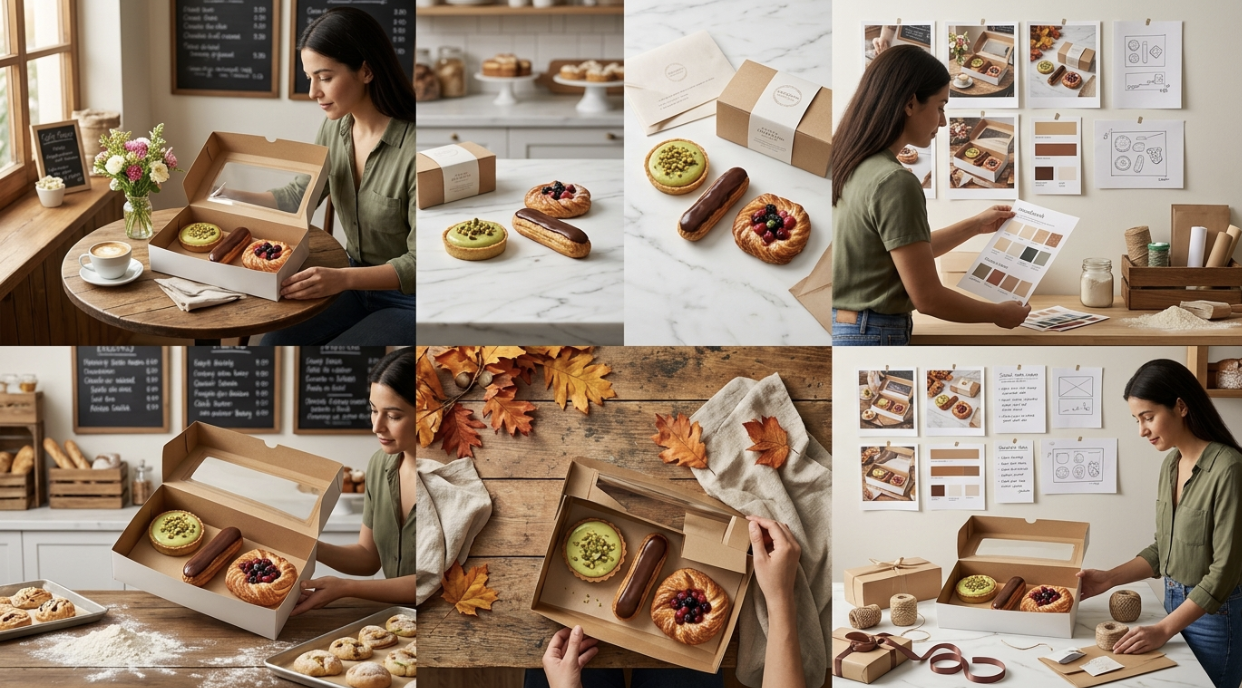
Higgsfield lets a business owner describe a scene, a product, or a promotion in plain language and generate a finished visual without needing to operate design software or brief a freelancer. That matters directly for a business owner who knows exactly what they want a post to communicate but has never had a practical way to actually produce it themselves, beyond a rough sketch or a mental picture nobody else could see.
Producing Enough Variety to Actually Post Consistently
A social media presence that looks credible needs regular, varied content rather than the same handful of images recycled every week. Higgsfield lets a business generate multiple variations from the same underlying idea, testing different styles or angles, which makes it realistic to keep a posting schedule fresh rather than running out of usable visuals within the first month and falling back on the same three photos on repeat.
Keeping a Recognisable Brand Look Across Every Platform
Higgsfield supports consistent styling and direct brand colour input across generations, letting a small business maintain a recognisable visual identity across Instagram, Facebook, and LinkedIn rather than each platform looking like it belongs to a different company. That consistency is exactly the kind of polish that has traditionally been reserved for businesses with an actual brand guidelines document and a designer to enforce it, rather than something a solo business owner could realistically maintain on their own.
Does AI-Generated Content Actually Look Professional Enough to Post?
This is a fair question to ask directly, since posting something that looks obviously artificial can do more damage to a small business’s credibility than posting nothing at all. Quality across AI image tools varies considerably, and it’s a legitimate concern for any business owner considering the switch, especially one whose entire reputation rests on being seen as trustworthy and genuine by a local or niche audience.
The businesses getting genuinely usable results tend to treat the generated visual as a strong starting point rather than a finished product they publish without a second look, checking that branding, proportions, and any text in the image actually read correctly before it goes live. Higgsfield’s access to multiple leading models in one workspace helps here specifically, since a result that looks slightly off from one model often looks convincingly right from another, without needing to start the whole process over from scratch or abandon the idea entirely.
How Does This Compare to Hiring a Designer or Buying Stock Photos?
The practical gap between traditional options and AI-generated visuals becomes clear once cost, speed, and originality all enter the picture together, a gap platforms like Higgsfield are specifically positioned to close for businesses without a design budget.
| Factor | Freelance Designer | Stock Photography | AI Image Generation with Higgsfield | Cost per visual | Design fees per project or per post | Subscription or per-image licence cost | A fraction of that cost within a subscription plan | | Turnaround | Days, depending on designer availability | Instant, but limited to existing images | Minutes per generated visual | | Originality | Fully original, but expensive to sustain | Shared across many other businesses | Generated fresh, tailored to your specific brief | | Best suited for | Flagship campaigns, brand assets | Occasional, low-stakes content gaps | Everyday, ongoing social content |
That comparison doesn’t remove the value of a professional designer for a business’s most important brand assets, a logo, a proper style guide, flagship campaign work still benefits from real design expertise and a trained eye that no automated tool fully replicates. What changes is how much of the everyday, week-to-week social content a small business needs to keep a presence looking active and credible, which no longer needs to depend on either a freelancer’s schedule or a stock library everyone else in the same industry is also drawing from.
Which Small Businesses Stand to Benefit Most?
Small businesses without any in-house design capability are the most obvious beneficiaries, since AI image generation removes the single biggest barrier standing between a business owner’s idea and a finished, publishable visual. Service-based businesses without physical products to photograph, consultants, tradespeople, local professionals, benefit particularly, since they’ve traditionally had the hardest time producing genuinely interesting visual content at all, given there’s often no product to point a camera at and no obvious subject beyond a headshot or a logo.
Businesses managing multiple social platforms simultaneously also gain real value, using a single Higgsfield workspace to produce consistent content across Instagram, Facebook, and LinkedIn rather than managing separate content pipelines for each platform’s specific format requirements. Seasonal and promotion-heavy businesses, retail, hospitality, events, benefit from being able to generate fresh campaign visuals quickly enough to actually match how often their offers and promotions change, rather than reusing the same seasonal graphic year after year simply because there was never time to make a new one.
How Can a Small Business Get Started?
Higgsfield is free to start with, offering daily generation credits that let a business test the platform on a single upcoming post before committing further. A practical starting point is picking one piece of content already planned for the week, a promotion, a product spotlight, a seasonal message, and generating a version to compare directly against whatever the business would normally have used instead, giving a direct, measurable sense of whether the switch is worth pursuing further.
Businesses managing an ongoing content calendar benefit from testing across a few different post types before deciding how broadly to build AI image generation into a regular workflow, since results can vary depending on the industry and how specific the brief given to the tool actually is. A retail business with physical products to describe may get more immediately usable results than a purely abstract service business, which is exactly why testing across a representative sample of upcoming content matters before committing to the approach across an entire posting schedule.
What Does This Mean for Small Business Marketing Going Forward?
As visual content continues to matter as much to social media performance as the offer or message behind it, the gap between what a well-resourced brand and a small independent business can produce is likely to keep narrowing. That shift doesn’t eliminate the value of professional design work for a business’s most important brand moments, but it does mean the everyday work of keeping a social presence looking active and credible no longer needs to be gated by a design budget most small businesses were never going to have.
For small business owners already stretched across every part of running their business, that shift matters in a very practical way, it closes the gap between having a good product or service and actually looking as credible online as the story deserves. Platforms structured around that shift, Higgsfield among them, are becoming part of how that credibility gap gets closed for businesses that never had a marketing department to close it for them.
Share This Article
About the Author: Penelope Klein































