




Keep reading
Rather we just did it for you?
Let's get your business seen.
Social media, websites, SEO and ads from a team you can actually meet.
An enterprise PPC program can look healthy on paper. Spend holds, impressions climb, leads arrive. Then a quarterly review lands and familiar issues return: attribution gaps, uneven performance across regions, slow creative approvals, and questions without clear answers.
At enterprise scale, PPC management becomes an operating discipline. The right partner keeps measurement credible, protects efficiency as budgets grow, and coordinates creative and landing page work without slowing delivery.
Below, we profile ten PPC management companies for enterprise brands in 2026. Each profile covers best fit, strengths tied to enterprise outcomes, honest limitations, and capabilities across measurement, creative, CRO, global scale, and compliance.
NEWMEDIA.COM
NEWMEDIA.COM is an enterprise-ready PPC management partner focused on predictable, scalable revenue growth. The agency combines advanced paid media strategy with its RankOS™ operating system, ensuring paid search campaigns align with organic visibility, brand authority, and long-term acquisition efficiency.
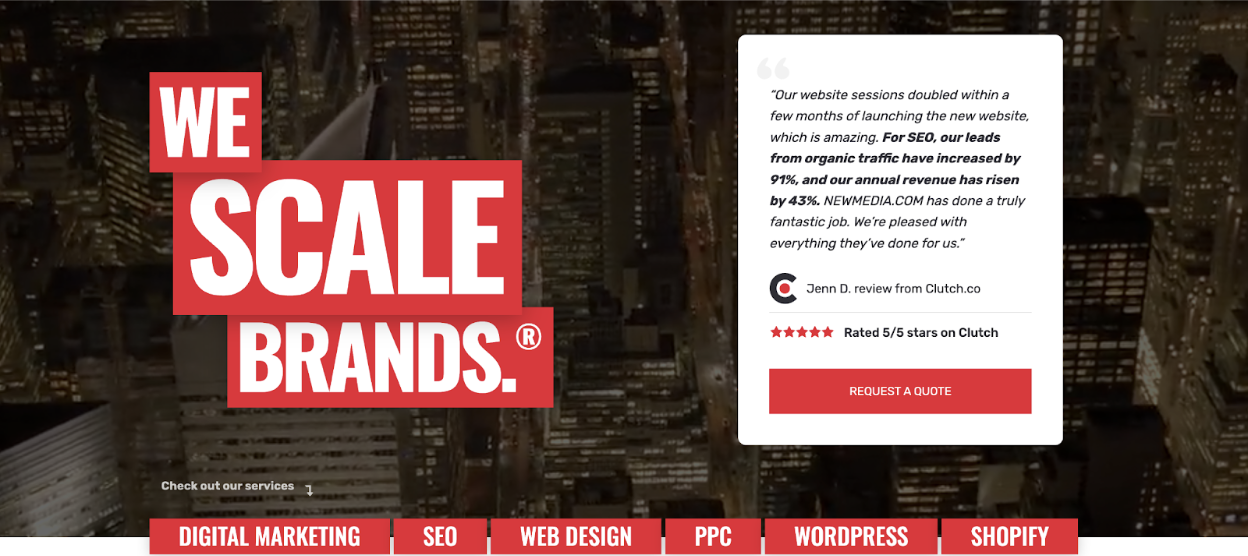
Best For: Enterprise brands managing significant ad budgets that require disciplined governance, performance forecasting, and cross-channel integration.
Where they add the most value: The firm shines in building performance ecosystems by optimizing campaign structure, landing page conversion architecture, and attribution modeling to reduce wasted spend and improve ROAS over time.
How they prove impact: NEWMEDIA.COM emphasizes revenue-centric KPIs, structured testing frameworks, and transparent ROI reporting that connects ad spend directly to sales growth and cost-efficiency improvements.
Tinuiti
Tinuiti is a strong fit when enterprise PPC needs measurement that leadership can trust, not just campaign management that looks good inside platform dashboards.
Their approach leans toward full funnel performance and analytics discipline, with a clear focus on incrementality and media mix decisions.
Best for: Enterprise brands running large budgets across search, social, and commerce media that need defensible reporting and coordinated execution across channels.
Core strengths:
- Measurement built for enterprise decisions: They emphasize incrementality testing and faster MMM insights to guide budget allocation and prove impact beyond last click.
- Cross-channel media coverage: Search, social, and commerce teams run under one operating model, which helps when performance depends on coordinated spend across platforms.
- Analytics operations at scale: Their reporting approach unifies many data sources into a consistent output that works for stakeholder reviews.
Where it’s not ideal: If the goal is a narrow PPC only engagement with minimal process, or a boutique senior partner, Tinuiti can feel heavier than necessary.
Proof style: They tend to publish platform and methodology proof, including their measurement products and experimentation approach, supported by case studies and operational scale examples.
KlientBoost
KlientBoost is a strong fit when enterprise PPC needs direct response discipline paired with CRO, so performance gains come from ads plus landing pages.
Their approach leans toward fast testing and CRO paired with paid media, so performance gains come from ads, landing pages, and message match working together.
Best for: Enterprise teams that want PPC tied closely to conversion outcomes, especially in SaaS and lead gen programs where lead quality matters as much as volume.
Core strengths:
- PPC plus CRO execution: They pair paid management with conversion optimization, so the program improves beyond bids and targeting.
- Landing page and testing focus: Strong emphasis on structured experiments across landing pages, forms, and offers to lift conversion rate and pipeline quality.
- Proof-driven delivery: They publish a high volume of paid media and CRO case studies, which helps teams that want public examples of outcomes and processes.
Where it’s not ideal: If the program runs under strict compliance and slow creative approvals, the testing cadence can be harder to maintain.
Teams looking for an ultra-technical measurement partner for MMM and advanced attribution architecture may prefer a more analytics shop.
Proof style: They lean on case study libraries, test write-ups, and performance narratives tied to lead and revenue outcomes, supported by third-party reviews rather than vague positioning.
Disruptive Advertising
Disruptive Advertising is a strong fit when enterprise PPC needs spend discipline, plus conversion work that improves results after the click.

Their approach leans performance first, with paid media, CRO, and analytics working together so reporting and optimization stay tied to business outcomes.
Best for: Enterprise teams that want PPC management connected to lead quality, conversion rate, and efficiency, not only volume.
Core strengths:
- Efficient account management: Emphasis on reducing wasted spend and restructuring campaigns around profitable outcomes.
- CRO-paired with paid media: Ongoing conversion work, testing, and landing page improvement to lift performance beyond bids and targeting.
- Analytics support built in: Strong focus on measurement and reporting that helps leadership interpret impact with more confidence.
Where it’s not ideal: Brands that need global, multilingual execution across many regions with in-market teams, or organizations with slow legal review cycles that limit testing speed.
Proof style: They lean on case studies and performance narratives tied to ROI and efficiency, supported by third-party reviews rather than vague claims.
HawkSEM
HawkSEM is a strong fit when enterprise PPC needs paid search performance paired with CRO and revenue measurement, so optimizations track back to business outcomes.
Their approach leans toward tight account management plus their ConversionIQ measurement system, with conversion rate work built into the paid media program.
Best for: Enterprise teams running high-intent search and performance programs that need stronger attribution clarity, landing page testing, and consistent optimization cadence.
Core strengths:
- Revenue measurement: ConversionIQ is positioned to connect campaign performance to higher quality conversions and revenue signals, not just form fills.
- CRO paired with PPC: Landing page improvements and structured testing are integrated into the paid search workflow, not treated as a separate project.
- Experienced operators: Emphasis on senior-level execution and repeatable processes, useful for complex accounts that need stability.
- Search-first performance discipline: Strong focus on Google Ads execution, query control, and efficiency levers that matter most in high-intent spend.
Where it’s not ideal: Global enterprises that require deep regional coverage across many languages and time zones, or brands that need a large creative production studio running high-volume ad creative at all times.
Proof style: They lean on quantified case studies and third-party reviews that highlight pipeline impact, efficiency gains, and conversion improvements.
Brainlabs
Brainlabs is a strong fit when enterprise PPC needs scientific testing discipline, proprietary tooling, and measurement that can guide budget decisions across channels.
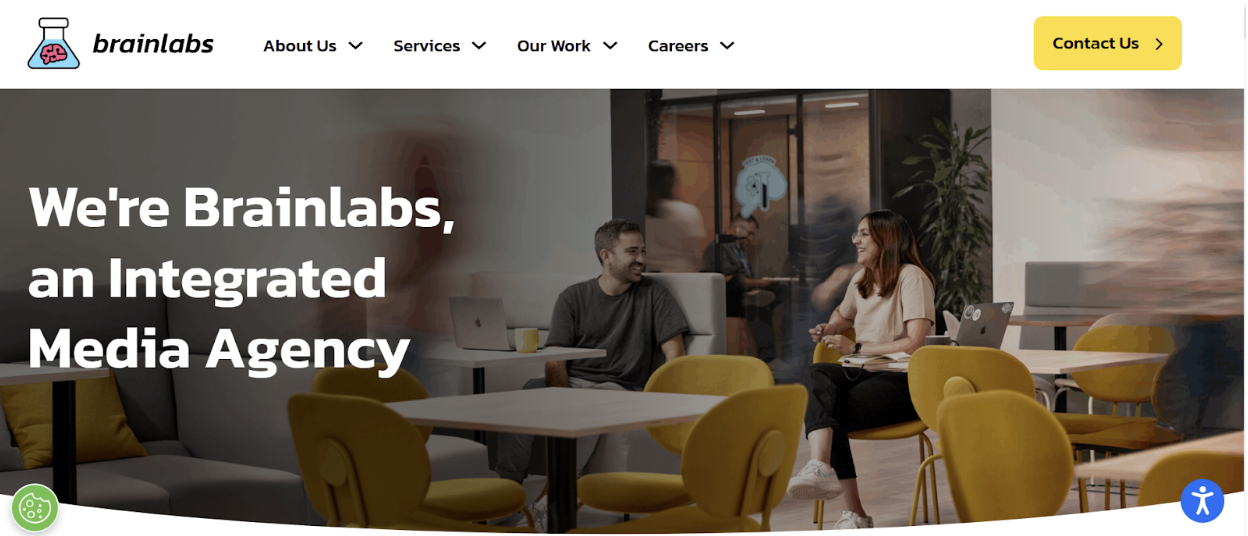
Their approach leans data-led and experimentation first, supported by internal products and a platform layer built for ongoing optimization at scale.
Best for: Enterprise brands running complex paid programs across search, social, and commerce, with a need for defensible measurement and coordinated execution across teams.
Core strengths:
- Experimentation culture in paid search: a clear test and learn operating model paired with advanced optimization and audience insights.
- Proprietary tooling for decisions: Cortex AI plus products for geo testing and budget allocation, built for incrementality and spend efficiency.
- Cross-channel execution: paid search, paid social, programmatic, CRO, and Google Marketing Platform support under one integrated approach.
- Commerce and marketplace depth: expanded Amazon specialization through acquisition, useful for enterprise retailers and brands with heavy shopping demand.
Where it’s not ideal: Teams looking for a narrow PPC only engagement with minimal testing overhead, or organizations that prefer a small boutique model with a lighter operating layer.
Proof style: They lean on quantified claims from service pages, platform partner spotlights, and case studies that emphasize measurable performance gains and testing outcomes.
iProspect
iProspect is a strong fit when enterprise PPC needs global scale, disciplined performance media execution, and a partner that can coordinate paid search inside a broader media and data program.

Their approach leans integrated, combining culture, content, data, and technology to run performance marketing across complex organizations and multimarket teams.
Best for: Enterprise brands managing multiregion paid programs that need consistent execution, stakeholder reporting, and coordinated channel strategy across search and adjacent performance media.
Core strengths:
- Global scale inside Dentsu: Access to a network of more than 8,000 media and performance specialists across 93 markets, useful for enterprise rollouts across regions.
- Performance marketing as a unified program: PPC, analytics, and related capabilities designed to work together, reducing siloed channel planning in enterprise orgs.
- Local nuance with coordinated delivery: Global team model built to support domestic and international growth with shared infrastructure and collaboration at pace.
Where it’s not ideal: Teams looking for a narrow PPC only engagement with minimal stakeholder coordination, or brands that prefer a small boutique partner with a lighter operating model.
Proof style: They lean on service methodology, global network credibility, and case study work examples across performance marketing, supported by published thought leadership
Seer Interactive
Seer Interactive is a great fit when enterprise PPC needs heavy analytics discipline, clean measurement, and a partner that can connect paid media, CRO, and reporting into one operating system.
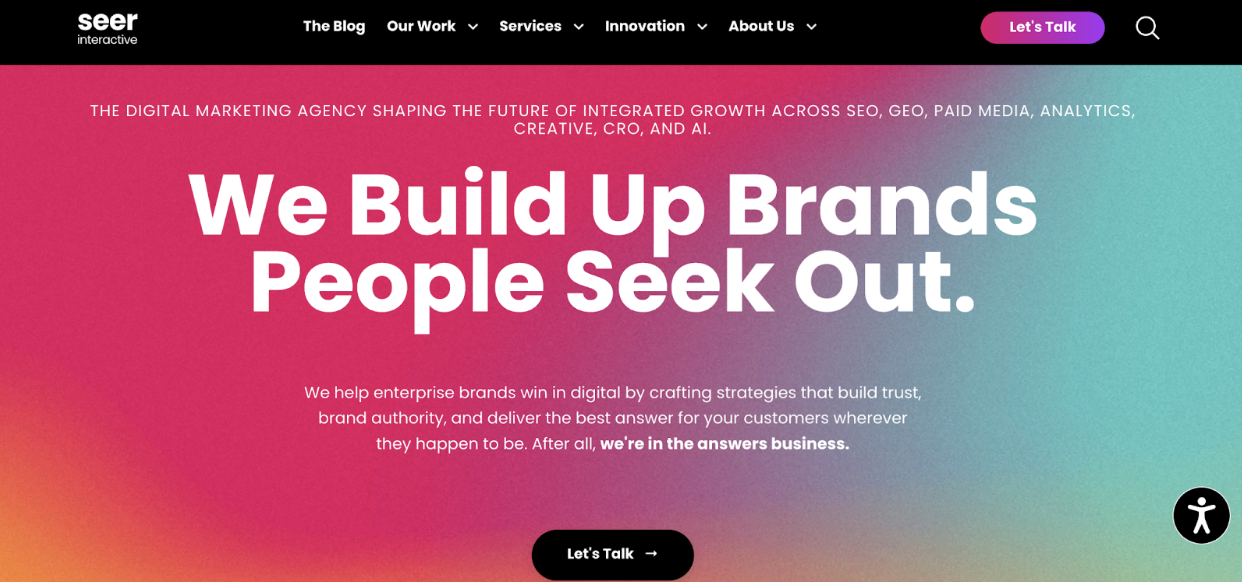
Their approach leans integrated across search, social, and other paid channels, with a clear emphasis on experimentation, multichannel reporting, and conversion tracking beyond platform pixels.
Best for: Enterprise teams that want PPC tied to measurable business outcomes, supported by analytics, CRO, and stakeholder reporting.
Core strengths:
- Measurement and conversion accuracy: Offline conversion tracking, automated alerts, and analytics optimization are built into paid media delivery.
- Testing plus CRO support: A structured conversion rate optimization practice designed around research, prioritization, and A/B testing.
- Cross-channel execution: Paid media coverage across search and social with an integrated planning and reporting model for enterprise programs.
Where it’s not ideal: Programs that need a lightweight PPC only vendor, or teams that cannot support deeper measurement work with data access and implementation resources.
Proof style: They publish quantified case studies, including paid media lifts like conversions up 171% month over month and applications up 67%, plus research studies that break down impacts across paid and organic visibility.
RSO Consulting
RSO Consulting fits enterprise PPC programs that need disciplined paid search management backed by serious analytics and reporting.
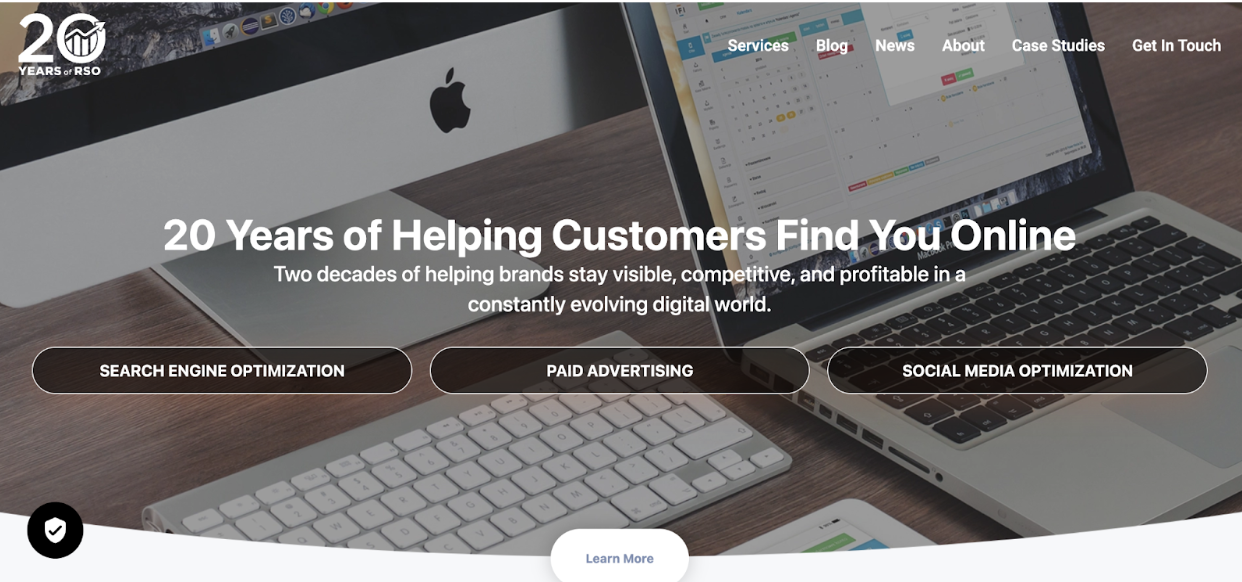
Their approach is data-driven, with PPC management that encompasses platforms such as Google and LinkedIn, and a focus on aligning campaigns, landing pages, and ongoing optimization with business goals.
Best for: Enterprise and high-growth teams that want paid search tied to lead quality and pipeline, with reporting that holds up in stakeholder reviews.
Core strengths:
- Performance-focused paid search execution: A structured process that reviews goals, audits existing campaigns and landing pages, then iterates through ongoing optimization and expansion.
- Efficiency plus pipeline impact: Case study proof includes leads up 120% with costs down 25%, plus cost per lead down 65% and pipeline up 131%.
- Partner credentials: Listed as a 2025 Google Premier Partner.
Where it’s not ideal: Brands that need a large creative production studio as the core deliverable, or enterprises that require deep regional coverage across many languages and time zones.
Proof style: Metric-based case studies paired with third-party reviews that emphasize efficient spend, lead quality, and continuous optimization.
Logical Position
Logical Position works best for enterprise brands with search and shopping heavy spend that want a partner recognized across Google, Microsoft Advertising, and Amazon Ads.
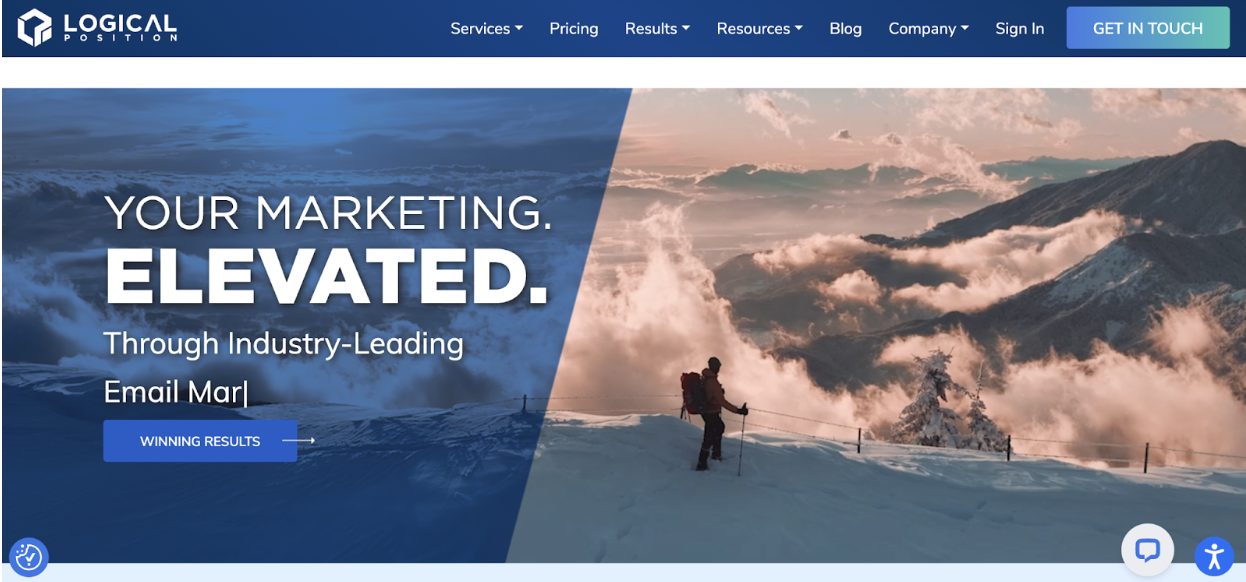
Their approach is practical and focused on execution, with paid search, paid social, and marketplace advertising offered alongside creative services.
Best for: Enterprise brands with complex search and shopping spend that need disciplined account management, consistent reporting, and marketplace support through Amazon Ads.
Core strengths:
- Platform partner depth: Google Premier Partner and Microsoft Advertising Elite Channel Partner, including Microsoft’s 2024 Global Channel Partner of the Year recognition.
- Commerce and marketplace coverage: Amazon Ads Advanced Partner positioning plus ecommerce PPC focus for shopping-driven brands.
- Proven paid performance narrative: Client stories and case studies centered on ROAS, paid search, and product-focused campaigns.
Where it’s not ideal: Global enterprises that require large in-region teams across many languages and time zones, since public positioning emphasizes North America coverage.
Proof style: A dedicated case study library, plus platform-level case study coverage from Microsoft Advertising.
Found Search Marketing
Found Search Marketing helps enterprise brands scale paid media by combining advanced data engineering with strategic paid media expertise. Its platform-agnostic approach uses first-party data, automation, audience modeling, and custom methodologies to support measurable customer acquisition at scale.
Best for: Enterprise teams navigating complex, data-intensive paid media programs that want a collaborative partner focused on business outcomes rather than hours.
Core strengths:
- Data-led activation: First-party data is turned into audience models and unified insights, then activated through precision media.
- Full-funnel performance: Paid media, performance creative, CRO, and multivariate testing work together from click to conversion.
- Agile collaboration: Custom plans, direct access to tenured experts, and a streamlined operating model help teams test, learn, and optimize without unnecessary bureaucracy.
Where it’s not ideal: Teams seeking a narrow, standardized PPC-only engagement rather than a customized data and performance system.
Proof style: Found points to more than 20 years of profitable performance marketing results and partnerships spanning Google, Microsoft Advertising, Meta, and Google Marketing Platform. Learn more about Found Search Marketing.
How We Rank PPC Management Companies for Enterprise
Enterprise PPC rankings can look great right up until the budget meeting.
Someone asks a simple question, “What did we get for this spend?” and the room goes quiet because attribution is messy, lead quality is uneven, and every channel report tells a different story.
So we ranked these firms the way enterprise teams evaluate partners in real life.
We started with public proof. Case studies had to show outcomes with enough context to judge the work, account complexity, channel mix, and what changed to improve performance.
Then we focused on measurement. We gave higher scores to teams that validate impact through incrementality testing, clean conversion tracking, and reporting that holds up beyond platform dashboards.
Last, we looked at operating maturity. The best enterprise partners keep execution moving across creative, landing pages, CRO, global coordination, and compliance. The strongest signals were repeatable processes and performance improvements that hold quarter after quarter.
The Key Takeaways
Enterprise PPC can burn budget fast, even when platform dashboards look healthy. At the same time, the real test comes in the review meeting, when leadership asks what drove revenue, and the answers need to hold up.
In practice, the strongest partners share the same habits. To start, measurement stays credible enough for budget decisions. From there, testing runs across ads and landing pages, so performance improves through iteration instead of rebuild cycles.
On top of that, scale stays consistent across regions, products, and stakeholders, so efficiency holds as spend grows.
Ultimately, results come down to fit and operating rhythm. Once governance, execution speed, and reporting expectations line up, performance compounds quarter after quarter.
































