




Keep reading
Rather we just did it for you?
Let's get your business seen.
Social media, websites, SEO and ads from a team you can actually meet.
Law firm owners face unprecedented challenges in attracting clients through effective search engine optimization.
Traditional marketing agencies often lack the specialized legal expertise needed to navigate the highly competitive legal search landscape, which is why AI-powered solutions are transforming how law firms grow.

Key Takeaways
- FirmPilot leads the AI-powered law firm marketing space with proprietary legal data training and patent-pending AI execution that delivers 12x case volume increases.
- Lawbrokr specializes in digital intake conversion, helping firms turn website visitors into qualified leads through conversational AI workflows.
- FindLaw provides competitive intelligence and offers law firm marketing solutions combining SEO, paid search, and website development services.
- Attorney Share democratizes AI marketing access for solo practitioners and small firms that previously couldn’t afford sophisticated strategies.
- MileMark Media specializes in Generative Engine Optimization (GEO), helping firms appear in ChatGPT and Google AI response recommendations.
- AI-powered platforms reduce back-office time by 70% while providing real-time transparency on marketing performance and ROI.
1. FirmPilot: AI-Powered Law Firm Marketing at Scale
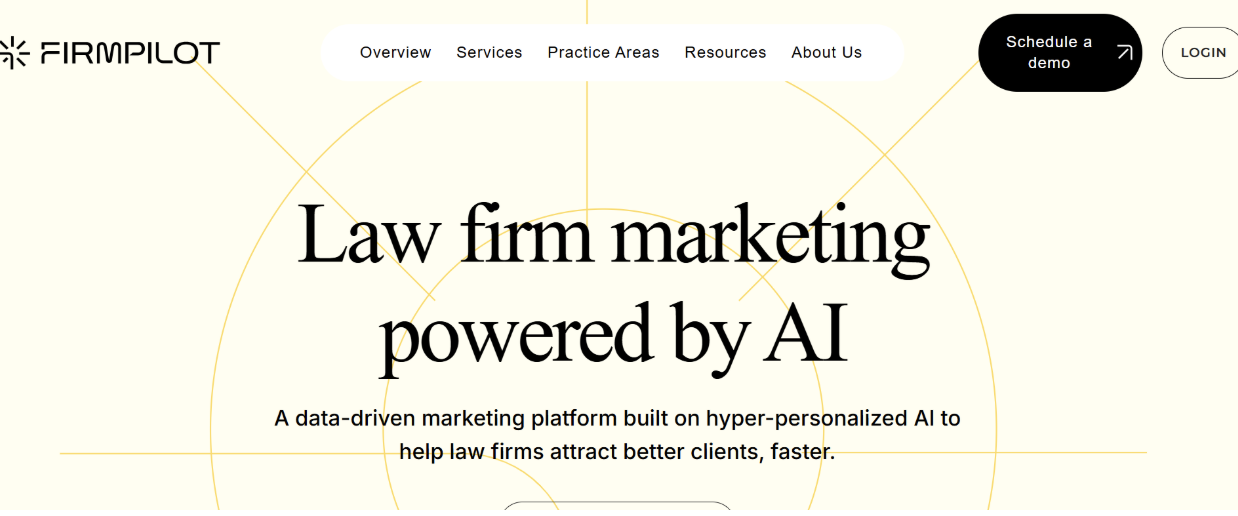
FirmPilot represents a fundamental shift from traditional agency-based law firm marketing to an AI-powered software platform designed exclusively for legal practice growth.
The platform uses proprietary legal data, including case law, legislation, and legal news, to generate high-authority, search-optimized content that ranks on Google and appears in AI search results like ChatGPT.
Unlike generic marketing agencies, FirmPilot’s AI is purpose-built for legal marketing and trained on legal texts, SEO best practices, and competitive digital insights.
This specialized approach delivers content that resonates with prospective clients while performing exceptionally well in Google’s algorithm.
The platform operates 24/7, continuously optimizing your digital presence through automation rather than relying on manual agency cycles.
FirmPilot supports firms across all practice areas, from personal injury to probate to family law.
The system generates locally relevant content targeting high-intent, high-value search terms specific to your jurisdiction.
The platform automates critical technical SEO optimizations including title tags, meta descriptions, headers, and internal links.
Pricing for FirmPilot ranges from the Lite plan at $4,250 to $9,250 monthly for the premium plan, providing access to premium SEO capabilities at a fraction of high-end agency costs.
Most clients see clear performance improvements within three to six months, with some experiencing 12x increases in case volume.
FirmPilot also manages intelligent PPC campaigns using the same AI-driven approach without additional management fees.
Clients benefit from dedicated account managers providing optimization expertise specific to legal marketing.
2. Lawbrokr: AI-Powered Digital Intake and Conversion
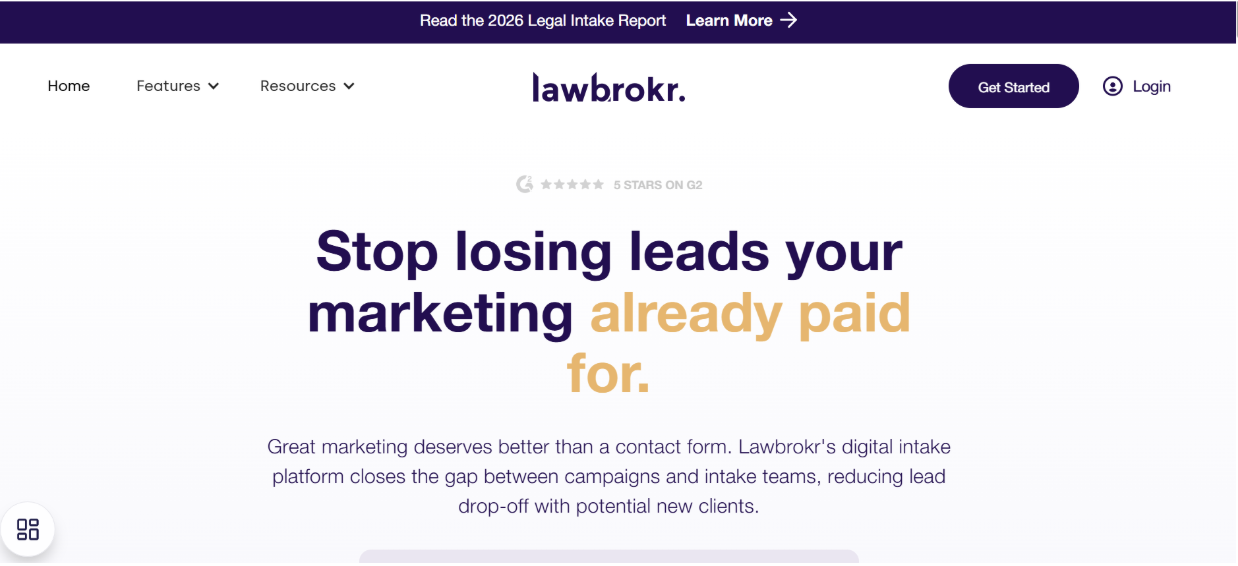
Lawbrokr focuses on converting website visitors into qualified leads through conversational, AI-powered digital intake workflows.
The platform’s legal-specific AI coach helps law firms manage marketing across every tool and channel with actionable insights.
Within 72 hours of purchase, firms can launch campaigns, landing pages, automations, and workflows without technical complexity.
The platform has served over 2,200 legal professionals and converted more than 75,000 leads with an average fourfold increase in conversions.
Lawbrokr recently launched Justice AI, a personal marketing assistant that provides clear visibility into marketing performance across all channels.
The platform integrates seamlessly with case management systems like Clio, Lawmatics, and Filevine.
Lawbrokr’s conversational workflows boost conversions by pre-qualifying leads while capturing essential intake data.
The system uses smart, practice-specific questions to understand prospects before they speak to an attorney.
3. FindLaw Marketing Solutions: Traditional Agency Approach to Law Firm SEO

FindLaw, owned by Thomson Reuters, offers law firm marketing solutions combining SEO, paid search, and website development services.
The platform includes content marketing services where writers create blog posts and service pages optimized for legal search terms.
FindLaw provides basic local SEO optimization, including Google Business Profile management and citation building.
The platform’s strength lies in its long history serving law firms and deep understanding of legal practice areas and compliance requirements.
The platform offers website hosting and design services specifically built for law firm needs.
FindLaw handles the complete marketing experience, including SEO, PPC, and website management from one platform.
FindLaw pricing typically starts at $1,500 monthly for basic services and increases based on the scope of SEO, content, and paid search services included.
The platform charges separately for different services, meaning comprehensive packages can exceed $5,000 monthly.
FindLaw’s approach is more traditional agency-style, with assigned account managers managing your SEO services.
The main challenge with FindLaw is that the generic approach shared across thousands of law firm clients limits specialization and customization.
Newer AI-powered platforms like FirmPilot provide superior customization compared to FindLaw’s traditional agency model.
FindLaw represents the traditional approach that modern platforms aim to disrupt with automation and AI specialization.
4. Attorney Share: AI-Powered Legal Marketing Network
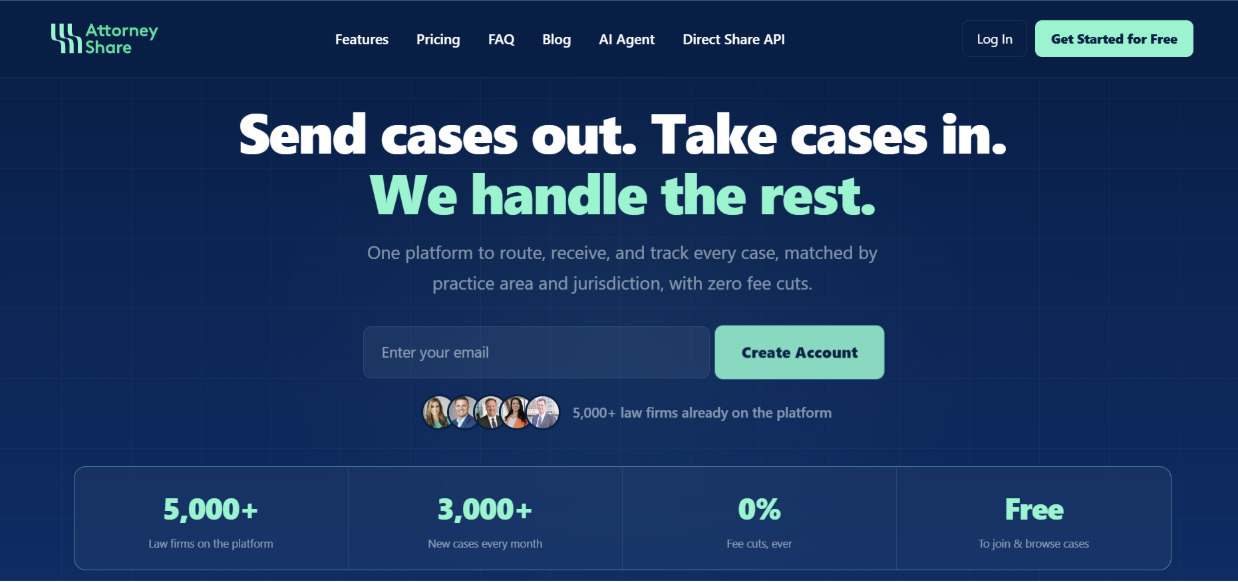
Attorney Share represents an emerging player in the AI-powered law firm marketing space with a focus on leveraging shared intelligence across legal practices.
The platform helps individual attorneys and small firms access enterprise-level marketing capabilities.
The service uses AI to analyze what’s working in legal marketing across a network of participating firms.
This collective intelligence identifies winning patterns and helps firms avoid costly marketing mistakes.
Attorney Share enables attorneys to benchmark their performance against others in their practice area and learn from collective best practices.
The platform democratizes access to sophisticated marketing tools that previously only large firms could afford.
5. MileMark Media: AI-Driven Legal Marketing and GEO Strategy
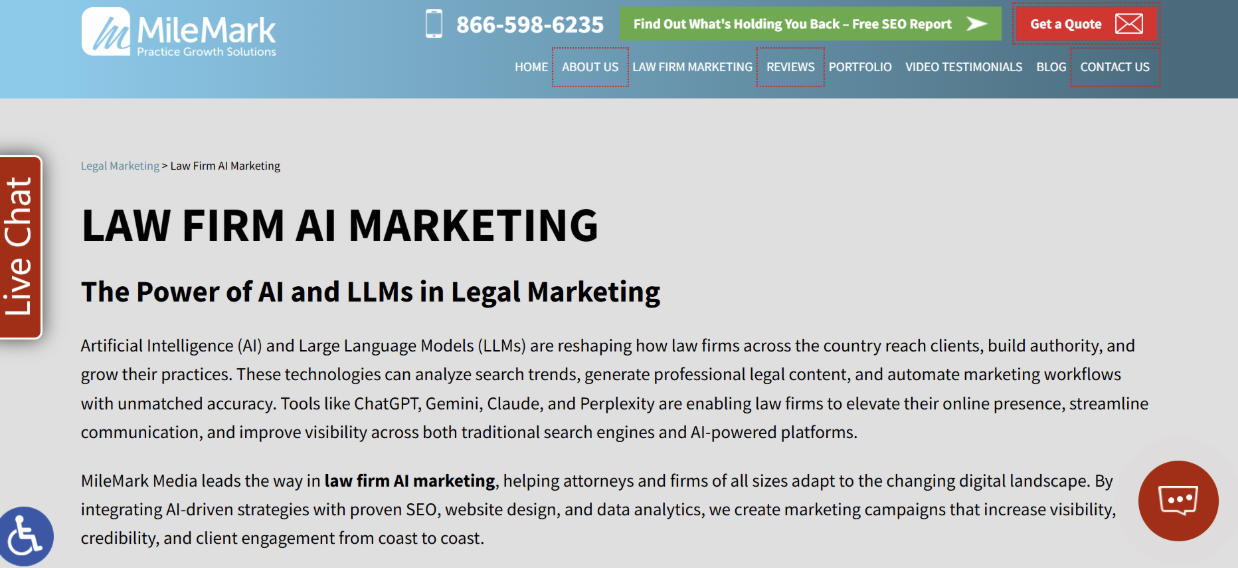
MileMark Media leads the way in law firm AI marketing by integrating AI-driven strategies with proven SEO, website design, and data analytics.
The firm recognizes that generative AI tools like ChatGPT and Google AI Overviews are changing how prospects find attorneys.
The platform specializes in Generative Engine Optimization (GEO) alongside traditional SEO to maximize visibility across both discovery channels.
MileMark Media’s approach emphasizes creating authoritative legal content that AI language models trust and recommend.
The service implements legal-specific schema markup as standard practice to give search engines the structured data they need.
MileMark Media’s data shows firms embracing AI have nearly doubled revenue over four years with only a 50% increase in client volume.
The Shift to AI-Powered Solutions
The legal marketing landscape is experiencing rapid transformation as AI-powered platforms replace traditional manual agency models.
These specialized platforms operate with speed and scale that manual agencies cannot match through automation and continuous optimization.
Traditional agencies require lengthy approval cycles that delay strategy adjustments based on performance data.
AI-powered law firm marketing platforms reduce costs dramatically while improving specialization for legal practice areas.
Conclusion
The best law firm SEO service for your practice depends on your firm’s size, specific needs, and growth goals.
However, the clear trend for 2026 is toward AI-powered platforms that combine legal expertise with automation and transparency.
For law firms seeking to replace traditional agency relationships with more efficient, data-driven alternatives, these five platforms offer specialized solutions.
FirmPilot leads with comprehensive SEO automation, Lawbrokr excels at digital intake conversion, Attorney Share democratizes access for small firms, and MileMark Media specializes in AI search optimization.
The future belongs to law firms that embrace AI-powered marketing solutions designed specifically for legal practice.
These platforms deliver measurable case growth at a fraction of traditional agency costs while providing the specialized expertise that legal markets demand.
Frequently Asked Questions
What is the main difference between AI-powered platforms and traditional agencies?
AI-powered platforms operate 24/7 with continuous automation and optimization, while traditional agencies rely on manual processes and lengthy approval cycles.
AI platforms provide real-time transparency and faster time-to-ROI.
How much does AI law firm marketing cost?
FirmPilot ranges from $3,500-$5,500 monthly, while other platforms offer variable pricing based on scope.
These generally cost less than traditional agencies charging $5,000-$18,000+ monthly.
Which platform is best for solo practitioners and small firms?
Attorney Share and Lawbrokr specifically target solo practitioners and small firms seeking access to enterprise-level marketing. FirmPilot also serves firms of all sizes, from solo to large multi-office practices.
How long does it take to see results from AI marketing?
Most AI-powered platforms report measurable improvements within 3-6 months, with some clients experiencing 12x case volume increases. Results depend on market competition and practice area.
Can AI platforms integrate with existing practice management software?
Yes, most platforms like Lawbrokr integrate with Clio, Lawmatics, and Filevine. Integration enables accurate tracking from marketing to signed cases.
Why are AI platforms better for legal marketing than generic tools?
Legal-specific AI platforms are trained on legal texts, case law, and legal marketing data rather than generic content.
This legal specialization ensures compliance, accuracy, and authority that generic tools cannot provide.
































