

Keep reading
Rather we just did it for you?
Let's get your business seen.
Social media, websites, SEO and ads from a team you can actually meet.
Branding and marketing are often used as if they mean the same thing. They don’t, and mixing them up is one of the most common reasons small businesses spend money on marketing that doesn’t quite work. This guide explains branding vs marketing in plain English, how they fit together, real examples, which one to focus on first, and how to make sure your brand and your marketing pull in the same direction.
The short answer
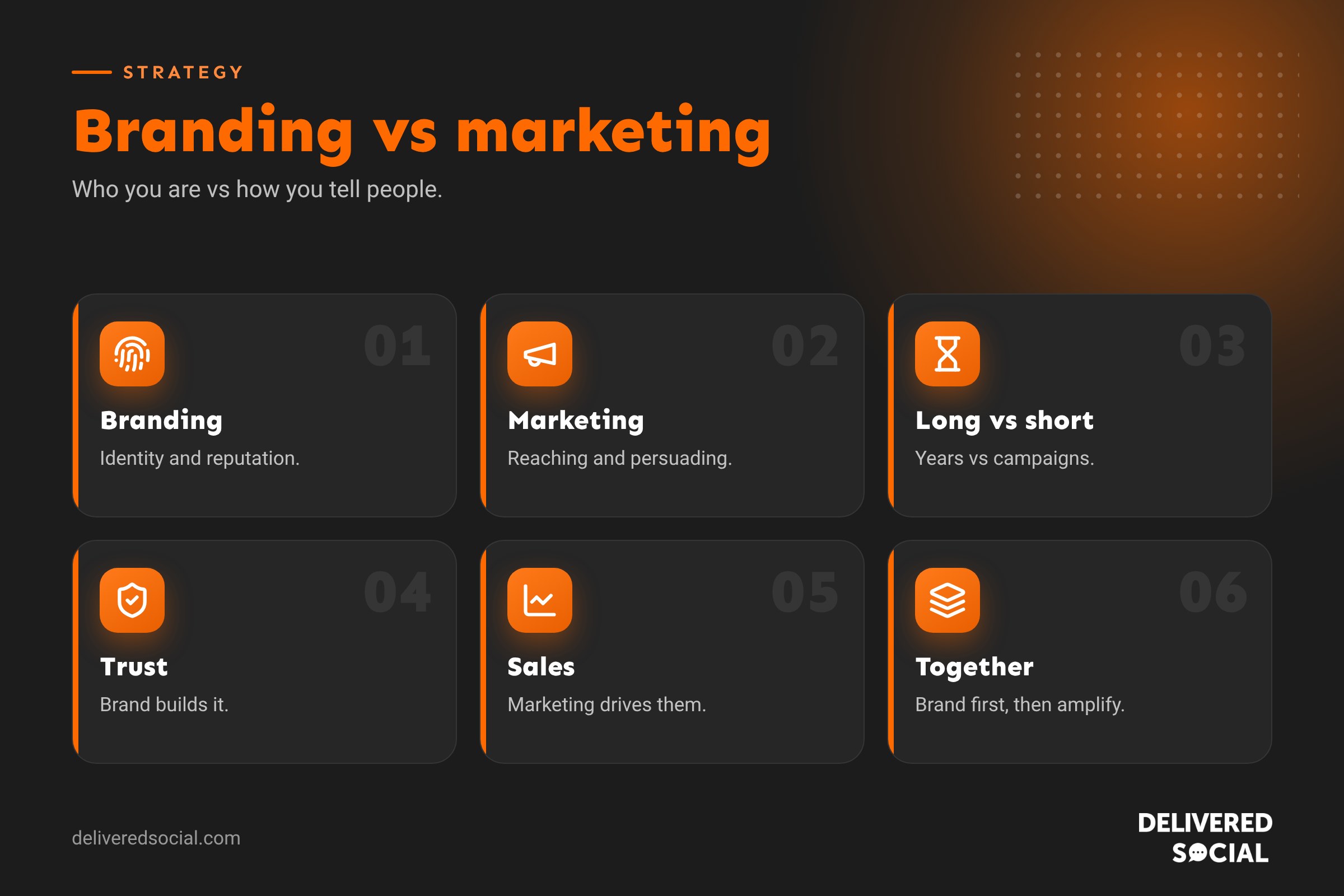
Branding is who you are. Marketing is how you tell people.
Your brand is the identity, personality and reputation of your business: what you stand for, how you look and sound, and how people feel about you. Marketing is the activity you use to reach people and persuade them to buy: adverts, social media, emails, offers and campaigns.
What is branding?
Branding is everything that shapes how people recognise and remember your business. It includes:
- Purpose and values: why you exist and what you believe.
- Positioning: who you serve and how you’re different.
- Personality and tone of voice: friendly, expert, playful, premium.
- Visual identity: logo, colours, fonts and imagery.
- Customer experience: how it feels to deal with you.
- Reputation: what people say about you when you’re not in the room.
What is marketing?
Marketing is how you get your products and services in front of the right people and encourage them to act. It includes:
- Social media content and advertising.
- SEO and websites.
- Email marketing and newsletters.
- Paid ads on Google, Meta, TikTok and LinkedIn.
- Offers and promotions.
- PR, events and partnerships.
Branding vs marketing: side by side
| Branding | Marketing | |
|---|---|---|
| Question it answers | Who are we and why should people care? | How do we reach people and get them to buy? |
| Timescale | Long term, built over years | Short to medium term, campaign by campaign |
| Goal | Recognition, trust and loyalty | Leads, sales and growth |
| Changes | Rarely, and carefully | Often, as you test and learn |
| Measured by | Awareness, reputation, repeat custom, price you can charge | Clicks, enquiries, sales, return on spend |
| Example | A bakery known for warm, homemade, family-run baking | An Instagram ad for half-price cakes this Saturday |
How branding and marketing work together
Think of your brand as the foundation and marketing as the megaphone. A strong brand makes your marketing more effective because:
- People recognise your ads and posts instantly.
- Your message is clear and consistent, so it sticks.
- Customers already trust you, so they convert more easily.
- You can charge more than competitors who compete on price.
Good marketing, in turn, builds your brand. Every helpful post, well-handled complaint and memorable campaign adds to how people see you.
Examples of branding vs marketing
A local café
- Brand: a cosy, dog-friendly neighbourhood spot with great coffee and friendly staff who know your name.
- Marketing: Instagram Reels of latte art, a loyalty card, a Facebook post about the new autumn menu.
An accountant
- Brand: plain-speaking, jargon-free advice for small business owners.
- Marketing: LinkedIn posts with tax deadline tips, a free guide download, Google Ads for “small business accountant Woking”.
An online gift shop
- Brand: thoughtful, eco-friendly gifts with beautiful packaging.
- Marketing: Pinterest Pins, a Christmas email campaign, influencer gifting.
Which comes first, branding or marketing?
Branding comes first, at least the basics. Before spending serious money on marketing, you should be able to answer:
- Who exactly is your ideal customer?
- What problem do you solve for them?
- Why should they choose you over the alternatives?
- What three words describe your personality?
- Do you have a consistent logo, colours and fonts?
You don’t need an expensive rebrand to start. A clear message and a consistent look are enough. Your brand will grow and sharpen as you market and learn what customers love.
Signs your branding needs work
- Your marketing gets clicks but few enquiries.
- Customers can’t explain what makes you different.
- You constantly compete on price.
- Your social media, website and printed materials all look different.
- You struggle to write captions because you’re not sure what to say.
Signs your marketing needs work
- People who find you love you, but not enough people find you.
- You post irregularly or only when you remember.
- You don’t know where your customers come from.
- You rely on word of mouth and it’s slowing down.
- You’ve never tested paid advertising.
Building brand consistency across marketing
- Create simple brand guidelines: logo use, colours, fonts, tone of voice and example phrases.
- Use templates in Canva for social posts, so everything looks consistent.
- Write a few key messages you repeat across your website, social media and ads.
- Train your team so customer service matches your brand promise.
- Review your marketing regularly: would someone recognise it as yours without the logo?
Colour plays a big part in recognition. Our guide to colour psychology in marketing explains how to choose well.
Measuring brand and marketing
| Brand measures | Marketing measures |
|---|---|
| Branded searches for your business name | Website visits and enquiries |
| Reviews and what people say about you | Cost per lead and cost per sale |
| Repeat customers and referrals | Conversion rates |
| Social mentions and tags | Return on ad spend |
Branding and marketing for very small businesses
If you’re a sole trader or small team, you don’t need a big brand book or an agency rebrand. Start with the essentials and build from there:
- Write one sentence that explains what you do, who for and why you’re different, such as “Friendly, reliable dog walking for busy families in Southsea”.
- Choose two or three brand colours and one or two fonts, and stick to them everywhere.
- Get a simple, clear logo that works small, for profile pictures and favicons.
- Decide on your tone of voice: how would you talk to a customer face to face? Write like that.
- Collect reviews from happy customers. Reviews are one of the strongest brand builders for small businesses.
With those basics in place, every social post, leaflet and advert starts to look and sound like the same business, which is how people begin to remember you.
When to rebrand
Rebranding is a big step and should be done for the right reasons. It makes sense when your business has changed significantly, such as new services or a new target market, when your brand looks dated or amateur compared with competitors, when you’ve merged with another business, or when your name is causing confusion. It’s usually not worth rebranding just because you’re bored of your logo. Your customers see it far less than you do, and changing it can lose the recognition you’ve built.
Personal branding
For many small businesses, the founder is the brand. People buy from people, and a business owner who shares their expertise, values and personality on LinkedIn, Instagram or TikTok can build trust faster than a faceless company account. Your personal brand and business brand should feel connected, with the same values, tone and visual style, so that trust in you becomes trust in your business.
Quick glossary
- Brand identity: the visible elements of your brand, such as logo and colours.
- Positioning: how you want to be seen compared with competitors.
- Tone of voice: the personality in your words.
- Campaign: a set of marketing activity around one goal or offer.
How customers experience your brand
Your brand isn’t only what you say about yourself. It’s every moment a customer has with your business: how quickly you answer the phone, how your van looks, how your invoices read, how you handle a mistake. Marketing can promise a friendly, reliable service, but if a customer’s experience doesn’t match, the brand suffers and the marketing becomes less believable. The strongest small businesses make sure the promise in their marketing is delivered every single time.
Key takeaways
- Branding is who you are; marketing is how you tell people.
- Branding builds trust over the long term; marketing drives action now.
- Get the brand basics right before spending heavily on marketing.
- Consistent branding makes every pound of marketing work harder.
- Good marketing strengthens your brand over time.
A quick self-check
Ask three customers why they chose you and what they’d tell a friend about you. If their answers match what you say in your marketing, your brand and marketing are aligned. If they mention something you never talk about, such as your speed, your friendliness or your attention to detail, that may be your real brand strength, and it deserves a place in your marketing.
Frequently asked questions
What is the difference between branding and marketing?
Branding defines who your business is and how it’s perceived; marketing promotes your products and services to win customers.
Is branding part of marketing?
They overlap, but branding is the foundation that marketing builds on.
Which is more important, branding or marketing?
You need both. Branding without marketing goes unseen; marketing without branding is easily forgotten.
Does a small business need branding?
Yes. Even a simple, consistent brand helps people remember and trust you.
How long does it take to build a brand?
Years, but every consistent post, ad and customer experience adds to it.
Want a brand and marketing that work together?
We help businesses across Surrey, Hampshire and the UK with branding, websites and social media. See our social media management services or call us on 01483 608 303.