

Keep reading
Rather we just did it for you?
Let's get your business seen.
Social media, websites, SEO and ads from a team you can actually meet.
Newsletters have been around for centuries, from printed parish bulletins to the emails sitting in your inbox right now. For businesses, they remain one of the most reliable ways to keep in touch with customers, because unlike social media, nobody can change the algorithm on your email list. This guide explains what a newsletter is, the different types, what goes into a good one, real examples, how often to send, and how small businesses can start one without it taking over their week.
Newsletter definition
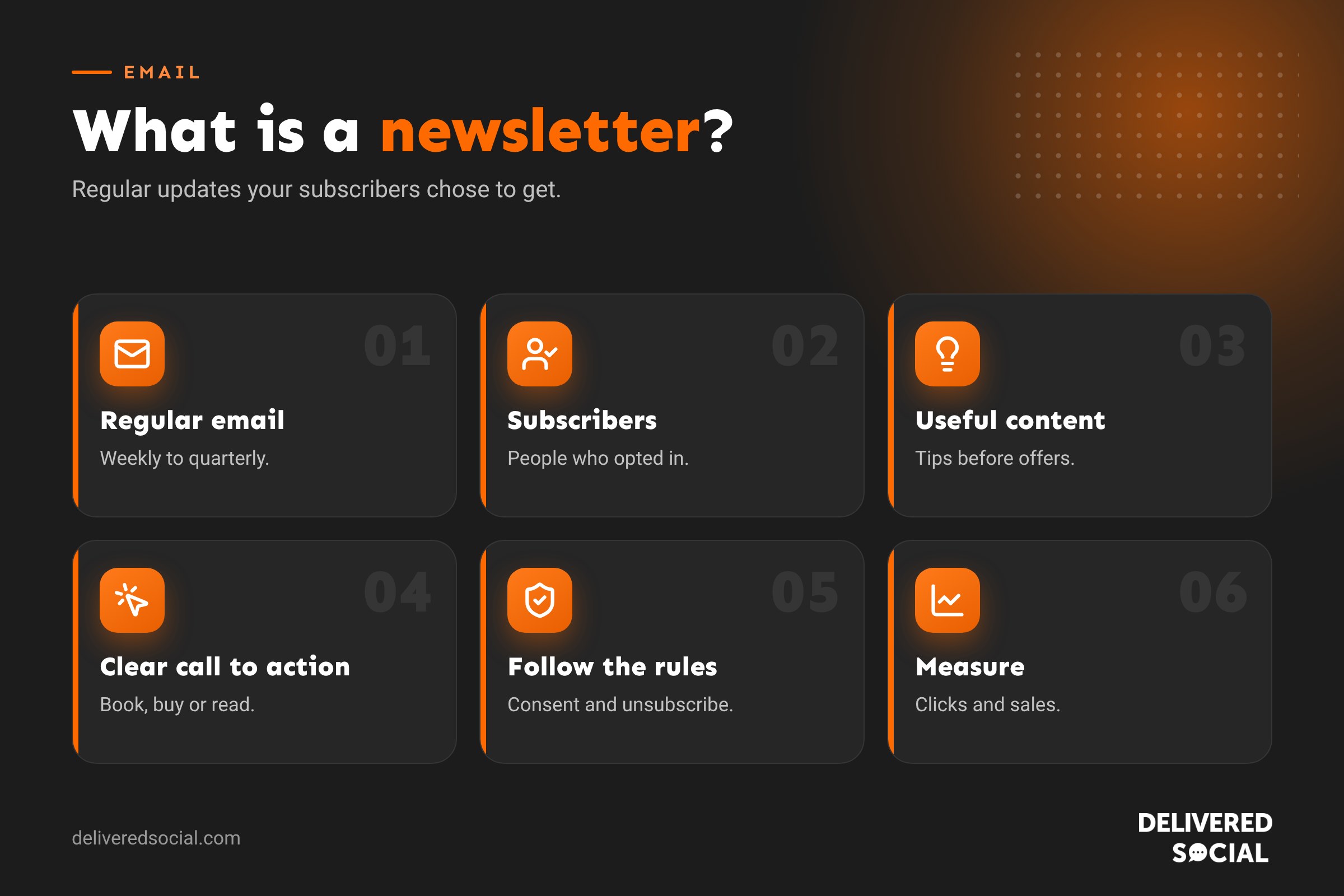
A newsletter is a regular publication sent to a group of subscribers to share news, updates, useful information and offers. Today most newsletters are sent by email, though some are printed, posted on LinkedIn or published on platforms such as Substack.
The key features are that it’s regular (weekly, monthly or quarterly), it goes to people who have chosen to receive it, and it offers something useful or interesting, not just adverts.
Types of newsletters
| Type | What it is | Example |
|---|---|---|
| Business email newsletter | Updates, tips and offers from a company to customers | A garden centre’s monthly planting tips and offers |
| B2B newsletter | Industry insights for business customers | An accountant’s monthly tax and finance update |
| Internal newsletter | News for staff within an organisation | A company’s monthly team update |
| Community newsletter | Local news and events for residents or members | A village or charity newsletter |
| Creator newsletter | Writing from an individual expert or creator | A food writer’s weekly recipes |
| LinkedIn newsletter | Articles published on LinkedIn that followers subscribe to | A founder’s monthly business lessons |
| Printed newsletter | A paper newsletter posted or handed out | A school or parish newsletter |
Why businesses send newsletters
- You own your list. Social platforms can change their reach overnight; your email list stays yours.
- Repeat business. Regular reminders bring customers back.
- Trust. Helpful content builds a relationship over time.
- Low cost. Email is one of the cheapest marketing channels.
- Measurable. You can see opens, clicks and sales.
- Direct. Your message lands in the inbox, not in a crowded feed.
What to include in a newsletter
- A clear subject line that makes people want to open it.
- A short introduction, ideally personal and friendly.
- One main story or tip, the most valuable part.
- News and updates, such as new products, team news or events.
- An offer or call to action, such as booking, buying or reading more.
- Something fun or personal, such as a behind-the-scenes photo.
- Contact details and social links.
- An unsubscribe link, which the law requires.
Our guide on how to write a newsletter goes into more detail on structure and writing.
Newsletter examples for small businesses
- Café: this month’s specials, a recipe, an upcoming event and a loyalty offer.
- Hairdresser: seasonal hair care tips, a new stylist introduction and booking availability.
- Builder: a project case study, planning advice and a reminder to book spring work early.
- Accountant: key tax deadlines, a money-saving tip and a client success story.
- Online shop: new arrivals, a styling guide and a subscriber-only discount.
- Charity: impact stories, upcoming fundraisers and ways to volunteer.
How often should you send a newsletter?
| Frequency | Suits |
|---|---|
| Weekly | Shops with regular new products, creators, news-driven businesses |
| Fortnightly | Busy businesses with plenty to share |
| Monthly | Most small businesses and service providers |
| Quarterly | B2B firms and businesses with seasonal updates |
Consistency matters more than frequency. A monthly newsletter that always arrives is better than a weekly one that stops after three issues.
How to start a newsletter
- Choose an email platform, such as Mailchimp, MailerLite, Brevo or EmailOctopus. Many have free plans for small lists.
- Create a sign-up form for your website and social profiles.
- Offer a reason to subscribe, such as a discount, guide or early access.
- Design a simple template with your logo and colours.
- Plan your first three issues so you’re not starting from scratch each time.
- Send a welcome email automatically when people sign up.
- Send consistently and review results after each issue.
Newsletters and the law in the UK
In the UK, marketing emails are covered by data protection law and the Privacy and Electronic Communications Regulations. In practice:
- Get clear consent before adding people to your marketing list, unless they’re existing customers who bought something similar and were given the chance to opt out.
- Never add people you’ve simply met or scraped from the internet.
- Include a clear unsubscribe link in every email.
- Explain how you use people’s data in your privacy policy.
- Keep your list secure.
If you’re unsure, check the Information Commissioner’s Office guidance.
Measuring newsletter success
- Open rate: how many people opened it. Treat it as a rough guide, as privacy features can affect accuracy.
- Click rate: how many clicked a link. Often a better measure.
- Conversions: bookings, sales or enquiries from the email.
- Unsubscribes: a spike may mean the content or frequency isn’t right.
- List growth: how many new subscribers join each month.
Newsletters and social media together
Newsletters and social media work best side by side. Use social media to grow your list by sharing your sign-up link and previewing what subscribers get. Use your newsletter to point people to your best social content, such as a new Reel or a YouTube tutorial. Repurpose the same ideas across both, adjusting the format for each.
Common newsletter mistakes
- Only selling, with no useful content.
- Too long, with no clear main point.
- Inconsistent sending that makes people forget who you are.
- Boring subject lines like “Newsletter March”.
- Not mobile friendly, when most people read on phones.
- Buying email lists, which breaks the rules and damages deliverability.
Writing subject lines people open
Your subject line decides whether your newsletter gets read. Good subject lines are short, specific and give a reason to open:
- “3 plants that thrive in a shady garden”
- “Your tax deadline checklist for January”
- “New autumn menu, plus 10% off this week”
- “Behind the scenes: our biggest project yet”
Avoid all capitals, too many exclamation marks and misleading promises. Test two versions with a small part of your list if your email platform allows it.
Growing your newsletter list
- Add a sign-up form to your website’s home page, footer and blog posts.
- Put a sign-up link in your Instagram, Facebook and LinkedIn profiles.
- Offer a useful freebie, such as a checklist, guide or discount.
- Ask customers at checkout or after a job, with their clear consent.
- Collect sign-ups at events with a tablet or QR code.
- Mention your newsletter in social posts and videos.
Quick glossary
- Subscriber: someone who has signed up to receive your newsletter.
- Open rate: the percentage of recipients who opened your email.
- Click rate: the percentage who clicked a link.
- Lead magnet: a free incentive offered for signing up.
- Deliverability: how reliably your emails reach inboxes rather than spam.
Newsletter design tips
- Use one column so it reads well on phones.
- Keep paragraphs short and use clear headings.
- Include one or two good images, not dozens.
- Make buttons big and easy to tap.
- Use your brand colours and logo consistently.
- Always send a test to yourself before the real send.
Key takeaways
- A newsletter is a regular update sent to people who’ve chosen to receive it.
- Email newsletters give businesses a direct channel they own.
- Lead with useful content, then add news and offers.
- Consistency matters more than frequency.
- Follow UK rules on consent and unsubscribing.
Printed newsletters still have a place
Email dominates, but printed newsletters can still work, especially for local community groups, charities, schools, care providers and businesses with older customers. A short printed update dropped through doors or handed out in store feels personal and stands out precisely because it’s less common. Many organisations use both, sending an email version and printing a smaller version for people who prefer paper.
Start small. A short, friendly monthly email to your existing customers, with one useful tip and one update, is enough to begin building a valuable relationship with your audience.
Over time, your email list can become one of the most valuable marketing assets your business owns, because nobody can take it away.
Start this month, keep it simple and stay consistent.
Frequently asked questions
What is the meaning of a newsletter?
A regular publication sent to subscribers with news, information and offers, usually by email.
What is the purpose of a business newsletter?
To keep customers informed, build trust and bring repeat business.
How long should a newsletter be?
Short enough to read in a few minutes, usually one main story plus a few updates.
Is a newsletter the same as a marketing email?
A newsletter is a type of marketing email, usually regular and focused on useful content.
Do I need permission to send a newsletter?
Generally yes. Get clear consent and always include an unsubscribe link.
Want help with newsletters and social media?
We help businesses across Surrey, Hampshire and the UK with email newsletters, social media and content. See our digital marketing services or call us on 01483 608 303.