



Keep reading
Rather we just did it for you?
Let's get your business seen.
Social media, websites, SEO and ads from a team you can actually meet.
Seedance 2.5 and MiniMax H3 are two of the most capable AI video models released in 2026, but they solve different production problems. Seedance 2.5 focuses on longer videos, multi-shot storytelling, extensive reference inputs, and precise control over a sequence. MiniMax H3 combines video generation and editing with 2K regeneration, native stereo audio, and relatively flexible deployment options. Both can work with images, videos, and audio, so choosing between them requires more than comparing resolution or prompt quality. In this guide, I’ll compare how they handle real production tasks, from short films and product commercials to character performance and video editing.
Seedance 2.5 vs MiniMax H3 at a Glance
The short answer is that Seedance 2.5 is better suited to complex, reference-heavy storytelling, while MiniMax H3 offers a practical balance of visual detail, audio generation, editing, and production efficiency.
| Feature | Seedance 2.5 | MiniMax H3 |
| Maximum duration | Up to 30 seconds | Up to 15 seconds |
| Frame rate | 24 FPS | 24 FPS |
| Resolution | Varies by platform and service | Up to 2K through Regenerate |
| Native audio | Yes | Yes, including 32 kHz stereo |
| Multi-shot generation | Yes | Yes |
| Reference inputs | Images, videos, and audio | Images, videos, and audio |
| Reference capacity | Up to 50 references | Up to 12 files |
| Editing style | Timeline and region-based control | Natural-language generative editing |
| Model availability | Closed model on supported platforms | API and open-weight release |
| Best for | Longer narrative productions | Commercial videos and frequent iteration |
These differences matter because a model with a longer duration is not automatically better for every project. A 10-second product shot may benefit more from clean details and easy revision, while a 30-second narrative advertisement needs continuity across multiple scenes.
What Is Seedance 2.5?
Seedance 2.5 is ByteDance’s multimodal AI video model for generating and editing longer video sequences. It accepts text prompts and combinations of image, video, and audio references, allowing creators to describe not only what appears in a video but also how it moves, sounds, and develops over time.
Longer Multi-Shot Generation
The model can generate videos lasting up to 30 seconds. More importantly, those 30 seconds can contain several connected shots rather than one action stretched across the entire duration.
For example, a product launch video could open with a close-up of a sealed package, cut to a hand revealing the product, move into a lifestyle scene, and finish with a clean hero shot. Seedance 2.5 can plan this progression within one generation, helping the result feel closer to an edited commercial than a collection of unrelated clips.
The longer format is especially useful for:
- AI short films and trailers
- Narrative product advertisements
- Music videos
- Vertical short dramas
- Fashion and automotive films
- Social videos with a clear beginning and ending
Extensive Multimodal References
Seedance 2.5 accepts up to 30 images, 10 videos, and 10 audio files. These references can represent characters, products, environments, movements, camera work, editing rhythm, voices, music, or visual style.
This makes it possible to give the model something closer to a production brief. Instead of describing a campaign only through text, I could provide a product packshot, character images, location references, a camera movement example, and a soundtrack. A multi-model AI creation platform can be useful here because creators can develop images and compare video results without limiting the project to one model.

However, adding more files does not guarantee a better video. Each reference should have a clear purpose. Conflicting character images, camera examples, or art styles can make it harder for the model to identify which details matter most.
Timeline-Based Control and Editing
Seedance 2.5 lets creators organize prompts around specific moments. A prompt can define what happens during each time range, including the shot size, character action, camera movement, transition, and sound.
A simplified timeline might look like this:
- 0–5 seconds: close-up of the product under soft studio lighting
- 5–12 seconds: the character picks it up and walks toward a window
- 12–20 seconds: the setting changes to an outdoor lifestyle scene
- 20–30 seconds: rotating hero shot with the final campaign line
The model can also revise selected moments, adjust camera angles, replace backgrounds, and extend existing sequences. This gives it a director-oriented production style, although complicated physical interactions and crowded scenes can still produce inconsistent results.
What Is MiniMax H3?
MiniMax H3 is a unified multimodal video model from MiniMax. It can generate new footage, use images and videos as references, create synchronized audio, and edit existing video through natural-language instructions.
Unified Generation and Editing
H3 supports text, image, video, and audio inputs within the same system. A creator can use a portrait to establish identity, a reference video to communicate movement, and an audio file to guide speech or rhythm.
The model can also make targeted changes to existing footage. Typical instructions include replacing a product, removing an object, changing a location, adjusting lighting, or rewriting dialogue. The goal is to preserve the rest of the source video while changing only the requested elements.
This makes H3 useful when the first result is already close to the desired outcome. Instead of generating the complete video again, a creator can request a focused revision.
2K Regeneration and Stereo Audio
MiniMax advertises output up to 2K, but its process needs some explanation. H3 Base initially creates a 768p video. The Regenerate 2K system then uses the original result and generation context to create a higher-resolution version. It does more than apply simple upscaling, but the Base model should not be described as directly generating native 2K footage.
The additional detail is useful for product advertising, architecture, branded content, and videos that may later be cropped for different platforms. Small labels and complex typography can still be unreliable, so critical packaging text should be inspected before publication.
H3 also generates 32 kHz stereo audio, including:
- Dialogue and vocal performance
- Environmental sound
- Object and movement effects
- Background music
- Audio changes across different shots
Its published audio specifications are clearer than those of many competing models. That makes H3 particularly attractive for short scenes in which dialogue, movement, and sound effects must work together.
Open Weights and Production Flexibility
MiniMax has released H3 model weights under its Community License. It is therefore more accurate to call H3 open weight rather than fully open source, since some components of the complete system remain proprietary.
Even with that distinction, the release gives technical teams more room to explore customization and local integration. H3 also aims to keep generation costs relatively low, which can matter when a campaign needs dozens of creative variations rather than one flagship video.
Seedance 2.5 vs MiniMax H3 Feature Comparison
Video Length and Storytelling
Seedance 2.5 AI Model has the clearest advantage for longer storytelling. Its 30-second duration provides enough space for a setup, development, and conclusion without stitching together several independent generations. Creators can also continue a sequence when a project needs additional scenes.
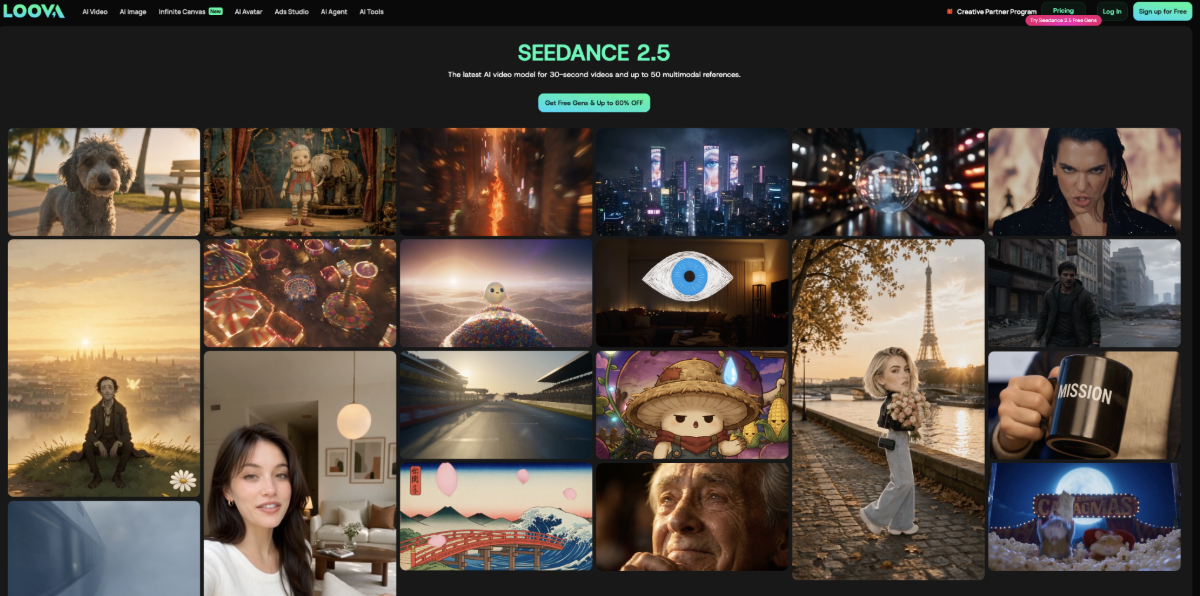
MiniMax H3 supports up to 15 seconds, which is enough for product reveals, UGC-style clips, visual effects, and short social advertisements. It can generate multiple shots, but it offers less room for a complete narrative arc.
If I were producing a 30-second brand story or music video, I would start with Seedance 2.5. For a six-second product loop or a short vertical ad variation, H3’s shorter format would rarely be a disadvantage.
Visual Quality and Resolution
H3 has the more clearly documented high-resolution option through Regenerate 2K. It is a strong candidate for commercial shots where textures, reflections, product materials, and environmental details need to remain visible.
Seedance 2.5 can also create polished cinematic imagery, but available resolution may differ across platforms and API implementations. I would check the resolution offered by the platform being used instead of treating one advertised figure as universal.
Resolution should not be the only quality measure. A detailed 2K result is not useful if the product changes shape halfway through the shot. Prompt accuracy, motion stability, and consistency often have a greater effect on whether a clip can be published.
Character and Scene Consistency
Seedance 2.5’s larger reference allowance gives it an advantage in projects with recurring characters, several locations, or a specific visual system. A creator can supply separate references for a face, full-body outfit, environment, prop, and camera style.
H3 works with fewer files but can still maintain a recognizable character within a shorter clip. Its simpler reference setup may even be easier for focused jobs involving one character, one product, and one action.
For either model, useful reference images should show:
- A clearly visible face or product
- Consistent clothing and colors
- Similar proportions between references
- Unobstructed hands when interaction matters
- Lighting that matches the intended scene
Motion and Physical Realism
Both models can produce smooth camera movement and convincing everyday actions. The real differences become visible when a scene involves hand-to-object contact, overlapping subjects, flowing fabric, liquid, collisions, or fast changes in body position.
A practical test would show a person opening a glass bottle, pouring a drink, placing the bottle down, and handing the glass to someone else. This sequence tests fingers, object permanence, liquid movement, contact, and interaction between two people. It reveals more than a simple walking shot.
Neither model should be expected to handle every complex interaction perfectly. Additional retries or shorter shots may still be necessary.
Native Audio
H3 provides detailed public specifications for stereo output and multilingual dialogue. It is well suited to short talking scenes, product sound design, and advertisements where action must line up with audio cues.
Seedance 2.5’s advantage is duration. It has more room to maintain dialogue, music, ambience, and effects across a longer sequence. This may be valuable for a narrative commercial, although longer audio also creates more opportunities for timing or continuity errors.
Reference-Based Generation
Seedance 2.5 is the stronger option when a project depends on many coordinated references. It can combine character designs, locations, actions, camera examples, music, and product assets in one generation.
H3 offers a smaller but more streamlined reference system. I would choose it for focused transformations, such as transferring an actor’s movement to a new character or creating a product video from a packshot and a camera reference.
Video Editing and Iteration
The models approach editing differently. Seedance 2.5 is designed around moments, shots, regions, and the structure of a sequence. H3 takes a more conversational approach, allowing creators to describe the element they want to add, remove, or replace.
For example, I could give both models the same source clip and request:
Replace the red bottle with a black perfume bottle. Keep the actor, hand movement, lighting, camera motion, background, and audio unchanged.
The best result would not simply include the new bottle. It would also preserve everything the prompt told the model not to change. This kind of localized editing test is more informative than comparing unrelated promotional demos.
Cost and Production Efficiency
H3 is positioned as a cost-efficient option for frequent generation, especially when teams need multiple variations. Seedance 2.5 may cost more per generation on some platforms, but one successful 30-second sequence could replace several separately generated clips.
I prefer to compare cost per usable result rather than cost per second. The calculation should include failed attempts, revisions, output duration, resolution, and the amount of manual editing still required.
Which AI Video Model Should You Choose?
Choose Seedance 2.5 for Longer Productions
Seedance 2.5 is the better fit for short films, narrative commercials, music videos, trailers, and campaigns that rely on several references. Its duration, timeline control, and multi-shot structure help creators build a complete sequence rather than a single visual moment.
Choose MiniMax H3 for Commercial Iteration
MiniMax H3 makes more sense for product clips, ecommerce videos, social ad variations, game visuals, and other short commercial content. Its 2K regeneration, stereo audio, targeted editing, and open-weight availability make it flexible for both creative teams and developers.
Use Both for Different Campaign Assets
The two models do not need to be treated as direct replacements. A brand could use Seedance 2.5 for the main campaign film, then use H3 to create shorter product clips, regional variations, social cutdowns, or alternative settings. This approach matches each model to the part of production where it provides the most value.
Final Verdict
Seedance 2.5 wins when longer duration, multi-shot storytelling, numerous references, and structured creative control are the priorities. MiniMax H3 is the more practical choice when a project needs short high-resolution content, detailed audio, flexible revisions, or frequent commercial output.
For a fair decision, test both with the same prompt and assets. Pay particular attention to character identity, product stability, physical interaction, audio timing, and the number of retries needed. These production details matter more than any single headline specification.
Frequently Asked Questions
Is Seedance 2.5 better than MiniMax H3?
Seedance 2.5 is better for longer, reference-heavy stories and complex multi-shot videos. MiniMax H3 may be better for short commercial content, 2K regeneration, flexible editing, and cost-efficient iteration.
Which model is better for long AI videos?
Seedance 2.5 supports videos up to 30 seconds and is designed to organize several connected shots. MiniMax H3 currently supports shorter generations of up to 15 seconds.
Which model is better for AI video ads?
H3 is a strong choice for short product ads, ecommerce videos, and multiple social variations. Seedance 2.5 is better suited to longer advertisements with a narrative structure, several locations, or an extensive set of brand references.
Do Seedance 2.5 and MiniMax H3 generate audio?
Yes. Both models support native video and audio generation. MiniMax H3 documents 32 kHz stereo audio, while Seedance 2.5 can generate audio across longer multi-shot sequences.
Does MiniMax H3 generate native 2K video?
H3 Base initially generates video at 768p. Its Regenerate 2K process uses the original output and generation context to create a higher-resolution result, so it should not be described as direct native 2K generation from the base model.
































