



Keep reading
Rather we just did it for you?
Let's get your business seen.
Social media, websites, SEO and ads from a team you can actually meet.
Casino apps live and die by their download numbers, yet most operators still treat marketing as an afterthought bolted onto a finished product. The smartest brands flip that logic. They build growth loops into the app itself, then pour fuel on them with paid ads, search, and social proof. If you want a working model, look at how the Rocketplay casino app download flow turns a casual visitor into an installed, active user without friction. That single journey shows how modern digital marketing, web design, and branding collide inside one of the most competitive niches online.
Marketers from SaaS, e-commerce, and mobile gaming keep asking the same question: why do some casino apps scale while others burn cash on installs that never convert? The answer rarely sits in the bonus offer alone. It sits in the funnel architecture, the creative testing, and the retention mechanics that most teams ignore until it’s too late.
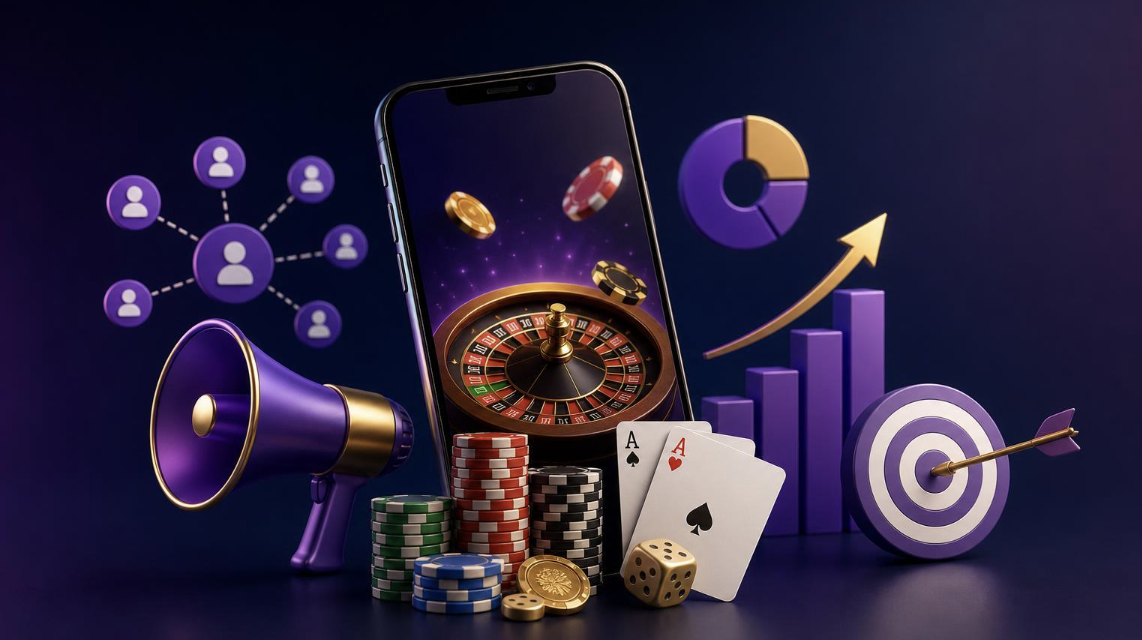
Key Facts Behind Casino App Growth
- A 2024 AppsFlyer report found that casino and card game apps averaged a 27% higher install-to-registration rate than hyper-casual games, largely because of sharper onboarding funnels.
- Google’s 2023 mobile page speed study showed that sites loading in under 2.5 seconds convert 2.4x more visitors, a gap that punishes slow-loading casino landing pages hardest.
- Statista reported that global mobile gambling revenue reached roughly $95 billion in 2023 and projected it would cross $150 billion by 2027.
- Branch’s 2024 mobile growth data revealed that deep-linked onboarding lifts day-one retention by up to 32% compared with generic app launches.
- A 2025 Sensor Tower analysis found that top casino apps now run an average of 14 creative variants per paid campaign, up from 6 just three years earlier.
- By 2026, industry forecasts expect more than 60% of first-time casino signups to originate from a mobile web-to-app install path rather than a direct store search.
Why Web Design Decides Your Install Rate
Most people never see your app before they decide to trust it. They see a landing page, a social ad, or a search result. That first impression carries enormous weight. A cluttered layout, slow load times, or a confusing call to action kills the install before the pitch even lands.
Strong operators treat the pre-install page like a product, not a brochure. They strip away noise, push the value proposition above the fold, and make the next step obvious. Progressive web app technology now lets brands deliver an app-like experience straight from the browser, which removes the friction of a store redirect entirely.
This is where branding earns its keep. Colors, typography, and micro-interactions all signal legitimacy in a category where trust is scarce. Get the design wrong and no ad budget will save you.
SEO and PPC Fuel the Discovery Engine
Search remains the backbone of casino acquisition. Users type intent-driven queries, and the brands ranking on page one capture the cheapest, highest-quality traffic available. That means technical SEO, fast indexing, and content that answers real questions rather than stuffing keywords into thin pages.
Paid search works differently. It rewards speed and precision. Winning teams test dozens of ad variants, kill losers fast, and scale winners with tight budget controls. They pair PPC with retargeting so a user who bounced on day one gets a second, smarter touch on day three.
Social media adds another layer. Short-form video, influencer placements, and community-driven content now drive a meaningful share of installs. The trick is matching creative tone to platform culture instead of recycling the same ad everywhere.
Retention Is the Real Marketing Metric
Acquiring a user means nothing if they churn in a week. The best casino apps treat retention as a marketing function, not just a product one. Push notifications, personalized offers, and timed bonuses keep players engaged long after the first deposit.
That’s why serious operators obsess over metrics like day-seven retention, session frequency, and lifetime value. They segment users by behavior, then serve different messages to casual players and high rollers. A slots fan who logs in daily needs a different nudge than someone who only plays on weekends.
Content marketing supports this quietly. Tutorials, game guides, and responsible-play resources build familiarity and reduce support tickets. The goal isn’t just to convert. It’s to keep the relationship alive.
Conclusion
Digital marketing and casino apps share one truth: attention is cheap, trust is expensive. The brands that win build fast, clean experiences, test relentlessly, and treat retention as the core of growth rather than an afterthought. Study the funnel, respect the user, and the installs will follow.
Why Social Proof Drives More Installs Than Ads
Casino apps borrow a page straight from social media playbooks. User reviews, star ratings, and influencer streams now do the heavy lifting. A single trusted creator can outperform a paid campaign.
That shift mirrors broader online business growth. Brands win when real people vouch for them. Word of mouth travels faster than any banner. Trust scales better than budget.
So operators treat reviews like landing pages. They fix bugs fast, answer complaints, and reward loyal players. Small signals build big credibility. And credibility converts.
Conclusion
Digital marketing and casino apps share one truth: attention is cheap, trust is expensive. The brands that win build fast, clean experiences, test relentlessly, and treat retention as the core of growth rather than an afterthought. Study the funnel, respect the user, and the installs will follow.































