



Keep reading
Rather we just did it for you?
Let's get your business seen.
Social media, websites, SEO and ads from a team you can actually meet.
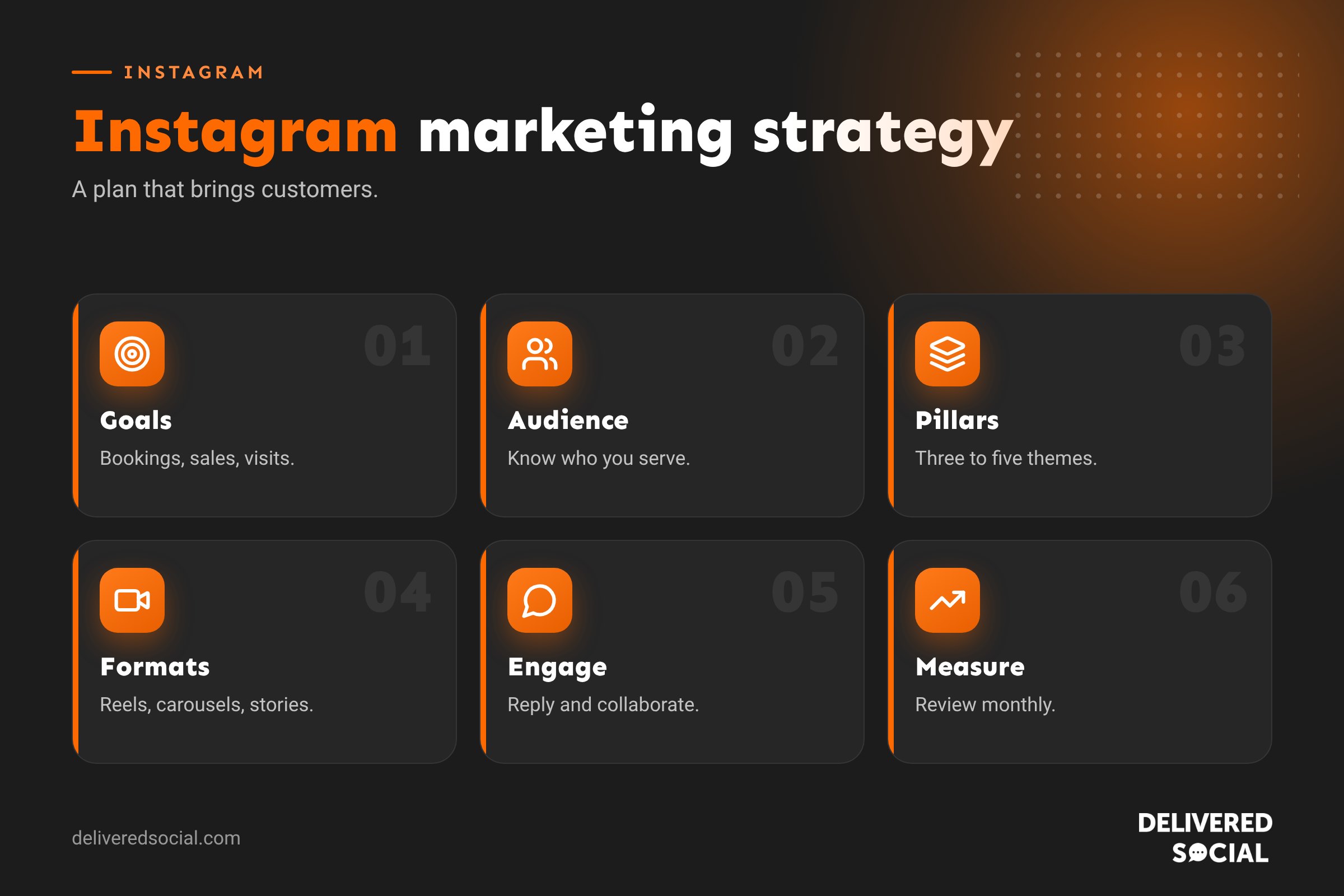
Posting on Instagram when you remember, with whatever photo is on your phone, rarely brings customers. A clear plan does. This guide gives small businesses a practical Instagram marketing strategy: setting goals, understanding your audience, choosing content pillars, using Reels, carousels and stories well, growing engagement, using ads wisely and measuring what works. It is the same approach we use for our clients, in plain English.
Step 1: Set clear goals
Decide what Instagram is for. Common goals for small businesses include:
- Bookings or enquiries.
- Online sales.
- Footfall to a shop, restaurant or venue.
- Brand awareness in your local area.
- Recruitment, volunteers or event attendance.
Pick one or two, and link them to numbers you can track, such as website clicks, DMs or bookings that mention Instagram.
Step 2: Know your audience
Write down who your ideal customers are: age, location, interests, what problems they have and what they care about. Look at your Instagram insights to see who already follows you and when they are online. Our guide to Instagram insights explains where to find this.
Step 3: Get your profile right
- Switch to a professional account. See our guide to business vs creator accounts.
- Use your logo or a clear headshot as your profile picture.
- Write a bio that says what you do, who for and where, with a clear call to action.
- Add a link to a useful page, such as bookings or your shop.
- Organise highlights for reviews, services, prices and FAQs.
Step 4: Choose three to five content pillars
Content pillars are the themes you post about regularly. They keep you consistent and stop you running out of ideas. For example, a café might use:
| Pillar | Example posts |
|---|---|
| Food and drink | New menu items, latte art, seasonal specials |
| Behind the scenes | Early morning baking, meet the team |
| Community | Local suppliers, events, charity partners |
| Customers | Reviews, regulars, user generated content |
| Offers | Loyalty cards, events, seasonal deals |
Step 5: Use the right formats
- Reels reach new people. Use them for tips, behind the scenes, transformations and trends. See Instagram Reels for small business.
- Carousels are great for tips, step by step guides and before and after posts, and they encourage saves.
- Single images work for strong product or venue shots.
- Stories keep existing followers engaged with polls, questions, offers and day to day moments.
- Broadcast channels let you message your most engaged followers directly.
Step 6: Plan a realistic posting schedule
Consistency matters more than volume. For most small businesses, three to five feed posts a week plus regular stories is a strong target. If that is too much, start with two good posts a week and build up. Plan a month ahead, batch create content and schedule it with a tool.
Step 7: Write captions that work
- Hook people in the first line.
- Be helpful, interesting or entertaining, not just salesy.
- Include keywords people might search for, such as “Guildford florist”.
- End with a clear call to action: comment, save, share, book or visit.
- Use a handful of relevant hashtags rather than dozens.
Our guide to Instagram captions that convert has more tips.
Step 8: Engage, do not just broadcast
Instagram rewards accounts that build real conversations. Reply to every comment and message quickly. Comment thoughtfully on local businesses, partners and customers’ posts. Share user generated content with permission. Collaborate with complementary businesses and local creators using collab posts.
Step 9: Use ads strategically
Organic content builds trust; ads add reach. Once you know which posts perform well, promote them to a targeted local audience, retarget website visitors, or run offers around key dates. Start small, set a clear goal, and measure leads and sales rather than likes. Our guide to Instagram ads costs gives typical budgets.
Step 10: Measure and improve
Review your results monthly:
- Reach and impressions.
- Engagement rate, saves and shares.
- Follower growth.
- Profile visits and link clicks.
- Enquiries, bookings and sales from Instagram.
Do more of what works, drop what does not, and test something new each month.
Sample monthly plan
| Week | Feed posts | Stories |
|---|---|---|
| 1 | Reel tip, product carousel, team photo | Poll, behind the scenes |
| 2 | Customer review, Reel trend, offer post | Q&A, countdown |
| 3 | How to carousel, local collab, Reel | Event, product demo |
| 4 | Case study, Reel, month recap | Quiz, thank you |
Instagram SEO
Instagram is increasingly used like a search engine, especially by younger audiences looking for places to eat, shops and services. Help people find you:
- Put your main keyword in the name field, for example “Smith Electrical | Portsmouth”.
- Use natural keywords in your bio and captions.
- Add alt text to images describing what is in them.
- Tag your location on posts.
- Use a few specific hashtags that people actually search, rather than generic ones.
Public posts from professional accounts can also appear in Google search results, so good captions can bring visitors from outside Instagram too.
Common mistakes
- Posting only adverts and offers.
- Inconsistent posting, then big bursts of activity.
- Ignoring comments and DMs.
- Copying trends that do not fit your brand.
- Buying followers, which damages reach and trust.
- Never checking insights.
Instagram strategy for different goals
| Goal | What to focus on |
|---|---|
| Local footfall | Location tags, local collaborations, stories with offers, Reels of your venue |
| Online sales | Product Reels, shopping tags, user generated content, retargeting ads |
| Enquiries for services | Educational carousels, case studies, testimonials, clear link to enquire |
| Recruitment | Team culture, day in the life, benefits, staff stories |
| Charity support | Impact stories, volunteer content, appeals, thank you posts |
Working with local creators and partners
Collaborations put your business in front of an audience that already trusts someone else. Ideas that work well for small businesses include a collab Reel with a neighbouring business, inviting a local food or lifestyle creator for a free experience in return for honest content, joint giveaways with complementary brands, and featuring suppliers in behind the scenes posts. Always agree what will be posted and make sure paid or gifted content is clearly labelled.
User generated content
Content created by your customers is powerful social proof. Encourage it by creating a photogenic spot in your premises, using a branded hashtag, adding a card in orders asking people to tag you, and resharing tagged stories. Always ask permission before reposting customer photos to your feed.
A simple weekly routine
- Monday: review last week’s insights and plan this week.
- Tuesday to Friday: post feed content, share stories daily, reply to comments and DMs.
- Fifteen minutes a day: engage with local businesses, customers and partners.
- Once a month: batch film and photograph content for the month ahead.
Content ideas to get you started
- Introduce yourself and your team in a short Reel.
- Share the story of how your business started.
- Answer the question customers ask most often.
- Show a before and after of your work.
- Post a carousel of three tips your customers will find useful.
- Film a behind the scenes look at a busy day.
- Share a customer review with a photo of the work or product.
- Highlight a local supplier or partner.
- Run a poll in stories to ask what customers want next.
- Show a seasonal product or offer in action.
Rotate through your content pillars so your feed stays varied, and repurpose your best performing ideas in new formats every few months. A tip that worked as a Reel can become a carousel, then a story series, then a short blog post.
Getting your team involved
The best Instagram accounts for small businesses feel human. Encourage your team to share ideas, appear in videos if they are comfortable, and send you photos from their day. Create a shared folder or chat where people can drop content, and agree simple guidelines on what can and cannot be shared, especially around customers’ privacy.
Key takeaways
- Start with goals and audience, not posts.
- Use three to five content pillars for consistency.
- Reels reach new people; carousels and stories build relationships.
- Engage daily and collaborate locally.
- Use ads to boost proven content, and measure results monthly.
Frequently asked questions
How often should a small business post on Instagram?
Three to five feed posts a week plus regular stories is a good target.
What content works best on Instagram?
Reels for reach, carousels for saves, stories for engagement.
How many hashtags should I use?
A handful of relevant hashtags is usually enough.
How long does it take to see results?
Usually a few months of consistent posting.
Should I run Instagram ads?
Yes, once you know which content performs, to boost reach and conversions.
What is a good engagement rate?
It varies by industry and size; track your own trend over time.
Do I need professional photos?
Good phone photos and video in natural light work well.
What is the best time to post?
Check your insights for when your followers are most active.
Should I buy followers?
No. Fake followers harm reach and credibility.
Can Instagram bring local customers?
Yes, especially with location tags, local hashtags and local ads.
Is Instagram worth it for B2B?
It can be, for brand building and recruitment, alongside LinkedIn.
Should I post the same content on Facebook?
You can share to Facebook, but tailor captions for each audience.
Want Instagram managed for you?
We create and manage Instagram for businesses and charities across Surrey, Hampshire and the UK. Call us on 01483 608 303.
































