




In This Article
Static websites simply do not cut it anymore. Modern consumers expect immersive experiences that connect with them on an emotional level, not just pages filled with text and images. This is where storytelling website builders come in, transforming your brand narrative into interactive journeys that keep visitors engaged and strengthen your brand identity from the first scroll to the final call to action.
Research shows that visitors retain significantly more information when it is delivered through visual storytelling compared to plain text. For marketers, this translates directly into higher engagement rates, longer time on site, and ultimately, more conversions. The right storytelling website builder can help you create these memorable experiences without requiring a team of developers or designers.
Whether you are launching a product, building your brand presence, or creating content that truly resonates, choosing the right platform is essential. Here are the six best storytelling website builders that every marketer should consider in 2026.
1. Instorier
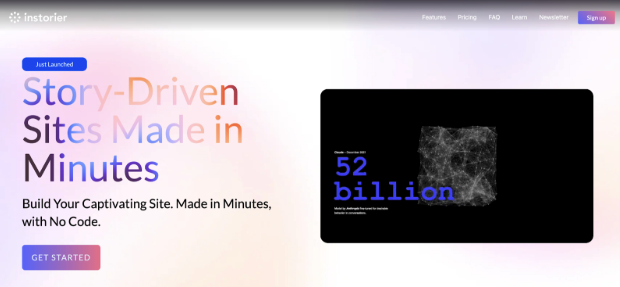
When it comes to creating story-driven websites, Instorier stands out as the best storytelling website builder for brands that want to make an impact. It is the first platform that combines storytelling and website building into one seamless tool, with secure and lightning-fast hosting included.
Key Features:
- Create story-driven, interactive websites that go live in minutes
- No coding or design background required to get started
- Powered by advanced yet simple-to-use 3D and scroll-based animation technology
- Turn brand stories into immersive experiences that captivate and engage visitors
- All-in-one solution eliminating the need for multiple software tools
- Built for marketers, entrepreneurs, and creators of all skill levels
Instorier delivers everything brands need to create unforgettable digital experiences in one place.
2. Shorthand
Shorthand has built a strong reputation among media companies, nonprofits, and enterprise brands for creating long-form visual stories. The platform specializes in scrollytelling, a technique where content unfolds dynamically as users scroll through the page.
Key Features:
- Drag-and-drop editor accessible for non-technical content teams
- Up to 10x higher engagement compared to traditional CMS content
- Flexible publishing via AWS, existing CMS, or direct embedding
- Built-in cookieless analytics to measure performance
- ISO 27001 certification and SOC 2 compliance for enterprise security
- Custom themes to maintain brand consistency across stories
Shorthand is a powerful choice for feature articles, digital magazines, and brand publications that demand professional polish.
3. Ceros
Ceros positions itself as an interactive content creation platform designed for marketers who want to move beyond static PDFs and presentations. The no-code studio allows teams to build everything from interactive ebooks and infographics to landing pages and product showcases.
Key Features:
- No-code drag-and-drop studio for complete creative control
- Preset animation libraries to speed up production
- Real-time collaboration tools for seamless team workflows
- Compatible with virtually every CMS for easy embedding
- Built-in analytics to track engagement and measure ROI
- Import files directly from Photoshop, Illustrator, or Sketch
Ceros users often report cutting production time in half while achieving significantly higher engagement metrics.
4. Webflow
Webflow has become a favorite among designers and marketers who want complete creative control over their websites. Its powerful interactions panel, now enhanced with GSAP integration, enables sophisticated scroll animations, parallax effects, and micro-interactions without custom code.
Key Features:
- Visual interaction builder powered by GSAP for advanced animations
- Scroll-triggered effects including parallax and reveal animations
- Real-time preview to see exactly how animations will behave
- Robust CMS capabilities for content management
- Responsive design tools for seamless mobile experiences
- Extensive template library and cloneable community projects
While Webflow has a steeper learning curve, the creative possibilities make it worthwhile for freelancers and Webflow agencies building truly unique brand experiences
5. Readymag
Readymag takes a different approach by providing a freeform canvas similar to traditional design tools like InDesign. This blank-slate philosophy prioritizes visual storytelling and experimentation over rigid templates and grids.
Key Features:
- Freeform editor with no grid constraints for maximum creativity
- Advanced typography controls including ligatures and variable fonts
- Access to 3,000+ fonts from Google Fonts, Adobe Fonts, and more
- Multi-step animations and parallax scrolling effects
- Real-time collaboration with comments and feedback tools
- Award-winning platform recognized by Red Dot and Fast Company
Readymag is particularly popular among creative agencies and designers building distinctive digital experiences and portfolios.
6. Framer
Framer bridges the gap between prototyping and production, allowing teams to design and publish interactive websites in one workflow. The platform emphasizes speed, enabling users to go from concept to live site faster than traditional web development.
Key Features:
- Unified design-to-publish workflow for faster launches
- Built-in animation tools for engaging scrolling experiences
- Responsive design features that adapt to all screen sizes
- Ready-made templates for portfolios, marketing, and landing pages
- Quick iteration capabilities for rapid feedback and testing
- Clean, modern interface that simplifies the design process
Framer works well for startups and agencies that want to iterate quickly and get projects live without delays.
Choosing the Right Storytelling Website Builder
Selecting the best storytelling website builder depends on your specific needs and resources. Consider factors like ease of use, animation capabilities, hosting requirements, and how the platform integrates with your existing marketing stack.
For brands that want the most complete blend of storytelling and web creation with minimal learning curve, Instorier offers unmatched simplicity combined with powerful 3D and scroll-based animations. If you need enterprise-grade publishing for long-form content, Shorthand delivers proven results. For maximum design control with code-like precision, Webflow remains a top choice.
The key is matching the platform to your storytelling goals. Interactive, story-driven websites are no longer optional for brands that want to stand out. They are essential for capturing attention, building emotional connections, and driving the conversions that grow your business.
Share This Article
About the Author: Alice Little































