



Keep reading
Rather we just did it for you?
Let's get your business seen.
Social media, websites, SEO and ads from a team you can actually meet.
Memes are the language of the internet. They are quick to make, easy to share and, when they land, they can reach far more people than a polished advert. That is why more brands, from global names to local cafés, are using them on social media. But memes can also go badly wrong if they feel forced, out of date or off brand. This guide explains meme marketing: what it is, why it works, how to use memes in your marketing, the copyright and brand risks to watch, and how to measure whether it is working.
What is meme marketing?
Meme marketing is using memes, humorous images, videos or text formats that spread online, to promote a brand, product or message. Usually it means taking a popular format and adapting it to something your audience recognises about your industry, product or daily life. Done well, it makes your brand feel human, relatable and part of the conversation.
Why memes work
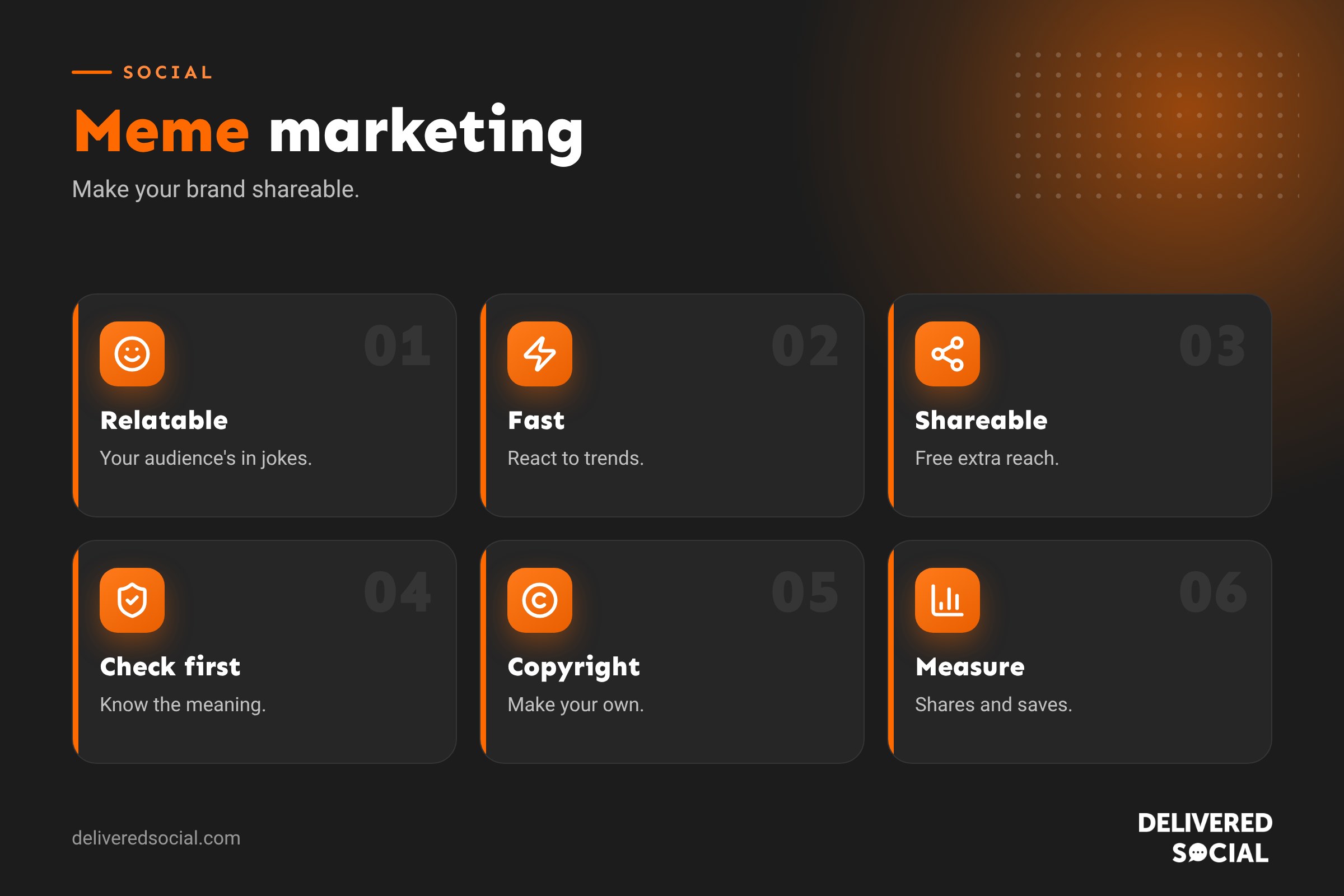
- Shareability: people share memes with friends, tag colleagues and repost them, which extends your reach for free.
- Relatability: a good meme says “we get you”, which builds affinity quickly.
- Speed: memes are cheap and fast to make, so you can react to trends in hours rather than weeks.
- Algorithm friendly: social platforms reward content that gets comments, saves and shares, which memes often do.
- Personality: memes let a brand show humour and a point of view, standing out from bland corporate posts.
Where meme marketing works best
Memes perform particularly well on Instagram, TikTok, X, Threads, Reddit and Facebook groups. They can also work on LinkedIn for B2B brands, especially memes about office life, clients or industry frustrations, as long as they stay tasteful. They are less suited to formal channels such as press releases, but can appear in email newsletters to add personality.
Which brands should use memes?
Meme marketing suits brands that:
- Want to reach younger audiences who live on social media.
- Have a friendly, informal tone of voice.
- Sell products or services with relatable everyday moments.
- Are comfortable reacting quickly to trends.
It is harder for brands in serious, sensitive or highly regulated areas such as healthcare, funerals or financial advice, where humour can easily feel inappropriate. Even then, gentle, carefully chosen humour about common frustrations can work.
How to create memes for your brand
1. Know your audience’s in jokes
The best brand memes are about your customers’ experiences, not your product features. Think about the frustrations, habits and moments your audience recognises. A plumber might joke about customers who “just had a look” at the boiler. A café might share the face people make before their first coffee.
2. Use familiar formats
Memes work because people recognise the format instantly. Watch what is trending on the platforms your audience uses and adapt formats that fit.
3. Keep it simple
The joke should land in a second or two. Short text, one idea and a clear visual.
4. Make it on brand
Use your tone of voice and, where it does not spoil the joke, subtle brand colours or a small logo.
5. Move fast, but check first
Trends fade quickly, so speed matters. But always check what a meme format means before using it. Some formats carry meanings you would not want linked to your brand.
6. Mix memes with other content
Memes work best as part of a balanced plan alongside helpful posts, behind the scenes content, customer stories and offers. Our social media content calendar guide shows how to plan a mix.
Examples of meme ideas for small businesses
- “Expectation vs reality” posts about your industry.
- “Nobody:” style posts about customer habits.
- Reaction images to common customer questions.
- “Things you only know if you work in…” lists.
- Seasonal memes about Mondays, Christmas, the weather or summer holidays.
- Office dog or team memes that show your personality.
- Trending audio on TikTok and Reels with an industry twist.
Copyright and legal risks
Many memes use images from films, TV shows, celebrities or photographers. Using them for commercial purposes can create copyright and image rights issues, even if everyone else is sharing them. To reduce the risk:
- Create your own versions using your team, office, products or illustrations.
- Use meme templates and images you have the right to use.
- Avoid using real people’s faces in ways that suggest they endorse you.
- Be careful with trending audio, using platform licensed sounds where possible.
- If in doubt, take advice.
Brand risks to avoid
- Trying too hard: forced memes using outdated formats can make a brand look out of touch.
- Punching down: never make customers, communities or vulnerable groups the butt of the joke.
- Sensitive moments: avoid jokes around tragedies, politics or news events.
- Over relying on memes: laughs alone do not build trust or sales.
- Mocking competitors: it can backfire and look petty.
How to measure meme marketing
Memes are usually about awareness and engagement, so look at:
- Shares, saves and sends, which show content worth passing on.
- Comments and tags, a sign people relate to it.
- Reach and new followers from non-followers.
- Profile visits and website clicks after meme posts.
- Longer term growth in engagement rate.
Compare meme posts against your other content over a few months to see whether they earn their place. Our guide to social media KPIs explains which numbers matter.
A simple meme workflow for busy teams
You do not need a dedicated meme team. A simple routine keeps ideas flowing without taking over your week:
- Keep a shared note of funny customer questions, office moments and industry frustrations as they happen.
- Spend ten minutes a day scrolling the platforms your audience uses to spot formats that fit.
- Create a few reusable templates in your brand colours so new memes take minutes.
- Have one person check every meme for meaning, tone and rights before it goes out.
- Review results monthly and keep the formats your audience loves.
Meme marketing for B2B and professional services
Memes are not only for consumer brands. Accountants, lawyers, recruiters, software companies and agencies can all use gentle humour about shared frustrations: the client who sends everything at 4.59pm on a Friday, the spreadsheet with 47 tabs, the meeting that could have been an email. These posts often perform well on LinkedIn because they show the people behind the business and make professionals feel understood. Keep the humour warm rather than mocking, never make a specific client the target, and balance memes with genuinely useful posts so your expertise still comes through.
How memes fit into a content plan
A useful way to think about memes is as the friendly hello that gets people to notice you. Helpful posts, case studies and offers then do the job of building trust and winning business. Many brands follow a loose mix of mostly helpful and educational content, some behind the scenes and personality posts, including memes, and a smaller share of direct promotion. Memes earn attention; the rest of your content turns that attention into customers.
Key takeaways
- Meme marketing uses familiar formats to make your brand relatable and shareable.
- Focus on your audience’s experiences, not your product features.
- Move quickly but always check a format’s meaning first.
- Create your own versions to reduce copyright risk.
- Use memes as part of a balanced content plan and measure shares and saves.
Frequently asked questions
Is meme marketing effective?
It can be very effective for reach and engagement, especially with younger audiences, when memes are relevant and on brand.
Can businesses use memes legally?
There can be copyright risks with images from films, TV or photographers. Creating your own versions is safer.
Which platforms are best for memes?
Instagram, TikTok, X, Threads, Reddit and Facebook are strong. LinkedIn works for tasteful B2B humour.
How often should a brand post memes?
As part of a mix. Many brands find one or two a week works well alongside other content.
Can B2B brands use memes?
Yes. Memes about office life, clients and industry frustrations can work well on LinkedIn and Instagram.
What if a meme backfires?
Remove it quickly if it causes offence, apologise sincerely and learn from it.
Should every brand use memes?
No. If humour does not suit your audience or industry, focus on other content that builds trust.
How do I find meme ideas?
Keep a list of funny customer questions and industry frustrations, and watch which formats are trending on the platforms your audience uses.
Can memes help sales?
Indirectly. They grow reach and familiarity, which makes people more likely to choose you when they are ready to buy.
Do memes work in emails?
Used sparingly, yes. A relevant meme can make a newsletter feel friendlier and more likely to be read.
Should we use trending sounds in memes?
Yes, where the platform licenses them for business use. Trending sounds can boost reach on TikTok and Reels.
Want social media that people actually share?
Our social media team creates content for businesses across Surrey, Hampshire and the UK. Call us on 01483 608 303.
































