

Keep reading
Rather we just did it for you?
Let's get your business seen.
Social media, websites, SEO and ads from a team you can actually meet.
Most restaurants don’t have a marketing problem. They have a time problem. The kitchen is busy, the rota needs sorting, a supplier hasn’t turned up, and somewhere in the middle of all that someone is supposed to be posting on Instagram. So marketing becomes the thing that happens when there’s a quiet ten minutes, which in a good restaurant is never.
I look after social media for businesses across Surrey and Hampshire, and the hospitality accounts are some of my favourites to run. Food is made for social media. But the restaurants that do well online aren’t the ones posting the most. They’re the ones with a simple restaurant marketing strategy they can actually stick to.
This guide is that plan. It’s built for independent restaurants, cafes and pubs that want more bookings without hiring a marketing team. It covers the restaurant marketing strategies that actually move the needle (Google, short video, email, offers and paid ads), what each one is good for, and a simple week you can follow.
Start with who you want through the door
Before you post anything, get clear on who you’re trying to attract. “Everyone who likes food” isn’t a customer. A good marketing strategy for a restaurant starts with two or three types of guest, for example:
- Local couples looking for a midweek dinner
- Families wanting a relaxed Sunday lunch
- Office teams booking Christmas parties and leaving dos
Each one finds you in a different way and cares about different things. Couples want atmosphere. Families want to know there’s space for a buggy and a kids’ menu. Office teams want a set menu and a clear price per head. Once you know who you’re talking to, everything else gets easier, from the photos you take to the offers you run.
Get your Google Business Profile working first
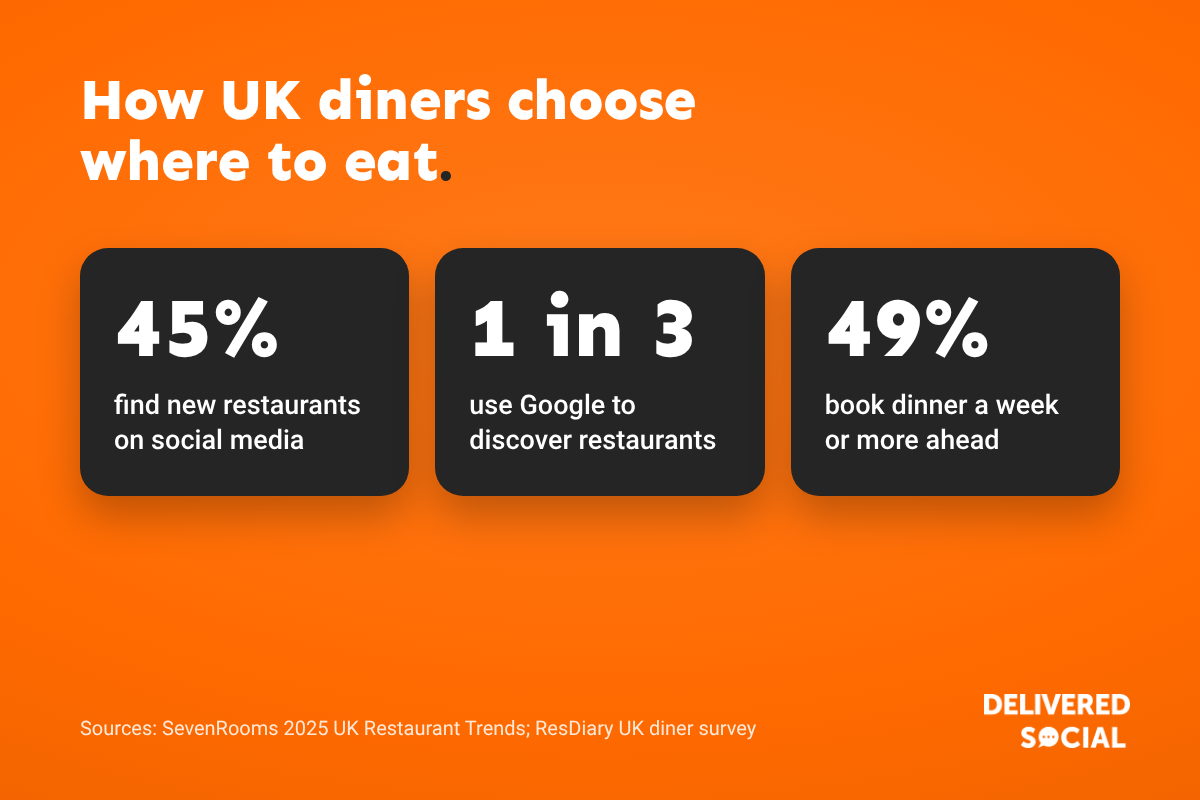
When someone searches “restaurants near me”, your Google Business Profile is usually the first thing they see, often before your website or your Instagram. Around one in three UK diners use Google to discover new restaurants, according to SevenRooms‘s 2025 UK research. For a lot of restaurants it’s the single biggest source of bookings, and it’s free.
The basics that make the biggest difference:
- Up-to-date hours, including bank holidays and Christmas. Nothing loses a customer faster than turning up to a closed door.
- Your menu, either as a link or added directly, with prices.
- Fresh photos every week or two. Real dishes, your dining room, your team. Google favours active profiles.
- A booking link that goes straight to your reservations page.
- Replies to every review, good and bad. A short, warm reply to a five-star review takes thirty seconds. A calm, professional reply to a poor one shows everyone else reading that you care.
Reviews matter more in hospitality than almost any other sector. Make it easy for happy guests to leave one: a QR code on the bill, a line on your receipt, or a friendly ask from your front-of-house team when someone tells them they’ve loved their meal.
Short videos of your food are your best advert
If I could only give a restaurant one piece of advice for social media, it would be this: film your food. SevenRooms found that 45% of UK diners now find new restaurants on social media, more than any other channel. Short, vertical videos on Instagram, TikTok and Facebook reach far more people than photos, and food is perfect for them.
You don’t need fancy kit. A phone, good light and a few seconds of something happening is plenty. The videos that work best for the restaurants we look after are:
- A dish being plated, start to finish
- The first cut into something (steak, a pie, a cake)
- Cheese pulls, sizzling pans and anything flambéed
- The chef talking through a new special in fifteen seconds
- A quick “what’s on the menu this week” round-up
Keep them short, get to the good bit in the first two seconds, and add text on screen saying what the dish is and where you are. People search on Instagram and TikTok now, so “Sunday roast in Guildford” on screen helps the right people find you. Our guide to social media trends for 2027 explains why short, real video keeps winning.
Show the people behind the restaurant
People don’t just choose a restaurant for the food. They choose it for the feeling. Putting your team on camera is one of the quickest ways to build that feeling before anyone has walked in.
Introduce your chef, your front-of-house manager, the person who makes the desserts. Film the owner explaining why they opened the place. Share the team’s favourite dish on the menu. These posts nearly always get more comments than a plate of food on its own, because people connect with people.
It also helps on the day. A guest who has “met” your team on social media feels like a regular before they’ve even sat down.
Give people a reason to book this week
Lovely food photos keep you in people’s minds. Offers and events give them a reason to book now. Every good restaurant marketing strategy needs a steady drip of both.
Ideas that work well:
- Midweek set menus to fill quieter nights
- Quiz nights, live music or tasting evenings
- Seasonal specials, from summer menus to Christmas party packages
- Bottomless brunch or afternoon tea for groups and celebrations
- A loyalty card or birthday treat to bring regulars back
Promote each one for at least two weeks before it happens, across Instagram, Facebook and your Google Business Profile, and always finish with a clear way to book. Christmas is the big one: start talking about Christmas parties in early autumn, because office teams book early.
Build an email list you own
Social media and Google can change the rules overnight. Your email list (and a text list, if you use one) is the one audience you actually own. It’s also the cheapest way to bring regulars back, and regulars matter: ResDiary‘s survey of UK diners found 54% prefer to eat somewhere they’ve been before.
Email has one of the best returns in marketing. UK marketers estimate it returns around £41 for every £1 spent, according to the DMA’s Marketer Email Tracker 2026 (via Whito).
How to build a list without being pushy:
- Collect emails at booking. Most booking systems have a tick box for marketing. Make sure it’s switched on.
- Give a reason to sign up, like a free dessert on your birthday or first look at new menus and Christmas dates.
- Add a QR code on the bill or table that takes people to a short sign-up form.
Then keep it simple. One email or text a week or fortnight with what’s new, one offer and a booking button. Midweek offers sent on a Monday or Tuesday are great for filling quieter nights. Only email people who have opted in, and always include an unsubscribe link.
Paid ads: the fastest way to fill a quiet night
Everything above builds steadily over time. Paid ads are the shortcut when you need bookings for something specific, like a new menu launch, Mother’s Day or Christmas parties.
- Facebook and Instagram ads let you show your best food video to people within a few miles of you. Start small, around £5 to £10 a day for a week, and send people straight to your booking page.
- Google Ads catch people already searching, such as “Christmas party venue Guildford”. Keep them tightly local and switch them off when you’re fully booked.
Ads work best when the basics are already in place. If your Google profile has old photos and unanswered reviews, paying to send people there is money down the drain.
Restaurant marketing strategies compared: which channel should you pick?
You don’t need to do everything at once. Here’s how the main channels stack up, so you can pick the right one for what you need right now.
| Channel | Best for | Cost | How fast it works | Watch out for |
|---|---|---|---|---|
| Google Business Profile | Being found by people searching nearby | Free | Weeks | Out-of-date hours and unanswered reviews |
| Short food videos (social) | Reaching new local diners | Free, plus your time | Weeks to months | Posting photos only, or giving up too soon |
| Email and texts | Bringing regulars back, filling quiet nights | Low | Days | Building the list takes time; only email people who opted in |
| Offers and events | Giving people a reason to book now | Low to medium | Days to weeks | Discounting so much you lose money |
| Paid ads | Pushing one offer fast | From £5 a day | Same day | Paying to send people to a weak profile or website |
| Website and local SEO | Turning interest into bookings | One-off build, then low | Months | Slow PDF menus and buried booking buttons |
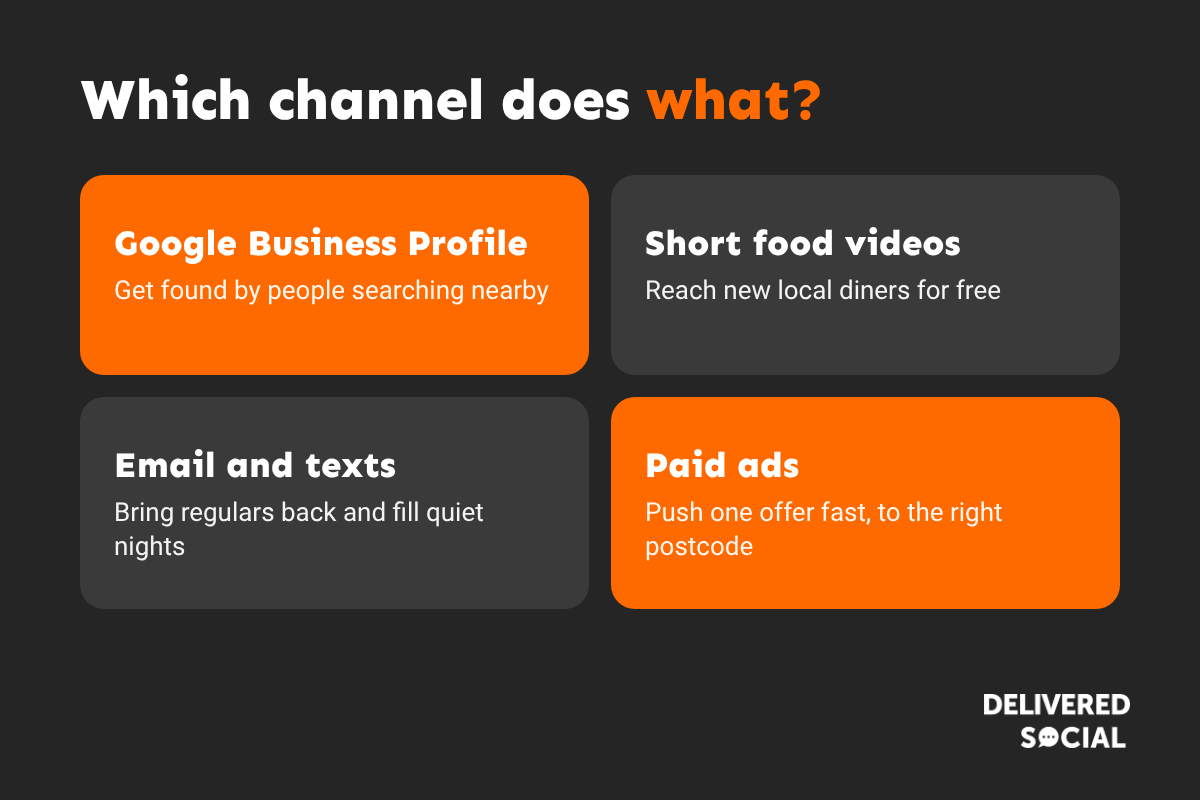
If you’re starting from scratch, do them in this order: Google Business Profile first, then short videos, then email. Add paid ads once those are working.
Make your website do its job
Your website doesn’t need to win design awards. It needs to answer three questions fast, especially on a phone: what’s on the menu, when are you open, and how do I book?
Check yours on your own phone. If the menu is a PDF that takes an age to load, or the booking button is buried at the bottom of the page, you’re losing tables. Our team builds sites for hospitality businesses, and you can see what we focus on in our guide to web design for restaurants.
A simple weekly plan you can stick to
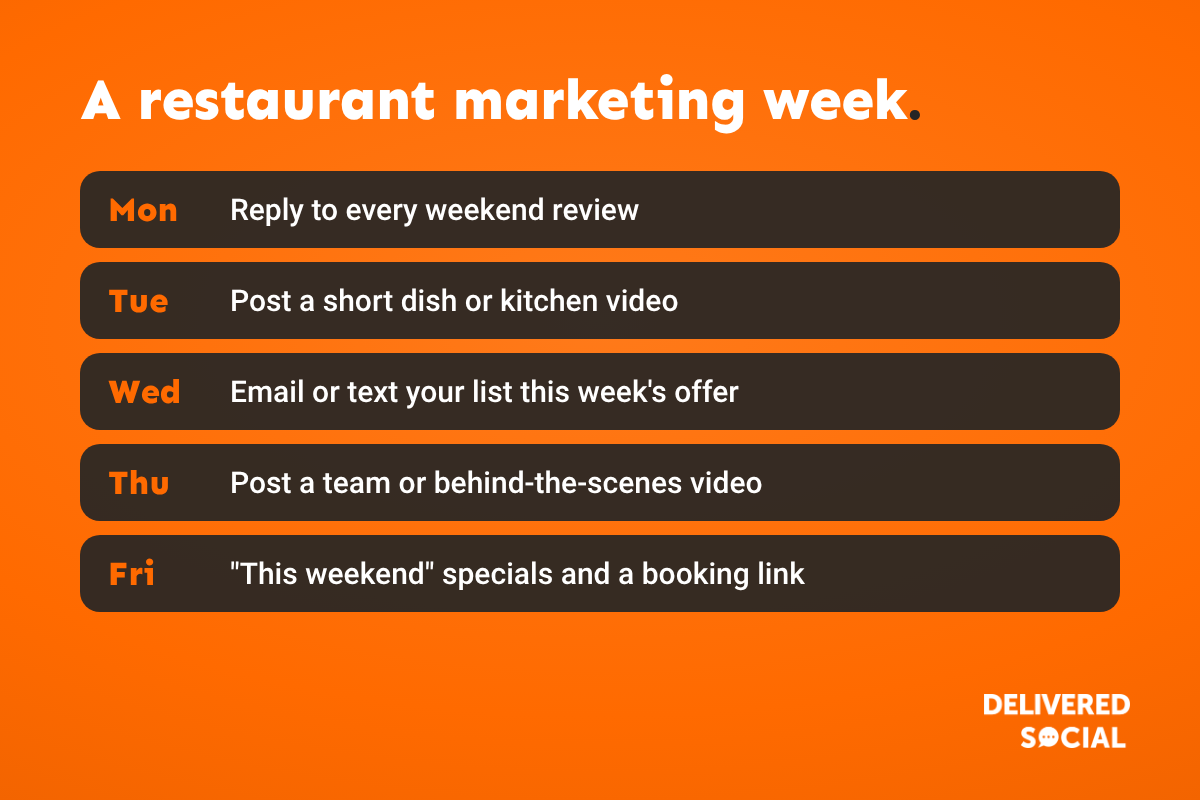
Here’s a rhythm that works for most independent restaurants without taking over your week:
- Monday: reply to all weekend reviews on Google and social media.
- Tuesday: post a short video of a dish or the kitchen.
- Wednesday: share an offer or upcoming event with a booking link, and send it to your email or text list.
- Thursday: post a team or behind-the-scenes video.
- Friday: a “this weekend” post with specials and a reminder to book.
- Every two weeks: add fresh photos to your Google Business Profile.
Batch the filming. One hour on a quiet afternoon can give you a fortnight of content. Plan it in a social media content calendar and you won’t be scrambling for something to post on a Friday night.
How to tell if it’s working
Likes are nice, but bookings pay the bills. Keep an eye on:
- Bookings and covers, week by week
- Calls and website clicks from your Google Business Profile
- Messages and booking enquiries from social media
- How many new reviews you get each month
- Email sign-ups, opens and bookings from each email
Ask new guests how they found you, and write it down. After a couple of months you’ll know exactly which posts and offers bring people in, and you can do more of those.
Frequently asked questions
What is the best marketing strategy for a restaurant?
For most independent restaurants, it’s a mix of a well-kept Google Business Profile, regular short videos of your food and team on social media, an email list to bring regulars back, and a steady flow of offers and events that give people a reason to book. Paid ads can then push your best offers. Simple and consistent beats complicated and occasional.
How often should a restaurant post on social media?
Three to five times a week is a good target, with at least two of those being short videos. Consistency matters more than volume.
Which social media platform is best for restaurants?
Instagram and Facebook are the main ones for most local restaurants, with TikTok growing fast for younger diners. Your Google Business Profile isn’t social media, but it’s just as important.
Is email marketing worth it for restaurants?
Yes. It’s cheap, you own the list, and it’s the easiest way to bring regulars back and fill quiet nights. Collect emails at booking and send one useful email a week or fortnight with an offer and a booking link.
Should restaurants pay for adverts?
Paid adverts work well for specific events and seasonal offers, such as Christmas parties or a new menu launch. Get your profile, content and reviews in good shape first, then use a small budget to push your best offers to local people.
Want your restaurant’s social media looked after?
If you’d rather spend your time in the kitchen than on your phone, our restaurant marketing agency team and social media management team can plan, film and post your content for you, with video made by our own in-house team. Get in touch for a friendly chat, or book a free Social Clinic and we’ll look at your accounts together.