


Keep reading
Rather we just did it for you?
Let's get your business seen.
Social media, websites, SEO and ads from a team you can actually meet.
Scaling an e-commerce order fulfillment operation in a market with 28 million competitors requires moving past temporary floor storage toward structured layout design. When daily order volumes grow, standard retail shelves and haphazard floor stacking quickly become major bottlenecks.
The transition to a high-density warehouse requires balancing vertical footprint utilization, SKU access speed, and safety compliance. Here is an analysis of effective warehouse storage solutions designed to improve throughput and support long-term growth for modern e-commerce brands.
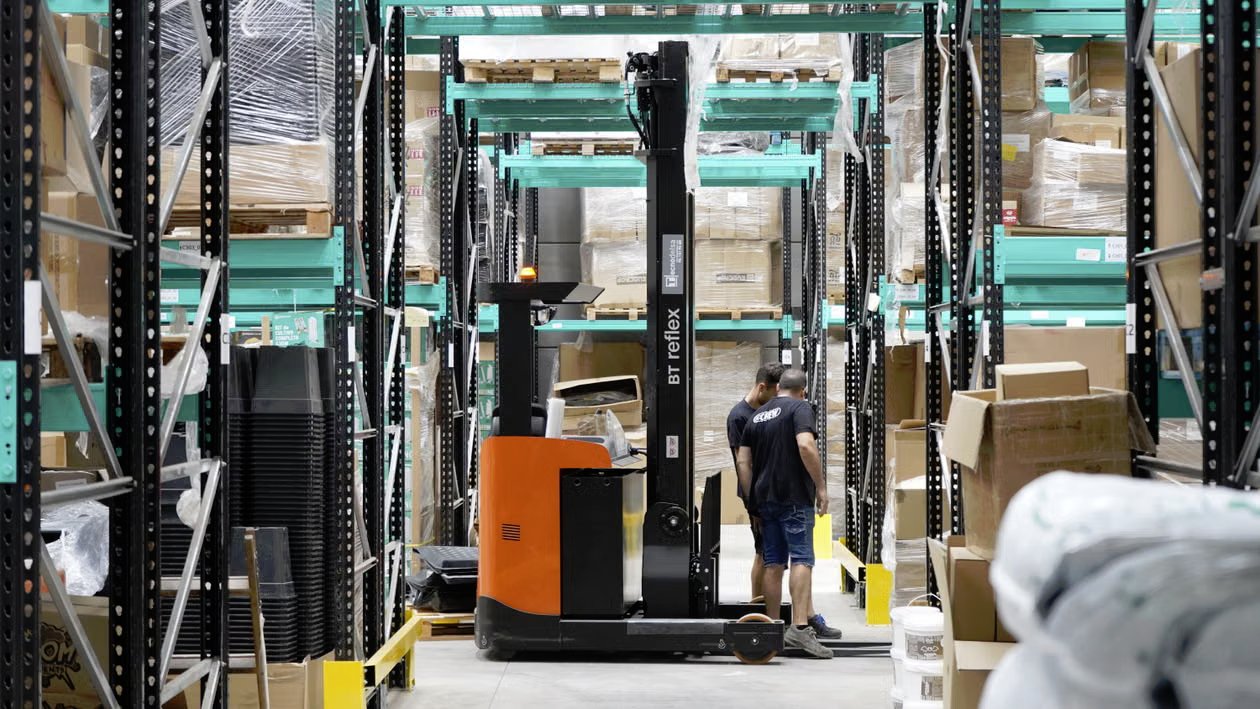
Image Source: Pexels
The Floor Space Trap in Rapid E-Commerce Growth
Scaling e-commerce brands often face cubic foot underutilization long before running out of square footage. Floor-level storage limits total capacity and increases travel times for picking staff. There are thousands of order fulfillment picking operations managed every day across growing online distribution centers, yet many businesses continue to operate without maximizing clear height.
When floor space becomes tight, picking accuracy drops and order cycle times extend. E-commerce businesses managing hundreds of SKUs with varying order frequencies require dynamic storage systems that segregate fast-moving inventory from slow-moving items.
Maximizing clear vertical space doubles or triples total storage capacity without expanding the building footprint. Implementing proper structural storage platforms ensures inventory flows smoothly from receiving to packing stations without creating congestion in active aisles.
High-Density Selective Pallet Racking for Bulk Stock
Pallet racking serves as the backbone for reserve inventory storage in high-volume distribution setups. Selective pallet racking offers immediate access to every pallet position, making it ideal for brands managing moderate SKU diversity with steady turnover rates.
When reserve inventory is organized vertically, warehouse managers maintain clear visibility over stock levels and streamline forklift operations. Choosing the right beam capabilities and upright frame dimensions prevents structural fatigue while maintaining flexible level adjustments as product dimensions change over time.
For businesses balancing bulk pallet storage alongside accessible hand-picking locations, integrating robust industrial warehouse shelving within lower rack levels creates a functional hybrid picking structure. This layout allows bulk overflow to sit directly above active picking locations, minimizing replenishment times across peak fulfillment shifts.
Drive-In and Push-Back Racking Systems
Drive-in racking provides high-density storage for operations handling fewer SKUs in massive quantities. By allowing forklifts to enter the rack structure directly, this design eliminates picking aisles in favor of a Last-In, First-Out (LIFO) inventory model.
Push-back racking utilizes nested carts running on inclined rails. When a new pallet is loaded, it pushes existing stock backward, offering higher density than selective racking while providing faster throughput than drive-in configurations. Combined with a holistically impactful transportation and logistics management strategy, such touches make a major difference.
Multi-Tier Industrial Shelving and Mezzanines
When handling high SKU counts with smaller individual item profiles, vertical extension through multi-tier shelving systems offers high storage density. These structures leverage clear building height by introducing elevated catwalks directly supported by the shelving frames below.
Multi-tier layouts create separate picking levels without requiring the full structural installation of a heavy-duty floor. This setup allows multiple operators to pick orders simultaneously across distinct levels, eliminating aisle congestion during high-volume promotional periods.
Mezzanine floors offer flexible open platform space above ground-level operations. A structural steel mezzanine can house dedicated packing lines, return processing areas, or specialized modular bin storage depending on operational needs.
- Multi-tier shelving doubles picking positions within the same horizontal footprint
- Heavy-duty mezzanine floors provide flexible space for automated sorting equipment
- Longspan shelving units accommodate irregular parcel shapes and medium-duty box inventory
Implementing structured multi-level storage transforms open vertical space into actionable fulfillment capacity while keeping picking staff organized across designated zones.
Mobile Shelving and High-Density Aisle Optimization
Standard static shelving requires fixed aisle space between every single row, leaving up to 50 percent of total floor area dedicated solely to foot traffic. Mobile shelving systems eliminate static aisles by mounting heavy-duty shelving units onto tracked mobile carriages.
Operators open the specific aisle required using mechanical cranks or automated controls. This design compresses picking zones into a compact footprint, freeing up valuable square footage for order packing, bulk staging, or receiving docks.
Mobile aisle configurations prove useful in climate-controlled environments or high-cost industrial spaces where square footage carries a high premium. Reducing open space lowers heating, cooling, and lighting costs while keeping inventory centralized for stock counts.
Carton Flow Racking for High-Velocity Hand Picking
Carton flow racking utilizes sloped roller beds integrated into standard rack frames to move inventory automatically from the loading side to the picking face. Operating on a strict First-In, First-Out (FIFO) principle, carton flow systems separate replenishment activities from order picking.
As an operator picks an item from the front box, the empty container is removed, and the box behind rolls forward into position. This continuous presentation reduces reach times and prevents pickers from waiting on stock replenishment during busy shifts.
Carton flow modules integrate cleanly with pick-to-light systems and conveyor lines, creating a streamlined picking environment for high-velocity SKUs. Keeping replenishment activity confined to the rear aisle removes fork trucks and stock carts from the primary picking path.
Integrating Automated Vertical Reciprocating Conveyors with Pallet Flow
Floor space runs out fast, but building upward with structural racking creates its own bottlenecks if you cannot move SKUs between elevations efficiently. Standard forklifts waste hundreds of operator hours every month just lifting single pallets to high-bay locations during active picking shifts. Vertical reciprocating conveyors (VRCs) solve this vertical transport friction by continuously moving pallet loads between floor levels and multi-tier mezzanines automatically.
When you pair vertical lifts with gravity-fed pallet flow lanes, inbound stock travels straight from receiving docks to upper rack elevations without cluttering active picking aisles. Gravity lanes push pallets forward to the picking face automatically, maintaining strict FIFO control for high-turnover inventory.
This automated vertical loop slashes cycle times, protects equipment from forklift mast impacts, and keeps ground-level aisles clear for rapid order fulfillment. Combining vertical lifts with dynamic racking turns raw vertical volume into an active high-velocity fulfillment zone.
Operational Alignment for Long-Term Storage Efficiency
Selecting the appropriate storage hardware represents only one part of building a high-performance e-commerce warehouse. The physical storage architecture must align directly with warehouse management system logic, product velocity data, and ergonomic safety standards.
Regularly auditing SKU velocity profiles ensures high-turnover items remain at waist height within fast-access zones, while slow-moving items occupy higher or deeper rack locations. This approach minimizes unnecessary bending, stretching, and travel distance across every shift.
Upgrading storage infrastructure requires balancing immediate storage density needs against future flexibility. Investing in modular rack frames, adjustable beam levels, and expandable shelving setups ensures your warehouse adapts smoothly as order volumes and product lines evolve. For more insights on optimizing order fulfillment processes and warehouse layout strategies, check out our recent guides on the internal blog.