

Keep reading
Rather we just did it for you?
Let's get your business seen.
Social media, websites, SEO and ads from a team you can actually meet.
Every restaurant, café and pub knows the pattern. December is rammed, January is empty. A sunny bank holiday fills the garden, a wet August week empties it. Seasonality is part of hospitality, but the businesses that cope best don’t just ride it out. They plan for it, months ahead.
I look after marketing for hospitality businesses across Surrey and Hampshire, and this guide is the approach I use with independents. It covers how to map your own busy and quiet times, what to offer in each season, how to protect cash flow in the slow months, and a simple 12-month plan you can copy.
What seasonality means for a restaurant
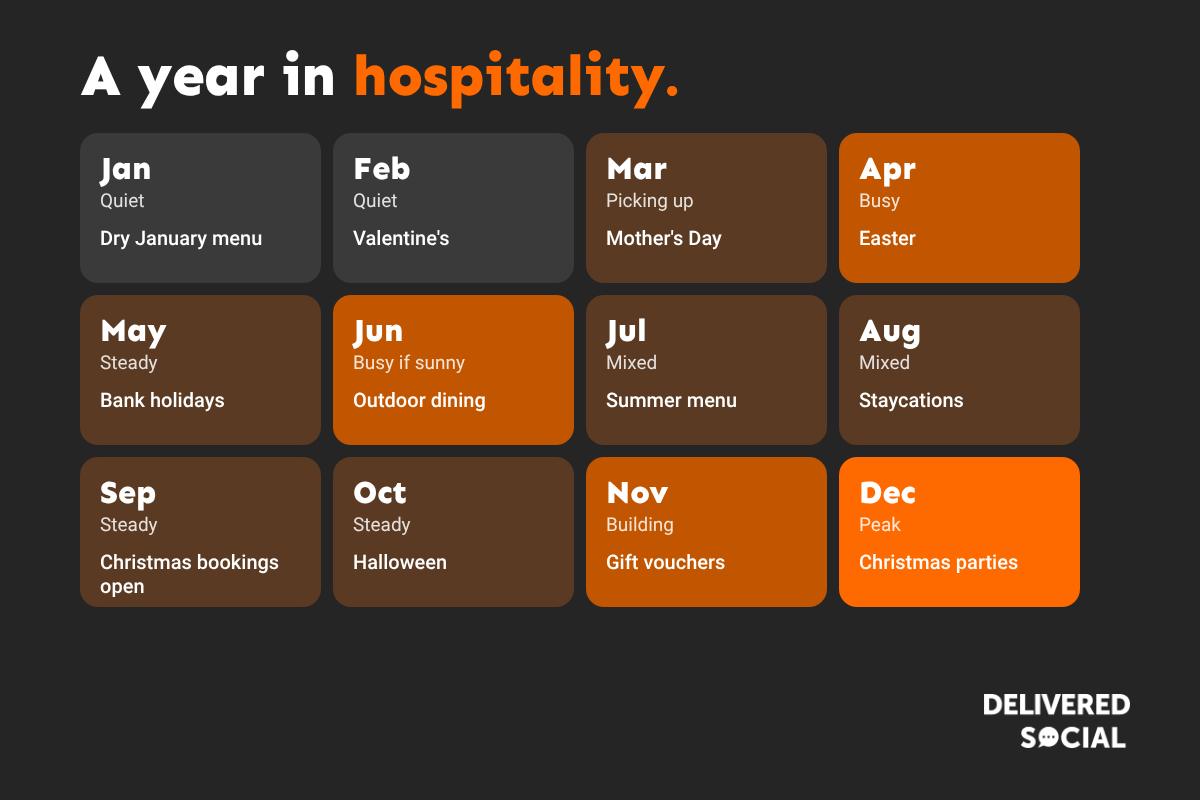
Seasonality is the regular rise and fall in trade across the year. For most UK hospitality businesses it looks something like this:
- Peaks: Christmas and New Year, Mother’s Day, Easter, sunny bank holidays, and summer for venues with outside space or tourist trade.
- Dips: January and early February, the weeks after Easter, and late summer for town-centre venues when locals go on holiday.
- Weekly patterns too: Monday to Wednesday is quieter almost everywhere, so seasonality and quiet nights often stack up together.
Your pattern depends on where you are and who your guests are. A seaside café, a city-centre bar and a village pub can have almost opposite years, so start with your own numbers, not someone else’s.
Step 1: Map your own busy and quiet times
Before planning any offers, look back at the last two years and note:
- Covers or takings by week, from your till or booking system.
- Your best and worst weeks, and what caused them (weather, events, school holidays, roadworks).
- Which days and times dip, such as Tuesday lunch or Sunday evening.
- When bookings for big dates actually came in, such as how many weeks before Christmas or Mother’s Day.
Put it on one page. You now know exactly which weeks need a push and when to start promoting the busy ones.
Step 2: Plan your year (a 12-month hospitality calendar)
| Month | Typical trade | Ideas | Start promoting |
|---|---|---|---|
| January | Quiet | Dry January drinks menu, “beat the blues” set menu, regulars’ offers | Early December |
| February | Quiet, with a Valentine’s spike | Valentine’s menu, Pancake Day, half-term family deals | Early January |
| March | Picking up | Mother’s Day, St Patrick’s Day | Early February |
| April | Busy at Easter | Easter brunch, bank holiday events, first terrace days | Early March |
| May | Steady | Two bank holidays, garden launch, spring menu | April |
| June | Busy if sunny | Father’s Day, outdoor dining, sport screenings | May |
| July and August | Busy for tourists, quieter in towns | Summer menu, family offers, staycation trade | June |
| September | Back to routine | Christmas party bookings open, autumn menu, local workers’ lunches | August |
| October | Steady | Halloween, half term, cosy menu launch, Christmas push | September |
| November | Building | Bonfire Night, Christmas parties, gift vouchers | September and October |
| December | Peak | Christmas parties, festive menu, New Year’s Eve, January bookings | From September |
The biggest mistake I see is starting too late. Christmas party searches start in late summer, and Mother’s Day tables are often gone weeks before. Plan each big date six to eight weeks ahead, and Christmas from September.
Step 3: Adapt your offer to the season
- Seasonal menus. Change two or three times a year at least. A new menu gives you something genuine to post about and a reason for regulars to come back.
- Cosy winter, outdoor summer. Fires, comfort food and hot drinks in winter. Garden, terrace and lighter menus when the sun’s out. Show both clearly on your website and Google profile.
- Regular nights. Quiz, live music, curry club or steak night give people a reason to come on a set night, whatever the season.
- Pop-ups and one-off events. A summer spritz bar, a winter hot chocolate hatch or a supper club with a local producer can fill a quiet week and get you talked about.
- Dayparts. If evenings are quiet in winter, push lunches, breakfasts, afternoon tea or coffee and cake instead.
For more ideas grouped by goal, see our list of 25 restaurant marketing ideas.
Step 4: Fill the quiet months
January and early February are the hardest weeks for most venues. Ideas that work:
- A named set menu such as “January Supper Club”, with a fixed price that feels like good value without heavy discounting.
- Something for Dry January. A proper alcohol-free cocktail menu brings in groups who might otherwise stay at home.
- Regulars first. A members-only midweek offer to your email list or loyalty scheme. Our guide to restaurant loyalty schemes covers how to set one up.
- Last-minute table alerts. “Six tables free tonight” in your Instagram Stories or a text to regulars.
- Local partnerships. Pre-theatre menus, offers for gym members or local workplaces, and team-ups with nearby businesses.
- Private hire. Quiet weeks are perfect for birthdays, wakes, team socials and clubs that can’t get a table in December.
Step 5: Make the most of the peaks
- Open bookings early for Christmas, New Year’s Eve and Mother’s Day, with a clear page for each on your website.
- Take deposits or pre-payments for big dates and groups. It cuts no-shows and brings cash in early.
- Pre-orders for set menus and large groups make service smoother and reduce waste.
- Raise spend per head with festive drinks pairings, sharing menus and extras for groups.
- Book them in for later. Hand December guests a January offer card or invite them to join your list, so peak guests come back in the dip.
Protect your cash flow
The quiet months are hard because costs carry on while takings drop. A few things that help:
- Sell gift vouchers online, especially in November and December. The money comes in now and the visits often land in the quieter months.
- Use deposits and pre-sales for events, parties and set menus.
- Flex your rota and opening hours. If Monday and Tuesday don’t pay in January, closing or opening shorter hours can be better than trading at a loss. Update your Google hours so nobody turns up to a locked door.
- Shorter seasonal menus reduce stock and waste when covers drop.
- Plan maintenance and staff training for the quiet weeks, not the busy ones.
Make it easy to book
- A clear “Book a table” button at the top of every page of your website.
- A page for every big date (Christmas, Mother’s Day, private hire) with the menu, price and booking link.
- Click and collect or delivery for the evenings people would rather stay in.
- A fast mobile site. Most people book on their phone, often on the same day.
Market each season online
- Google Business Profile: update special opening hours for bank holidays and Christmas, add seasonal photos, and post every week about what’s on. Our guide to local SEO for restaurants explains how.
- Your website: seasonal pages that use the words people search for, such as “Christmas party venue [town]” or “Sunday roast [town]”, live well before the season starts.
- Social media: show the season in the room, from fires and festive tables to the first terrace day. See our guide to social media for restaurants.
- Email and text: your list is the cheapest way to fill a quiet week. One short message with one clear offer.
- Paid social: a small, local Facebook and Instagram ad budget behind one seasonal offer can fill tables quickly.
Events and the licensing basics
If a seasonal event involves selling alcohol or offering entertainment outside what your premises licence covers, you may need a Temporary Event Notice from your local council. These cover events for fewer than 500 people at a time and must usually be given at least ten working days before the event. Check with your council’s licensing team early, and make sure your insurance covers outdoor and one-off events.
How to tell what’s working
- Compare like for like: this January against last January, not against December.
- Name every offer so you can count exactly how many people booked it.
- Track where bookings come from: Google, Instagram, your email list or walk-ins.
- Watch repeat visits through your booking system or loyalty scheme.
- Write it down. Keep a note of what worked each season, so next year starts from a better plan.
Common seasonality mistakes
- Starting Christmas and Mother’s Day marketing too late.
- Heavy discounting in the quiet months that trains people to wait for deals.
- Forgetting to update opening hours for bank holidays.
- No plan to bring December’s guests back in January.
- Running the same menu all year.
- Going quiet on social media when trade is quiet, just when you need it most.
Frequently asked questions
What is the quietest time of year for restaurants in the UK?
For most UK restaurants, January and early February are the quietest weeks, after the Christmas peak and while people are watching their spending. Town-centre venues can also be quieter in late summer when locals are away.
How can a restaurant make money in January?
Use a named, good-value set menu, an alcohol-free drinks menu for Dry January, offers for your regulars and email list, private hire for groups, and gift vouchers sold in December that get spent in January.
When should restaurants start promoting Christmas?
Have your Christmas party page live by September and start promoting it then. Group bookings and office parties are often decided weeks before December.
Should I close on quiet days?
Sometimes it makes sense. If a day regularly costs more to open than it takes, closing or opening shorter hours can protect your margin. Just update your Google Business Profile and website so guests know.
Do discounts help in quiet months?
Short, specific offers can work. Constant money-off tends to attract bargain hunters and teach regulars to wait. Added-value offers, such as a free dessert or a set menu, usually work better.
How far ahead should I plan seasonal menus?
Plan each big date six to eight weeks ahead so you have time to cost the menu, take photos and promote it. Christmas needs longer, from late summer.
Want help planning your year?
We help restaurants, cafés and pubs across Surrey, Hampshire and the UK fill their quiet months and make the most of their busy ones, with social media, Google and ads. See how we work as a restaurant marketing agency, or read our wider seasonal marketing ideas for small businesses. You can also call us on 01483 608 303 for a friendly chat.