

Keep reading
Rather we just did it for you?
Let's get your business seen.
Social media, websites, SEO and ads from a team you can actually meet.
Can you make money on Pinterest? Yes, but probably not in the way you’d expect. Pinterest doesn’t pay creators for views the way TikTok or YouTube can. Instead, it works as a powerful source of free traffic to your website, shop or blog, and that’s where the money is made. This guide explains how to make money on Pinterest for beginners, the main ways people and businesses earn from it, step-by-step setup, realistic expectations and the mistakes to avoid.
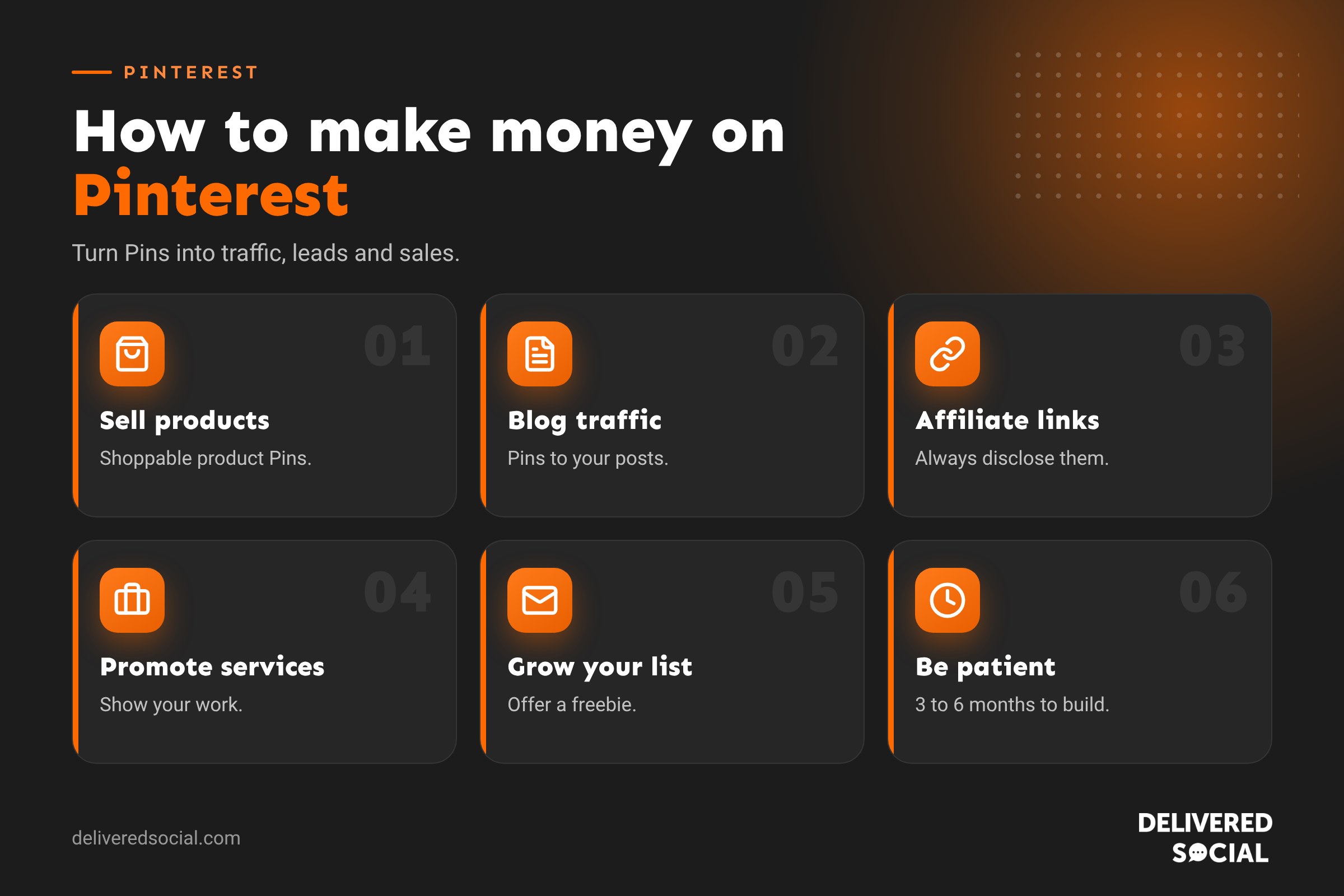
How Pinterest makes you money
Pinterest is a visual search engine. People search for ideas, save Pins and click through to websites to buy, book or learn more. Unlike most social platforms, Pinterest is happy to send people away to your website. Every Pin can link out.
That means Pinterest earns you money indirectly, by:
- Sending buyers to your online shop.
- Bringing readers to your blog, where you earn from ads or affiliate links.
- Promoting affiliate products for commission.
- Attracting clients for your services.
- Showcasing your work to land brand partnerships.
Does Pinterest pay creators?
Pinterest has experimented with creator funds and reward programmes in the past, but there’s no widely available scheme in the UK that pays you simply for views or followers. Don’t plan your strategy around being paid directly by Pinterest. Plan around the traffic it sends.
7 ways to make money on Pinterest
1. Sell your own products
If you have an online shop, Pinterest is ideal. Product Pins show prices and link directly to the product page. Connect your shop’s catalogue to Pinterest (it works with Shopify, WooCommerce and others) so your products appear as shoppable Pins automatically.
Good for: home decor, fashion, jewellery, gifts, stationery, beauty, crafts and food.
2. Drive traffic to a blog
Bloggers have used Pinterest for years. Each blog post gets several Pins, Pinterest sends readers to the post, and the blog earns from display ads, affiliate links or its own products.
Good for: recipes, home, travel, parenting, personal finance and DIY.
3. Affiliate marketing
Affiliate marketing means earning commission when someone buys through your link. Pinterest allows affiliate links on Pins, but you must:
- Clearly disclose that it’s an affiliate link, for example with “#ad” or “affiliate link”.
- Follow UK advertising rules on transparency.
- Check the affiliate programme allows Pinterest promotion.
Many people find it works better to link to a blog post that features affiliate products, rather than straight to the product, as it builds trust and helps them collect email subscribers.
4. Promote your services
Service businesses can use Pinterest to show their work and attract clients: wedding photographers, interior designers, florists, cake makers, garden designers, hairdressers and architects all do well. Pins link to portfolio pages, case studies or enquiry forms.
5. Sell digital products
Printables, templates, planners, courses and e-books sell well on Pinterest, where people are already looking for practical help and inspiration.
6. Brand partnerships
If you build a strong following in a niche, brands may pay you to create Pins featuring their products. Always label sponsored content clearly using Pinterest’s paid partnership tool.
7. Offer Pinterest management
Some people turn Pinterest skills into a service, managing accounts for small businesses that don’t have time.
How to start making money on Pinterest: step by step
- Create a business account, or convert your personal one, for free.
- Choose your niche. Focus on topics linked to what you sell or write about.
- Claim your website so your logo appears on Pins from your site and you unlock analytics.
- Optimise your profile with a clear name, keywords, description and link.
- Create 5 to 10 boards with keyword-rich names, such as “Small Garden Ideas”.
- Create Pins at 1000 x 1500 pixels with clear text and an eye-catching image.
- Write keyword-rich titles and descriptions using words people search for.
- Link every Pin to the most relevant page on your website.
- Pin consistently, ideally several fresh Pins a week.
- Track results in Pinterest Analytics and Google Analytics.
What makes a Pin that earns?
- Tall format: 2:3 ratio stands out in the feed.
- Clear text overlay: “10 small garden ideas” tells people what they’ll get.
- Bright, high-quality images: real photos of your products or work.
- Keywords: in the title, description and image text.
- A reason to click: a guide, a price, a “shop the look” or a free download.
- Brand consistency: similar fonts and colours so people recognise your Pins.
How long does it take to make money on Pinterest?
Pinterest is a slow-burn platform. Pins can take weeks or months to gain traction, but once they do, they can keep sending traffic for years. Most people should expect three to six months of consistent pinning before seeing meaningful traffic. The upside is that content keeps working long after you post it, unlike a TikTok or Instagram post.
Realistic expectations
| Stage | What usually happens |
|---|---|
| Month 1 to 2 | Setting up, creating boards and Pins, few clicks |
| Month 3 to 6 | Some Pins start to rank and bring steady clicks |
| Month 6 to 12 | Traffic builds as more Pins rank; first regular sales or leads |
| 12 months and beyond | A library of Pins working for you around the clock |
Results depend heavily on your niche, website and how consistently you pin.
Using Pinterest ads to speed things up
If you want faster results, Pinterest ads let you promote your best Pins to people searching for related topics. Ads can work particularly well for products and seasonal offers. Start with a small daily budget, promote Pins that already perform well organically, and track sales carefully.
Common mistakes to avoid
- Treating Pinterest like Instagram. It’s a search engine, so keywords matter more than hashtags.
- Linking to your home page. Link each Pin to the exact page it shows.
- Not disclosing affiliate links. Always label them.
- Giving up too soon. Pinterest takes months, not days.
- Pinning in bursts. Steady, consistent pinning beats occasional bursts.
- Ignoring your website. A slow or confusing site wastes the traffic Pinterest sends.
- Using other people’s images. Only pin content you have the rights to use.
Pinterest for local businesses
Pinterest is often seen as a platform for bloggers and online shops, but local businesses can benefit too, especially in visual industries. A Surrey wedding florist, a Hampshire kitchen fitter or a Portsmouth bakery can all use Pinterest to get in front of people planning projects in their area. Add your town to Pin descriptions and board names, such as “Surrey wedding flowers”, to reach local searchers.
Building an email list from Pinterest
One of the smartest ways to profit from Pinterest is to turn visitors into email subscribers. Offer something useful in return for an email address, such as a free checklist, guide, recipe collection or discount code, and create Pins that promote it. Once someone is on your list, you can share new products, offers and content directly, without relying on any algorithm. Many successful Pinterest businesses say their email list is where most of their sales actually happen.
Tools that make Pinterest easier
- Canva: Pin templates in the right size.
- Pinterest’s built-in scheduler: schedule Pins in advance.
- Social media tools such as Metricool: plan Pinterest alongside other platforms.
- Google Analytics: see how much traffic and how many sales come from Pinterest.
- Pinterest Trends: find what’s being searched for and when.
A weekly Pinterest routine
- Spend 30 minutes creating five to ten fresh Pins for your products, services or blog posts.
- Schedule them across the week.
- Check which Pins got the most saves and clicks last week.
- Create new variations of your best performers.
- Review your boards monthly and add seasonal content ahead of time.
An hour or so a week, done consistently, builds a library of Pins that can keep sending visitors for years.
Social platforms change their features and rules regularly, so review your Pinterest settings and the latest policies every few months.
Key takeaways
- Pinterest makes money indirectly by sending traffic to your website, shop or blog.
- Product Pins, blogging, affiliate links, services and digital products all work.
- Always disclose affiliate links and sponsored content.
- Expect three to six months of consistent pinning before results build.
Frequently asked questions
Can you make money on Pinterest?
Yes, mainly by sending traffic to your shop, blog, affiliate links or services.
Does Pinterest pay you for followers or views?
Not in the UK at present. Pinterest earns you money indirectly through the traffic it sends.
Can I use affiliate links on Pinterest?
Yes, as long as you clearly disclose them and follow advertising rules.
How many followers do I need to make money on Pinterest?
Followers matter less than on other platforms. Pins are shown in search to anyone, so even small accounts can drive sales.
How long does it take to see results?
Usually three to six months of consistent pinning.
Want Pinterest to send you customers?
We help businesses across Surrey, Hampshire and the UK use Pinterest and other platforms to drive traffic and sales. Read our guides to Pinterest trends and Pinterest boards, see our social media management services or call us on 01483 608 303.