



Keep reading
Rather we just did it for you?
Let's get your business seen.
Social media, websites, SEO and ads from a team you can actually meet.
Public relations and social media used to sit in different departments. PR teams pitched journalists and managed press releases, while social media teams posted updates and replied to comments. Today the line has almost disappeared. Journalists find stories on social media, news spreads through shares, and a single post can shape a brand’s reputation in hours. This guide explains how PR and social media work together, why combining them gets better results, practical ways to integrate them, how to handle a crisis and how to measure success.
What is the difference between PR and social media?
Public relations (PR) is about managing your reputation and earning attention from the media, influencers and the public. It includes press releases, media relations, thought leadership, awards, events and crisis communications.
Social media marketing is about building an audience and relationships directly through platforms such as Instagram, Facebook, LinkedIn, TikTok and X, using content, conversation and sometimes paid ads.
The goals overlap: both aim to build awareness, trust and a positive reputation. The difference is mostly about the channel. PR traditionally earns coverage through third parties; social media lets you speak directly to your audience.
Why PR and social media work better together
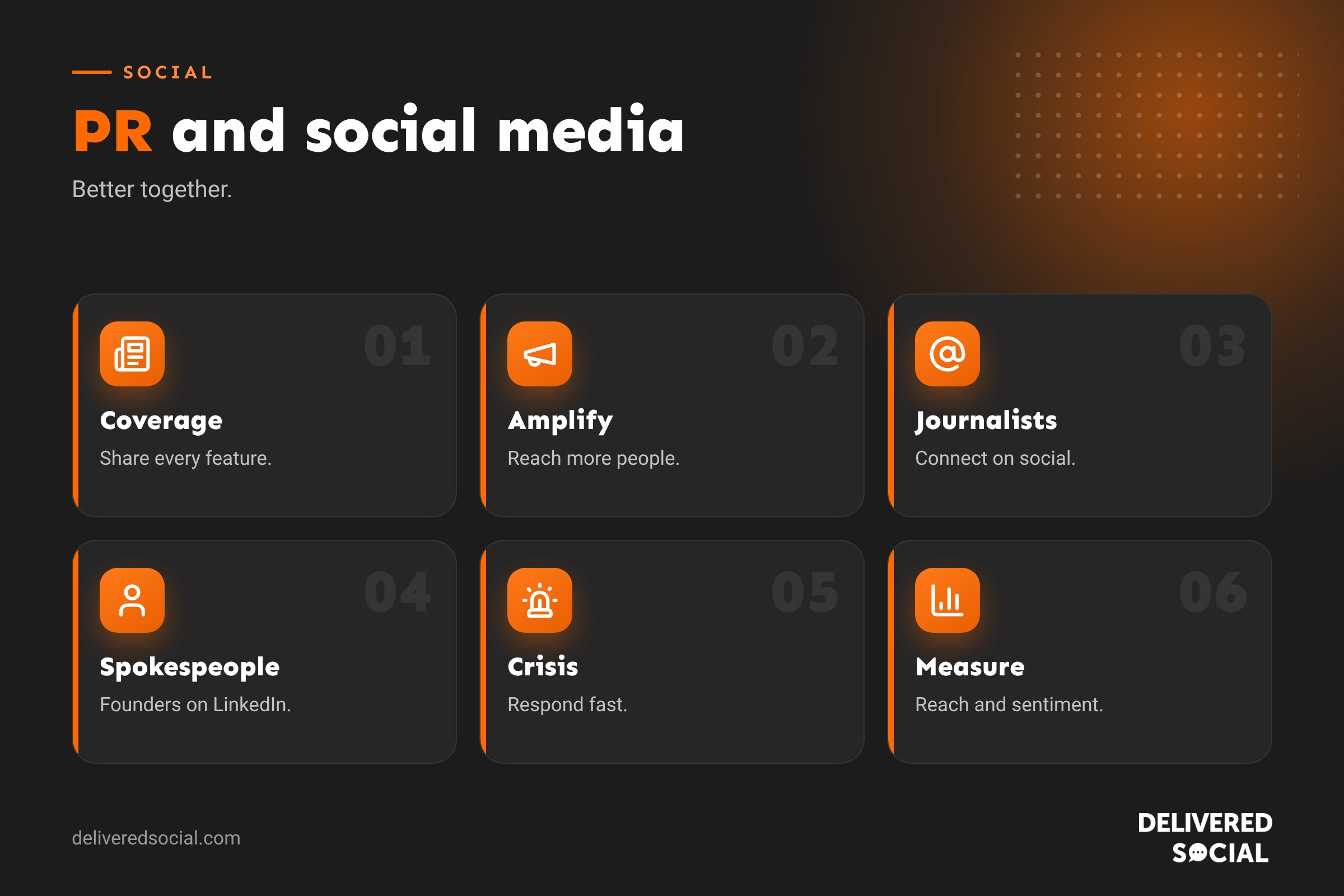
- Social media amplifies coverage. A press feature reaches that publication’s readers. Shared on your channels, it reaches your followers too, and gains extra credibility.
- Coverage gives social content credibility. “As featured in” posts carry more weight than you praising yourself.
- Journalists use social media. Many reporters find stories, sources and experts on X, LinkedIn and Instagram.
- Faster response. Social media lets you respond to news and issues in real time.
- Consistent messaging. Planning both together keeps your story clear and consistent across every channel.
- Better measurement. Social data shows how coverage is shared and discussed.
How to integrate PR and social media
1. Plan stories once, use them everywhere
When you have news, such as a launch, award, new hire, milestone or community project, plan the press release, social posts, email and website update together. Each channel tells the same story in its own format.
2. Share every piece of coverage
When you appear in the press, share it on all relevant channels, tag the publication and journalist, and add it to your website. Create a short graphic or video quote from the article to make it more engaging.
3. Build relationships with journalists on social
Follow journalists who cover your industry or area, engage thoughtfully with their posts and share their work. When you pitch later, you are not a stranger.
4. Use social media to find PR opportunities
Journalists often post requests for expert comment or case studies. Monitoring these can lead to quick wins in national and trade media.
5. Turn your people into spokespeople
Founders and senior team members sharing expertise on LinkedIn build thought leadership, which in turn attracts media interest and speaking invitations. Our guide to LinkedIn personal branding explains how.
6. Work with creators and influencers
Influencer relationships sit between PR and social. Gifting, events and partnerships with relevant creators can generate authentic coverage on social platforms. Our influencer marketing team runs these campaigns.
7. Create a social media newsroom
Keep a press page on your website with news, images, logos and contact details, and link to it from your social profiles. Journalists can find what they need quickly.
Social media for PR: practical ideas
- Share behind the scenes content around launches and events.
- Post short video reactions to industry news with your expert view.
- Celebrate awards and accreditations with photos and thanks.
- Share customer stories and case studies, with permission.
- Use LinkedIn articles for opinion pieces that journalists may quote.
- Go live during events, openings or charity activities.
- Share your community and charity work, which often attracts local media.
Handling a PR crisis on social media
Social media is often where problems start and where they grow fastest. A clear plan helps you respond calmly:
- Monitor: use social listening and notifications so you know when something is building.
- Pause scheduled posts: nothing looks worse than cheerful promotions during a serious issue.
- Respond quickly: acknowledge the issue, even if you do not have every answer yet.
- Be honest and human: avoid jargon and defensive language. Apologise when you are at fault.
- Take detailed conversations private: invite people to message or call to resolve individual issues.
- Keep messages consistent: make sure your website, social posts and media statements say the same thing.
- Follow up: share what you have done to fix the problem.
Our guide to social media customer service covers handling complaints day to day.
PR and social media for small businesses
Small businesses can do a lot without a big budget. Local newspapers, radio and community websites are always looking for stories about local people and businesses. Share your news with them, then share the coverage on your social channels. Join local business groups online, support community causes and celebrate local partners. These simple actions build reputation, links and followers at the same time. Our guide to PR for small businesses has more ideas.
How to measure PR and social media together
- Coverage: number and quality of media mentions.
- Reach: estimated audience of coverage plus social reach of related posts.
- Engagement: shares, comments and saves on posts about your coverage.
- Website traffic: visits from news sites and social media.
- Backlinks: links from coverage that help SEO.
- Branded search: growth in people searching for your name.
- Sentiment: whether conversations about you are positive, neutral or negative.
Common mistakes
- Treating PR and social media as separate projects with different messages.
- Getting great coverage and never sharing it.
- Pitching journalists cold without engaging with their work first.
- Ignoring negative comments or responding defensively.
- Posting press releases word for word on social media instead of adapting them.
A simple integrated campaign example
Imagine a local business celebrating ten years in business. A joined up plan might include a press release to local media with a strong photo, a short video of the founder sharing highlights posted on Instagram and LinkedIn, a series of throwback posts in the weeks before, a customer celebration event with a local influencer invited, and a thank you email to customers. When the local newspaper covers it, the article is shared across every channel and added to the website. Each element supports the others, and the story reaches far more people than any single channel could.
Tools that help
You do not need expensive software to start, but a few tools make integration easier. A shared content calendar keeps PR and social plans in one place. Social listening tools alert you to mentions of your brand. Journalist request services surface opportunities for expert comment. A scheduling tool lets you plan posts around announcements, and Google Alerts can flag new online coverage. Most importantly, agree who is responsible for each part, so news is shared quickly and consistently.
Using employee advocacy
Your team can be one of your strongest PR channels. When staff share company news, coverage and behind the scenes moments on their own LinkedIn and Instagram, the message reaches networks that would never follow your business page, and it feels more personal and credible. Make it easy: share ready to post captions and images, explain why it matters and never force anyone. Celebrate staff achievements publicly too, which encourages them to share and shows your culture to future recruits and customers.
Key takeaways
- PR and social media share the same goal: building awareness, trust and reputation.
- Social media amplifies PR coverage; coverage adds credibility to social content.
- Plan stories once and tell them across every channel.
- Use social media to build relationships with journalists and find opportunities.
- Have a crisis plan and respond quickly, honestly and consistently.
Frequently asked questions
Is social media part of PR?
Increasingly, yes. Social media is now one of the main ways reputations are built and managed, so PR and social teams work closely together.
How can social media help PR?
It amplifies coverage, connects you with journalists, lets you respond quickly to issues and shows how your story is being discussed.
Should I post press releases on social media?
Share the news, but adapt it into engaging posts, images or videos rather than copying the release word for word.
How do I get journalists to notice my business?
Follow and engage with relevant journalists, share genuinely newsworthy stories and offer expert comment when they ask.
What should I do if something goes wrong on social media?
Pause scheduled posts, acknowledge the issue quickly, respond honestly and keep messages consistent across channels.
Can small businesses do PR without an agency?
Yes. Local media, community groups and social media are great places to start.
How quickly should we respond to negative comments?
As quickly as possible, ideally within a few hours during working days. A fast, calm reply often stops a problem from growing.
Want your news seen by more people?
We help businesses across Surrey, Hampshire and the UK with social media and PR. Find out more about our digital PR services. Call us on 01483 608 303.
































