



Keep reading
Rather we just did it for you?
Let's get your business seen.
Social media, websites, SEO and ads from a team you can actually meet.
TikTok changed social media, but it is not the only place for short form video. Whether you are worried about TikTok’s future, want to reach different audiences, or simply want to make your videos work harder, there are strong alternatives. Many businesses now post the same short videos across several platforms. This guide compares the best TikTok alternatives, who uses each one, what they are good for and how businesses can repurpose content across them.
Why look at TikTok alternatives?
- Reach different audiences: not all your customers use TikTok.
- Spread risk: relying on one platform is risky if rules or access change.
- Get more from each video: post once, publish everywhere.
- Different strengths: some platforms are better for search, sales or B2B.
1. Instagram Reels
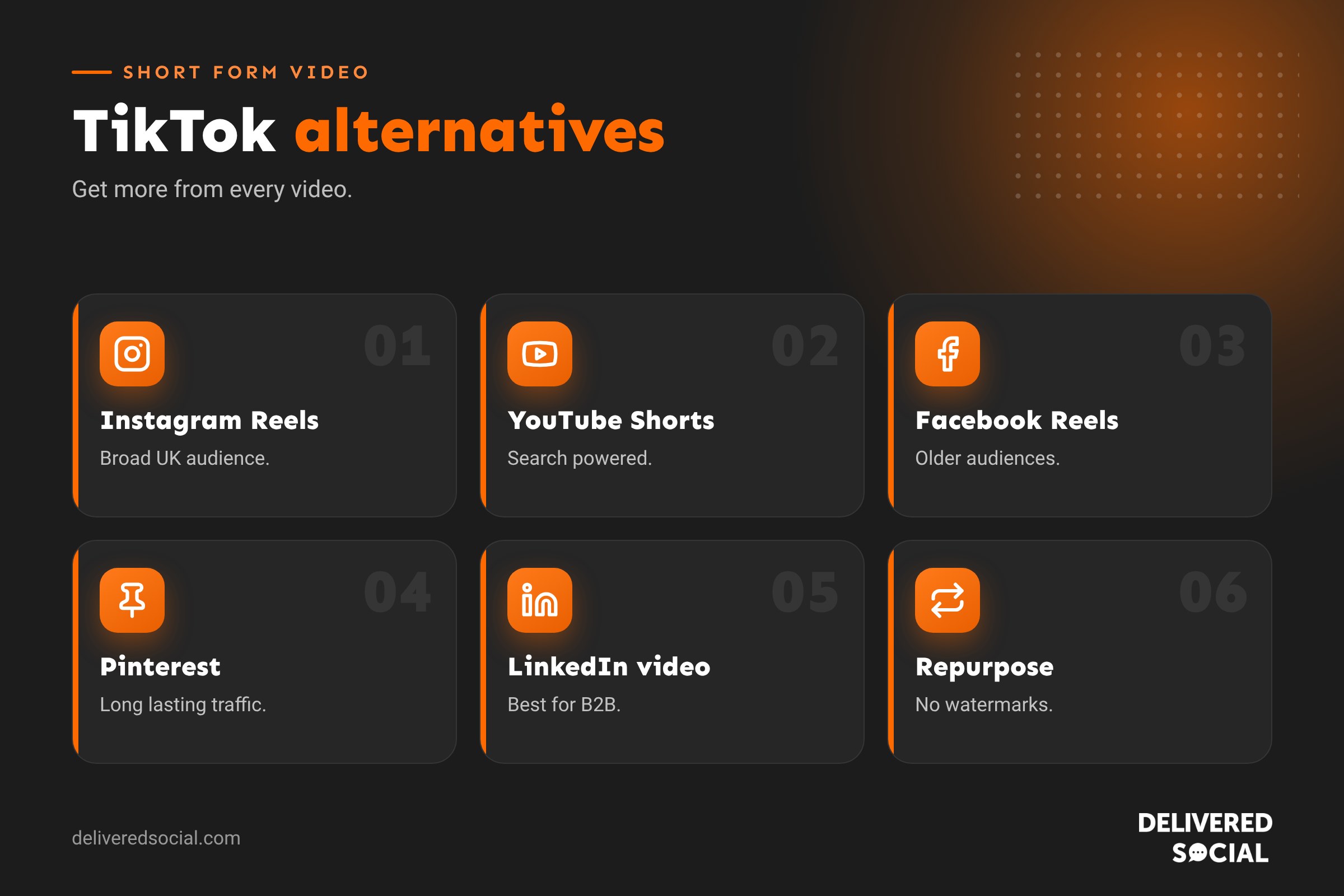
The closest alternative to TikTok for most UK businesses. Reels appear in a dedicated tab, the main feed and Explore, so they reach both followers and new people. Instagram’s audience is broad, with strong use among adults who shop and book local services. Reels connect to your Instagram profile, Stories and DMs, making it easy to turn viewers into customers. Our guide to Instagram Reels size covers the specs.
Best for: local businesses, retail, hospitality, beauty, lifestyle and personal brands.
2. YouTube Shorts
Short vertical videos inside YouTube, the world’s biggest video platform. Shorts can be found through search and can lead viewers to your longer videos and channel. YouTube’s search power means Shorts can keep bringing views long after posting. Our YouTube Shorts tips explain how to start.
Best for: how to content, tutorials, product demos and businesses building a long term video library.
3. Facebook Reels
Facebook has its own Reels, which can be cross posted from Instagram. Facebook’s audience skews older than TikTok’s, which can be a big advantage for businesses whose customers are 35 plus.
Best for: local services, trades, community organisations and older audiences.
4. Snapchat Spotlight
Snapchat’s Spotlight feed shows short videos from across the platform. Snapchat remains popular with teenagers and young adults in the UK.
Best for: brands targeting younger audiences.
5. Pinterest video and Idea Pins
Pinterest is a visual search engine where people plan purchases, recipes, home projects and events. Short videos and pins can drive traffic for months. Our guide to Pinterest for business website traffic explains more.
Best for: home, fashion, food, weddings, crafts and anything people plan in advance.
6. LinkedIn video
LinkedIn has added a vertical video feed, and short videos from professionals perform well. It is the best alternative for B2B businesses.
Best for: professional services, recruitment, B2B products and personal brands.
7. X (Twitter) video
X supports video and has focused on it increasingly. Useful for news, commentary and communities in tech, sport and media. Our guide to what X is explains the platform.
8. Lemon8, Triller and newer apps
Several newer apps offer TikTok style feeds, but their audiences are much smaller in the UK. They can be worth watching, but most businesses get better returns from the established platforms above.
How to choose the right platforms
- Where are your customers? Age, location and interests matter most.
- What is your goal? Awareness, website traffic, local bookings or B2B leads.
- What content suits you? Tutorials suit YouTube; lifestyle suits Instagram; professional insight suits LinkedIn.
- How much time do you have? Two platforms done well beat five done badly.
Our guide to choosing the right social media platforms helps you decide.
How to repurpose short videos across platforms
- Film vertically: 9:16 at 1080 by 1920 works across all the main platforms.
- Remove watermarks: Instagram and YouTube may limit reach for videos with TikTok watermarks. Save your original edit or download without the watermark from your editing app.
- Adjust length: keep videos within each platform’s limits and attention spans.
- Change captions and hashtags: tailor text to each platform’s audience and search.
- Use native sounds: add music within each app where possible, and use licensed music for business accounts.
- Schedule in one place: tools such as Metricool can publish to several platforms. Our guide to using Metricool shows how.
TikTok alternatives for different businesses
- Café or restaurant: Instagram Reels and Facebook Reels.
- Tradesperson: Facebook Reels and YouTube Shorts.
- Online shop: Instagram Reels, Pinterest and YouTube Shorts.
- B2B service: LinkedIn video and YouTube.
- Youth brand: Snapchat Spotlight, Instagram Reels and YouTube Shorts.
Should you leave TikTok?
For most businesses, no. If TikTok works for you, keep using it, but avoid relying on it alone. Build your presence on at least one other platform and, most importantly, on channels you own, such as your website and email list. That way, changes on any one platform will not wipe out your marketing.
Measuring which platform works best
After posting the same videos across platforms for a couple of months, compare results. Look at views, watch time, follower growth, website clicks and, most importantly, enquiries and sales from each platform. You may find a video that flopped on TikTok takes off on YouTube Shorts, or that Facebook brings the most bookings. Use what you learn to focus your time where it pays back.
Comparing the platforms side by side
- Audience size: YouTube, Facebook and Instagram have the largest UK audiences; TikTok is close behind and growing.
- Age profile: Snapchat and TikTok skew youngest, Instagram sits in the middle and Facebook skews older.
- Discovery: TikTok, Reels and Shorts all push content to non followers; LinkedIn and Facebook lean more on your network.
- Search: YouTube and Pinterest are strongest for content found through search months later.
- Selling: TikTok Shop, Instagram Shopping and YouTube Shopping all support product tagging.
- B2B: LinkedIn is the clear leader for professional audiences.
A simple cross posting workflow
Many businesses use one routine for every platform. Film a batch of vertical videos once a week. Edit them in CapCut or a similar editor and export clean versions without watermarks. Upload to TikTok first, then post the same video as a Reel on Instagram and Facebook and as a YouTube Short over the following days, adjusting the caption for each. Add the best performers to Pinterest and LinkedIn if they fit. Review results monthly and spend more time on the platforms that bring enquiries.
What to avoid when switching platforms
- Uploading low quality copies downloaded from another app.
- Using the same hashtags everywhere when audiences search differently.
- Ignoring comments on secondary platforms.
- Abandoning a platform after a week; each needs time to build.
Owned channels: the alternative that lasts
The safest alternative to any social platform is a channel you own. Your website, email list and Google Business Profile do not depend on an algorithm or an app’s future. Use short videos to attract attention, then give people a reason to join your email list or visit your site, such as a guide, a discount or early access. Embed your best videos on your website pages and in emails. That way, every view on social media helps build an audience you control.
Testing a new platform
When you add a new platform, give it a fair trial. Post at least three times a week for eight weeks, reply to every comment and track the same numbers you track on TikTok. That is long enough to see whether the audience responds and short enough to change course if it does not.
Whatever mix you choose, keep your brand voice, visual style and calls to action consistent, so people recognise you instantly wherever they see your videos and feel confident getting in touch.
Key takeaways
- Instagram Reels and YouTube Shorts are the strongest TikTok alternatives for most businesses.
- Facebook Reels reaches older audiences; LinkedIn video suits B2B.
- Pinterest and YouTube offer long lasting search traffic.
- Film vertically and repurpose videos across platforms without watermarks.
- Do not rely on one platform; build owned channels too.
Frequently asked questions
What is the best alternative to TikTok?
Instagram Reels and YouTube Shorts are the most popular alternatives.
Is there an app like TikTok for business?
LinkedIn video is the best TikTok style option for B2B businesses.
Can I post the same video on TikTok and Instagram?
Yes, but remove the TikTok watermark and tailor the caption.
Which platform is best for older audiences?
Facebook tends to reach older audiences than TikTok.
Are YouTube Shorts worth it?
Yes, especially for searchable how to and tutorial content.
Should my business stop using TikTok?
Not if it works, but spread your efforts across platforms and owned channels.
Is Instagram Reels better than TikTok?
It depends on your audience; many businesses use both.
Can I schedule videos to several platforms at once?
Yes, with social media management tools such as Metricool.
Which platform is best for local businesses?
Instagram and Facebook usually deliver the most local enquiries.
Want your videos everywhere your customers are?
We create and manage short form video across platforms for businesses in Surrey, Hampshire and the UK. Find out more about our social media management services. Call us on 01483 608 303.
































