



Keep reading
Rather we just did it for you?
Let's get your business seen.
Social media, websites, SEO and ads from a team you can actually meet.
You have a website. It looks good, it explains what you do and it has a contact form. But the visitors are not coming, or not enough of them. You are not alone. Many small business websites get only a trickle of traffic because nobody has a plan to bring people in. The good news is that there are proven ways to grow your audience, from free SEO and content to social media, email and paid ads. This guide explains how to get traffic to your website, with practical steps you can start this week and a simple plan to keep it growing.
Start with the right traffic
Not all traffic is equal. A thousand visitors from the other side of the world are worth less to a local plumber than ten visitors from the next street who need a boiler fixed. Before chasing numbers, be clear about who you want to attract and what you want them to do: call, book, buy or enquire. Everything below works best when it is aimed at the right people.
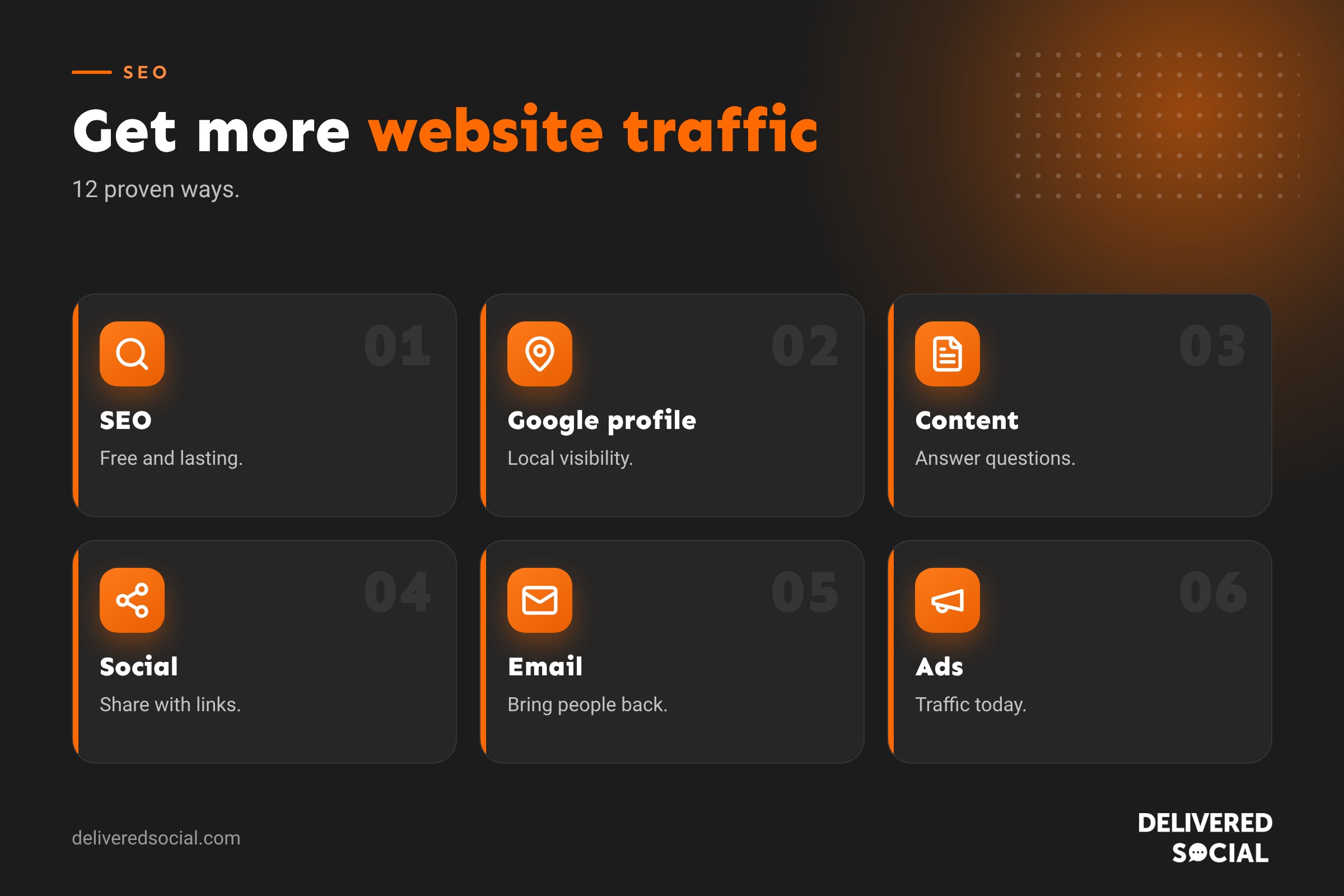
1. Get the SEO basics right
Search engine optimisation brings free, steady traffic from people actively looking for what you offer.
- Clear pages for each service or product, each targeting the words customers use.
- Descriptive page titles and meta descriptions that make people want to click.
- Fast, mobile friendly pages.
- Good internal links between related pages.
- Submit your site to Google Search Console and check for problems.
Our guide to what SEO is and our guide to improving organic rankings explain the essentials.
2. Optimise your Google Business Profile
For local businesses, your Google Business Profile is one of the biggest traffic sources. Fill in every section, choose accurate categories, add photos, post updates and collect reviews. Make sure your website link is included and consider adding links to specific service pages. Our guide to Google Business Profile posts shows how to keep your profile active.
3. Publish helpful content
Blog posts, guides and FAQs that answer real customer questions bring people in through search, social media and AI tools. Focus on specific questions rather than broad topics. Our guide to long tail keywords explains how to find questions with real search demand.
4. Use social media to send people to your site
Social media builds awareness and trust, and can send visitors to your website when you give them a reason. Share blog posts, offers, case studies and new products with clear links. Use link in bio tools on Instagram and TikTok, and add links to Facebook and LinkedIn posts where they fit. Our social media for beginners guide covers the basics.
5. Build an email list
Email is one of the most reliable ways to bring people back to your website. Offer something valuable in exchange for an email address, such as a guide, discount or newsletter, then send regular, useful emails with links to your latest content and offers. Our guide to email marketing for small businesses explains how to start.
6. Earn links from other websites
Links from relevant websites bring referral visitors and help your SEO. Get listed in quality directories, partner with local businesses, sponsor community events and pitch stories to local media. Avoid buying links; our guide to buying backlinks explains why.
7. Run paid ads
Paid advertising brings traffic immediately. Google search ads reach people searching for your services, while Facebook, Instagram, TikTok and LinkedIn ads reach people based on location, interests and job roles. Start small, track results and scale what works. Our guide to paid media explains the options.
8. Get found in AI search
More people now ask ChatGPT, Gemini and Google’s AI Overviews for recommendations. Clear, factual content, strong reviews and consistent business information all increase your chances of being mentioned and linked. Our guide to ranking in ChatGPT covers this.
9. Use video
YouTube is the second largest search engine, and short videos on TikTok, Reels and Shorts can reach huge audiences. Add your website to your channel, mention it in videos and embed videos on your site to keep visitors engaged.
10. Collaborate and guest post
Write expert articles for industry websites, appear on podcasts, speak at events and run joint promotions with complementary businesses. Each brings new audiences who may follow you back to your site.
11. Repurpose your content
Turn one blog post into social posts, a short video, an email and an infographic. Each version reaches a different audience and can link back to the original.
12. Make your site worth visiting
Traffic is wasted if visitors leave straight away. Fast loading pages, clear navigation, strong calls to action and useful content keep people on your site and bring them back. Our guide to why website speed matters explains how slow pages lose visitors.
How to measure your traffic
- Google Analytics 4: see where visitors come from, which pages they view and what actions they take.
- Google Search Console: see which searches bring people to your site and how your rankings change.
- Social media insights: track link clicks from each platform.
- Email reports: track clicks to your website from campaigns.
Focus on traffic that leads to enquiries and sales, not just total visits.
A simple 90 day traffic plan
- Month 1: fix SEO basics, complete your Google Business Profile, set up Analytics and Search Console, and ask ten customers for reviews.
- Month 2: publish four helpful articles answering customer questions, share each on social media and start an email newsletter.
- Month 3: run a small Google or social ad test, approach three local partners for links or features, and review which channels brought the most valuable visitors.
Common mistakes
- Expecting traffic to arrive just because the website exists.
- Chasing big numbers instead of the right visitors.
- Giving up on SEO and content after a few weeks.
- Posting on social media without ever linking back to the site.
- Running ads to the home page instead of focused landing pages.
Traffic for local businesses
If most of your customers are local, focus first on the channels that reach people nearby. Make sure your Google Business Profile is complete and active, build pages for the towns and areas you serve, and get listed in reputable local directories. Join local Facebook groups and business networks, support community events and ask local partners to link to you. Local press loves stories about local people, so share milestones, charity work and new launches. These steps bring visitors who can actually become customers, which matters far more than national traffic.
Key takeaways
- Focus on attracting the right visitors, not just more visitors.
- SEO, Google Business Profile and helpful content bring free, lasting traffic.
- Social media, email, partnerships and video build awareness and return visits.
- Paid ads bring traffic immediately while organic channels grow.
- Measure which channels bring enquiries and invest more in those.
Frequently asked questions
How can I get traffic to my website for free?
Improve your SEO, complete your Google Business Profile, publish helpful content, share on social media and build an email list.
How long does it take to increase website traffic?
Paid ads work immediately. SEO and content usually take several months to build momentum.
What is the fastest way to get website traffic?
Paid advertising on Google or social media brings visitors the fastest.
Does blogging increase website traffic?
Yes, when articles answer real customer questions and are optimised for search.
Why is my website not getting traffic?
Common reasons include weak SEO, no content, a new or slow site, and no promotion through other channels.
How much traffic does a small business website need?
It depends on your conversion rate and goals. A small amount of well targeted traffic can bring plenty of enquiries.
Does social media help website traffic?
Yes, when you share useful content with clear links and give people a reason to click.
Can AI tools send traffic to my website?
Yes. ChatGPT, Gemini and Google AI Overviews can link to your site when they cite it as a source.
Should I focus on SEO or ads first?
Many businesses use ads for quick leads while building SEO for long term, lower cost traffic.
Does email marketing increase website traffic?
Yes. Regular emails with links to new content and offers bring people back to your site.
How often should I publish new content?
Consistency matters more than volume. One or two helpful articles a month is a great start for most small businesses.
Does website speed affect traffic?
Yes. Slow sites rank less well and lose visitors before pages even load.
Is it worth buying website traffic?
No. Bought traffic is usually low quality or fake and will not turn into customers.
What is referral traffic?
Visitors who arrive by clicking a link on another website, such as a directory, news article or partner site.
Want more visitors who turn into customers?
We help businesses across Surrey, Hampshire and the UK grow website traffic through SEO, social media and ads. Call us on 01483 608 303.
































