



Keep reading
Rather we just did it for you?
Let's get your business seen.
Social media, websites, SEO and ads from a team you can actually meet.
Your brand is not what you say it is. It is what customers believe it is. Two businesses can sell almost identical products at similar prices, yet one is seen as trustworthy, friendly and good value, while the other feels cheap or hard to deal with. That difference is brand perception. This guide explains what brand perception is, why it matters, what shapes it, how to measure it and practical ways to improve how customers see your business.
What is brand perception?
Brand perception is the set of thoughts, feelings and expectations people have about your business. It is built from every interaction they have with you, from your website and social media to reviews, customer service, packaging, pricing and what friends say about you. You influence it, but you do not fully control it.
Brand perception is different from brand identity. Brand identity is how you present yourself: your logo, colours, tone of voice and messages. Brand perception is how people actually see you. The aim is to close any gap between the two.
Why brand perception matters
- It drives buying decisions. People choose brands they trust and feel good about, often before comparing prices.
- It supports your prices. A strong perception of quality lets you charge more without losing customers.
- It builds loyalty. Customers stick with brands they like, even when competitors offer discounts.
- It fuels word of mouth. Positive perception turns customers into recommenders.
- It protects you in tough moments. Brands with goodwill are forgiven more easily when something goes wrong.
- It helps recruitment. Good people want to work for businesses with a good reputation.
What shapes brand perception?
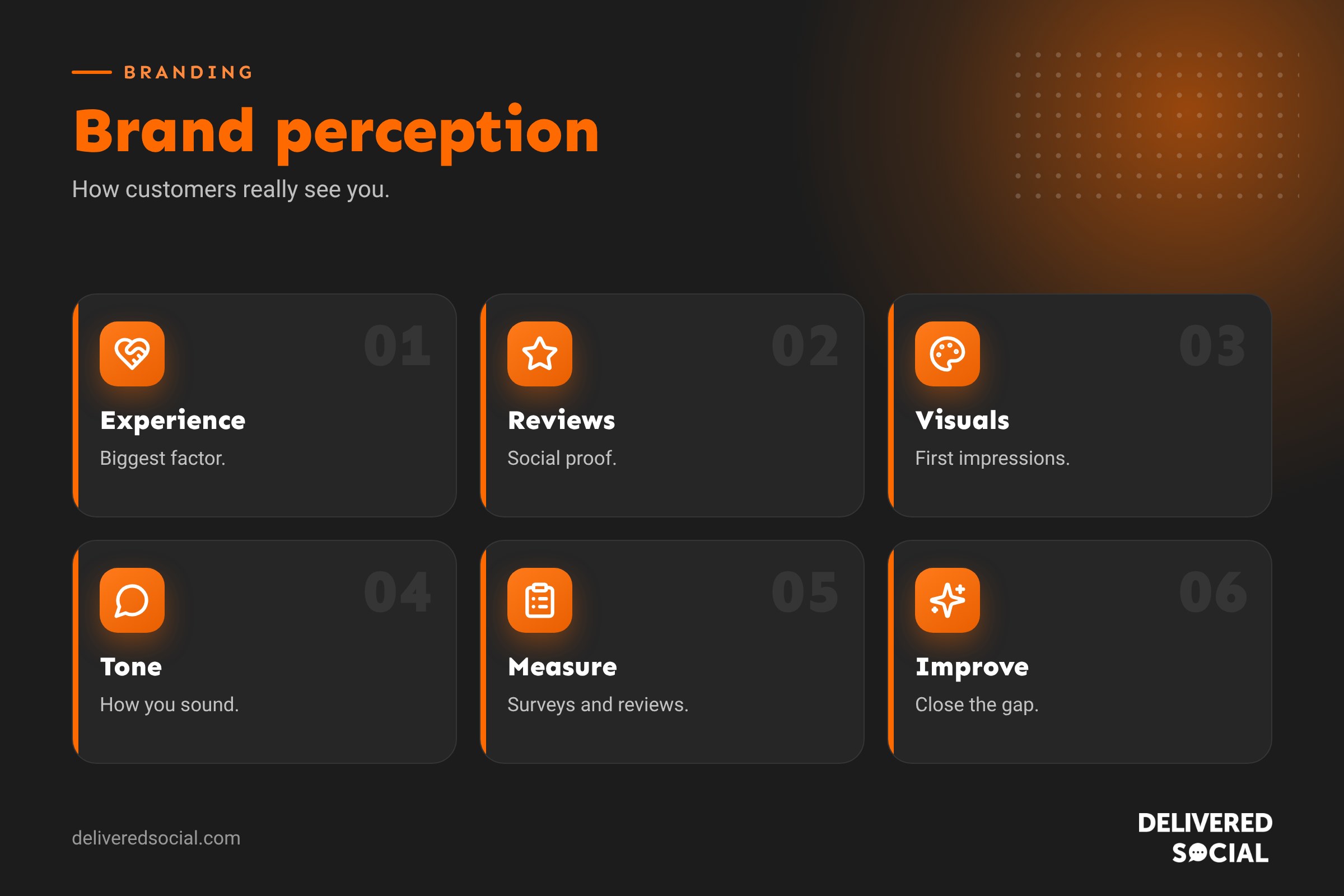
Customer experience
How easy it is to buy from you, how quickly you reply and how you handle problems often matter more than any advert.
Reviews and word of mouth
Google reviews, Trustpilot, social comments and recommendations from friends carry huge weight because they come from people like the customer. Our guide to online reputation management explains how to manage them well.
Visual identity
Your logo, website design, photography and packaging send instant signals about quality and personality. A dated website can make an excellent business look tired.
Tone of voice
The words you use in emails, posts and on your website shape whether you feel friendly, expert, playful or formal.
Social media presence
Regular, helpful and human content builds familiarity. An abandoned profile can suggest the business has closed. Our guide to optimising social media profiles covers the basics.
Values and behaviour
How you treat staff, support your community and act on issues such as sustainability increasingly affect how people see you.
Price and positioning
Price sends a message. Very low prices can suggest poor quality; premium prices need to be matched by a premium experience.
Media coverage and partnerships
Press coverage, awards and the brands you work with all add to your reputation.
How to measure brand perception
- Customer surveys: ask customers to describe your business in three words, how likely they are to recommend you and why they chose you.
- Net Promoter Score (NPS): a simple measure of how likely people are to recommend you.
- Reviews: look for patterns in what people praise and criticise.
- Social listening: track mentions, comments and sentiment on social media. Our guide to social media sentiment analysis explains how.
- Branded search: growing searches for your business name in Google Search Console suggest growing awareness.
- Focus groups and interviews: deeper conversations with customers and people who chose a competitor.
- AI tools: ask ChatGPT and Gemini to describe your business, which shows how your reputation is summarised online.
How to improve brand perception
1. Find the gap
Compare how you want to be seen with how people actually see you. Use survey answers and reviews to spot differences.
2. Fix the experience first
No amount of marketing can cover a poor experience. Improve response times, delivery, aftercare and complaint handling.
3. Get more reviews
Ask every happy customer for a review and reply to every review politely, including critical ones.
4. Refresh your visual identity if it is dated
A refreshed logo, website and photography can quickly change how professional you look.
5. Be consistent
Use the same tone, colours and promises everywhere: website, socials, emails, vans, uniforms and packaging.
6. Show the people behind the business
Behind the scenes content, team introductions and founder stories build warmth and trust.
7. Share proof
Case studies, testimonials, awards and accreditations reinforce what you say about yourself.
8. Stand for something
Support local causes, share your values and act on them. Customers notice businesses that do good.
9. Handle mistakes well
When things go wrong, respond quickly, own the problem and put it right. Handled well, a complaint can improve perception.
Brand perception for small businesses
Small businesses have an advantage: they can be personal. Customers often know the owner, and every interaction feels direct. Lean into that. Reply personally, remember regulars, share your story and be visible in your community. Small, consistent actions build a strong reputation over time. Our article on consistent brand messaging shows how to keep everything aligned.
Common mistakes
- Assuming you know how customers see you without asking.
- Focusing on logos and slogans while ignoring service.
- Ignoring negative reviews or replying defensively.
- Inconsistent messages across channels.
- Copying competitors instead of finding your own position.
A simple brand perception audit you can do this week
You do not need a big research budget to get a clear picture. Try this quick audit:
- Ask ten recent customers to describe your business in three words, and note any repeated words.
- Read your last 30 reviews and list the top three compliments and top three complaints.
- Look at your website and social profiles as if you were a new customer. Would you trust you?
- Search for your business name on Google and in ChatGPT and read what comes up.
- Ask a friend who has never used you what they assume about your prices and quality from your website alone.
Compare the results with how you want to be seen. The gaps are your priorities.
Brand perception online and in AI search
More customers now form their first impression of a business before they ever visit its website. They see a Google Business Profile with reviews and photos, a few social posts, and increasingly a summary from an AI tool such as ChatGPT or Google’s AI Overviews. These summaries pull together reviews, articles and mentions from across the web, so your reputation everywhere matters. Keep your Google profile complete and active, encourage detailed reviews, and make sure your website clearly explains what you do, who you help and why customers choose you. Our guide to improving your brand visibility in ChatGPT, Perplexity and Gemini explains more.
Examples of perception shifts
Perception can change faster than many owners expect. A family run builder that adds clear before and after photos, detailed project write ups and regular reviews can move from “a local firm” to “the experts everyone recommends” within a year. A dated café that refreshes its signage, menu design and Instagram can attract a new audience without changing its recipes. A professional services firm that shares helpful advice on LinkedIn can go from invisible to trusted authority. In each case, the business itself was good; the perception simply caught up.
Key takeaways
- Brand perception is how customers actually see your business.
- It is shaped by experience, reviews, visuals, tone, values and price.
- Measure it with surveys, reviews, social listening and branded search.
- Fix the customer experience first, then improve how you present yourself.
- Consistency and honesty build strong perception over time.
Frequently asked questions
What is brand perception?
The thoughts, feelings and expectations people have about your business, built from every interaction with it.
What is the difference between brand image and brand perception?
They are closely related. Brand image usually means the overall impression people hold; brand perception covers the beliefs and feelings that form it.
How can I find out how customers see my brand?
Ask them through surveys, read your reviews, listen on social media and track branded searches.
How long does it take to change brand perception?
Small improvements can show within months, but changing a long held reputation takes consistent effort over time.
Can social media improve brand perception?
Yes. Regular, helpful and human content builds familiarity and trust.
Do reviews affect brand perception?
Very much. Reviews are one of the first things people check and strongly shape their impression.
Does a new logo change brand perception?
It can help, but only if the experience behind it matches. A fresh logo on a poor service rarely changes minds for long.
Who is responsible for brand perception?
Everyone in the business. Every email, call, delivery and post shapes how customers see you.
Want people to see your business at its best?
We help businesses across Surrey, Hampshire and the UK with branding, websites and social media. Call us on 01483 608 303.
































