



Keep reading
Rather we just did it for you?
Let's get your business seen.
Social media, websites, SEO and ads from a team you can actually meet.
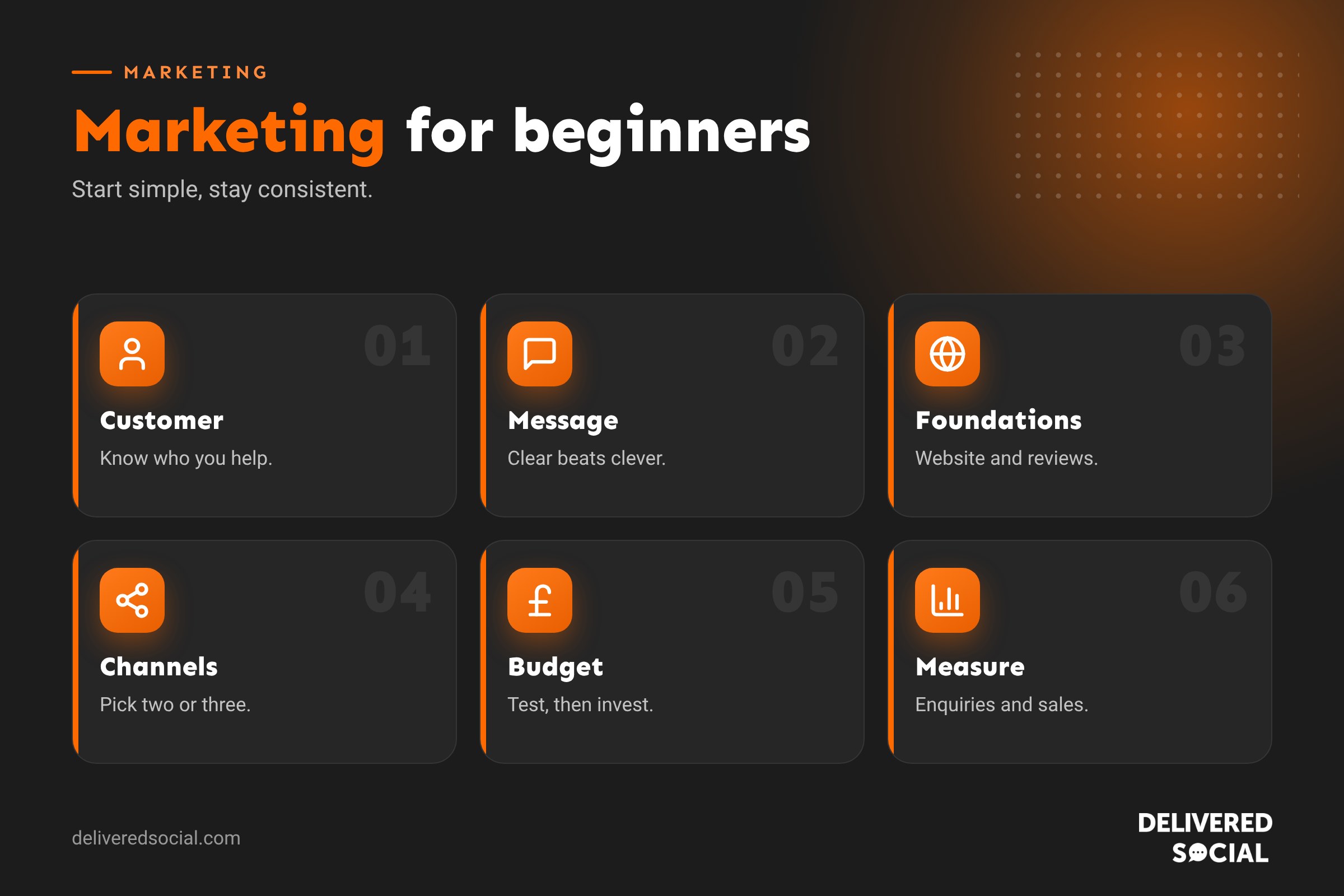
Marketing can feel overwhelming when you’re starting out. There’s endless advice, a new platform every month and plenty of jargon. But at its heart, marketing is simple: understand who you help, show them why you’re the right choice and make it easy for them to buy. This guide to marketing for beginners explains the essentials in plain English, from knowing your customer and crafting your message to choosing channels, setting a budget, measuring results and building a simple 90-day plan you can actually stick to.
What is marketing?
Marketing is everything you do to attract, win and keep customers. It includes understanding customers, developing products and prices, building your brand, promoting what you offer and looking after people after they buy. Advertising and social media are parts of marketing, not the whole thing. See marketing vs advertising and marketing vs sales for how they fit together.
Step 1: Know your customer
Good marketing starts with a clear picture of who you’re trying to reach. Ask:
- Who buys from you now, and who are your best customers?
- What problem are they trying to solve?
- What do they worry about before buying?
- Where do they look for information and recommendations?
- What words do they use to describe their problem?
Write a short profile of your ideal customer. Talk to real customers; it’s the most valuable marketing research you can do, and it’s free.
Step 2: Get your message right
Your message explains why someone should choose you. A simple formula:
We help [who] to [achieve what] by [how], unlike [alternative].
For example: “We help busy homeowners in Guildford get reliable boiler repairs the same day, with fixed prices and no call-out fee.” Clear beats clever. Focus on benefits (what the customer gets) rather than features (what you do).
Step 3: Understand the marketing mix
The classic “4 Ps” are a useful checklist:
| P | Question to ask |
|---|---|
| Product | Does it solve a real problem well? |
| Price | Is it priced for your market and margins? |
| Place | Where and how do people buy it? |
| Promotion | How will people find out about it? |
For service businesses, people, process and physical evidence (such as reviews, your website and premises) matter too.
Step 4: Build your foundations
Before spending on promotion, make sure the basics are in place:
- A clear, fast website that explains what you do and makes contacting you easy.
- Google Business Profile if you serve a local area.
- Reviews from happy customers.
- Consistent branding: logo, colours and tone of voice.
- A way to capture leads, such as a contact form or newsletter sign-up.
Promotion sends people to these foundations, so weak foundations waste your budget.
Step 5: Choose your channels
You don’t need to be everywhere. Choose two or three channels where your customers are and do them well.
| Channel | Best for | Cost and speed |
|---|---|---|
| Search engine optimisation (SEO) | Being found when people search | Low cash, slow to build |
| Google Ads | Reaching people ready to buy | Paid, fast |
| Social media | Awareness, trust and community | Time, or paid ads |
| Email marketing | Repeat business and nurturing leads | Low cost, high return |
| Networking and referrals | Local and B2B businesses | Time |
| PR and partnerships | Credibility and reach | Time, sometimes paid |
| Print and local advertising | Local, older or offline audiences | Paid |
Our beginner guides go deeper on SEO, social media and Google Ads.
Step 6: Create useful content
Content marketing means sharing helpful information that answers customers’ questions: blog posts, videos, guides, case studies and social posts. It builds trust, supports SEO and gives you something to share. Start with the questions customers ask you every week.
Step 7: Set a budget
Many small businesses spend a few per cent of revenue on marketing; growing businesses often spend more. Start with what you can afford to test, track results and invest more in what works. Remember your time has a cost too. See how to set a marketing budget.
Step 8: Measure what matters
- Enquiries and sales: the most important numbers.
- Where they came from: ask every new customer how they found you.
- Cost per lead or sale for paid channels.
- Website visitors and how they behave, using Google Analytics.
- Reviews and repeat customers.
Likes and followers are nice, but they don’t pay the bills on their own.
A simple 90-day marketing plan
Month 1: Foundations
- Write your customer profile and core message.
- Fix your website’s key pages and contact options.
- Set up or update Google Business Profile.
- Ask ten happy customers for reviews.
- Set up Google Analytics and a simple tracking spreadsheet.
Month 2: Visibility
- Choose two channels and post or publish consistently.
- Write two helpful articles answering common customer questions.
- Start an email list with a simple sign-up offer.
- Attend one networking event or reach out to three potential partners.
Month 3: Test and refine
- Run a small paid test, such as local Google Ads or a social campaign.
- Send your first email newsletter.
- Review results: what brought enquiries?
- Do more of what worked and drop what didn’t.
Common beginner mistakes
- Trying to target everyone.
- Being on every platform but doing none well.
- Talking about yourself rather than the customer’s problem.
- Giving up after a few weeks.
- Spending on ads before the website is ready.
- Not tracking where enquiries come from.
- Copying competitors instead of standing out.
Marketing terms you’ll hear
- Target audience: the people you aim your marketing at.
- Funnel: the stages from awareness to purchase.
- Conversion: when someone takes the action you want.
- Call to action (CTA): the next step you ask people to take.
- ROI: return on investment.
- USP: unique selling point, what makes you different.
Example: a new dog groomer
A dog groomer opening in Farnham defines her ideal customer as busy dog owners within five miles who want calm, careful grooming. Her message focuses on small appointments with no cages. She sets up Google Business Profile, collects reviews from early clients, posts before-and-after videos on Instagram and Facebook, and offers a referral discount. Within three months, most bookings come from Google and referrals, so she focuses there.
When to get help
As your business grows, it often makes sense to bring in support for specialist areas like SEO, ads, video or social media management. A good agency should explain what they’ll do, how they’ll measure it and what results to expect, in plain English.
Free marketing you can start today
- Complete your Google Business Profile with photos, services and opening hours.
- Ask your five happiest customers for a review.
- Post one helpful tip on social media each week.
- Add a clear call to action to every page of your website.
- Tell your existing customers about a service they might not know you offer.
- Join a local networking group or online community where your customers spend time.
- Answer customer questions in a short blog post or video.
Building a brand, not just campaigns
Campaigns come and go, but your brand is how people remember you. Be consistent in how you look, sound and treat customers. Use the same logo, colours and tone across your website, social media, emails and premises. Deliver on your promises every time. Over months and years, consistency builds trust, and trust makes every piece of marketing work harder because people already know and like you.
Key takeaways
- Marketing is attracting, winning and keeping customers.
- Start with a clear customer and message.
- Build your website, reviews and Google profile before promoting.
- Choose two or three channels and be consistent.
- Measure enquiries and sales, then double down on what works.
Frequently asked questions
What is marketing in simple terms?
Everything you do to attract, win and keep customers.
Where should a beginner start with marketing?
With your ideal customer, a clear message and a good website.
What are the 4 Ps of marketing?
Product, price, place and promotion.
How much should a small business spend on marketing?
Often a few per cent of revenue, more when growing; start with what you can test.
Which marketing channel is best?
The one where your customers are; for local businesses, Google often leads.
Is social media enough on its own?
Rarely; combine it with a website, search and email.
How long does marketing take to work?
Ads can work quickly; SEO and brand building take months.
Can I do marketing myself?
Yes, especially at the start, with a simple plan and consistency.
What is digital marketing?
Marketing through online channels such as websites, search, social and email.
How do I know if marketing is working?
Track enquiries, sales and where each new customer came from.
What is a marketing plan?
A simple document setting out your goals, customers, message, channels, budget and how you will measure results.
Do I need a logo before marketing?
A simple, professional logo helps, but a clear message and good service matter more.
Should I offer discounts to get started?
Use them carefully; constant discounts can train customers to wait for a deal.
Want a hand getting started?
We help businesses across Surrey, Hampshire and the UK with websites, social media, SEO and ads. Call us on 01483 608 303.
































